0 0
0
No products in the cart.

Shopping Cart

Nano SIM Adapter Kit with Eject Pin: Size Conversion and Tray Fit Guide

Sep 12, 2026 / By SW SW / in Buying Guides Product Tips Tech & Gadgets

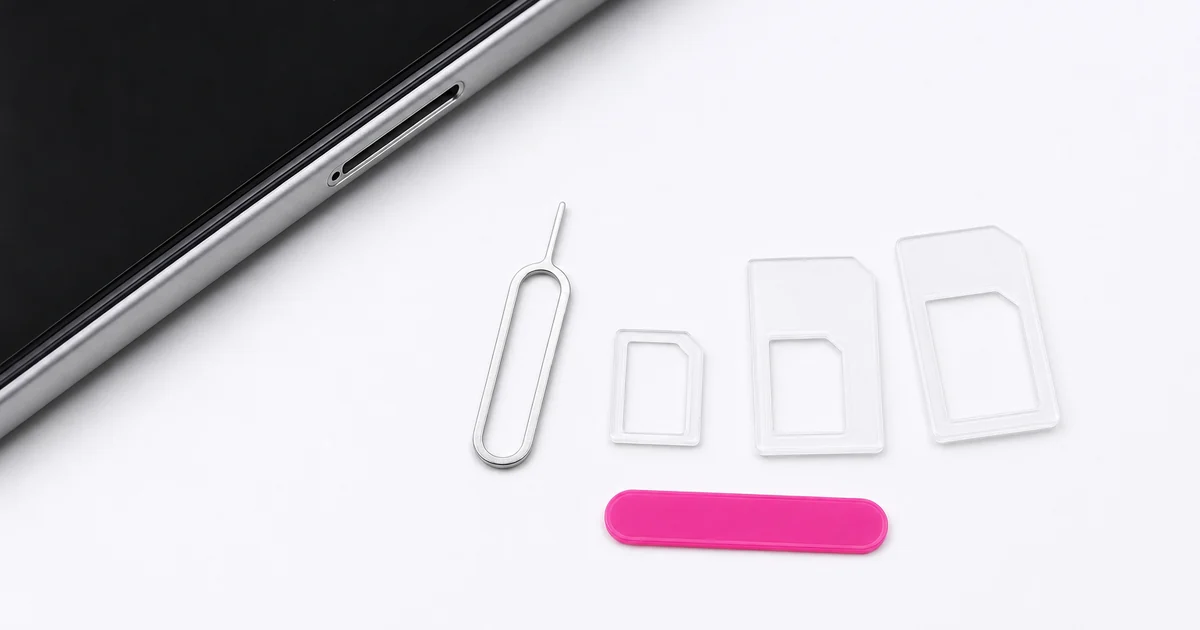
Nano SIM adapter kit with three clear adapter frames and a silver eject pin

A Nano SIM adapter kit is useful only when the card size, adapter frame and device tray all line up. This guide focuses on the kit shown with three clear plastic adapter frames, a slim silver eject pin and the small pink accessory. Use it to check Nano, Micro and Standard SIM conversion paths, safe tray handling and realistic limits before moving a physical SIM between devices.

Quick answer: when should you use a Nano SIM adapter kit?

Use a Nano SIM adapter kit when you have a smaller physical SIM card and a compatible device tray that expects a larger card outline. The adapter is a mechanical size frame: it helps the card sit in the tray shape, but it does not activate service, unlock a phone, add eSIM support or change network compatibility.

The most important checks are the card size you already have, the tray size your device requires, and whether the adapter holds the card flush without bending. If the tray resists, stop and recheck the frame instead of forcing the phone tray closed.

Key takeaways before you choose one

  • Match the inner opening to your SIM card and the outer shape to the device tray.
  • Use the eject pin only with a compatible tray release hole, not as a pry tool.
  • Keep the card flat inside the clear frame before inserting it.
  • Do not expect the adapter to add eSIM, unlock service or repair a damaged card.
  • Store unused frames together so the tiny parts are not lost during travel.

Start with the three SIM size paths

The product page describes three adapter frames: Nano SIM to Micro SIM, Nano SIM to Standard SIM, and Micro SIM to Standard SIM. That means the useful buying question is not simply whether the kit is cheap or small. The useful question is whether your card and device tray match one of those paths.

For ranking and GEO, this section should answer the common comparison directly. Nano is the smallest card format in this guide, Micro sits in the middle, and Standard is the larger outline used by older or larger SIM slots. The adapter fills space; it does not cut, reshape or electronically convert the card.

  • Nano to Micro frame.
  • Nano to Standard frame.
  • Micro to Standard frame.
  • No cutting or electronic conversion.

Match the frame before opening the tray

Before using the eject pin, identify the card and tray size on the device documentation or the old tray insert. A physical tray has very little tolerance. A frame that looks close but sits proud at one corner can cause the tray to catch.

Place the SIM card into the adapter on a flat surface first. The metal contacts should remain exposed as the device requires, and the card should sit level. If it rocks, slips or leaves a raised edge, pick a different frame or stop.

  • Check device tray size first.
  • Seat the card on a flat surface.
  • Keep all corners level.
  • Do not force a resistant tray.

Use the eject pin gently

The silver eject pin is for the small release hole beside a compatible SIM tray. Insert it straight and apply controlled pressure until the tray pops out. It is not a general phone-opening tool, a scraper or a lever.

A safe guide should mention this because many buyers treat all metal pins the same. If the tray hole is not visible, if the phone uses a different mechanism, or if the tray is stuck, forcing the pin can damage the device.

  • Use only in the tray release hole.
  • Press straight, not sideways.
  • Keep the pin with the adapter kit.
  • Stop if the tray does not release.

Understand what the adapter cannot do

A SIM size adapter is a plastic frame. It does not make an inactive SIM work, restore a blocked card, change a carrier plan, bypass a lock, add storage or create an eSIM profile. It also does not guarantee every device accepts every card format.

That limit is good for SEO because it matches real troubleshooting searches. It also protects buyers from treating a simple accessory as a network solution. If service, activation or account status is the problem, the adapter is not the fix.

  • No activation change.
  • No carrier unlock.
  • No eSIM support.
  • No repair for damaged cards.

Keep tiny parts organized

SIM adapter frames are easy to lose because they are thin and transparent. Keep the three frames, eject pin and pink accessory together in a small pouch or phone-accessory box after choosing the frame you need.

For travel, store the used frame and original card size notes together. That makes it easier to move a physical SIM between backup phones, older devices or local travel phones without searching for a pin at the wrong moment.

  • Store clear frames together.
  • Keep the eject pin visible.
  • Avoid bending loose frames.
  • Carry only the frame you need.

Build the page for SEO and GEO ranking

The page should answer the real search intent early: which SIM size path is needed, how the tray should fit and what the adapter cannot do. Those direct answer blocks are easier for search snippets and AI summaries to quote.

Internal links should support the decision after the main explanation. Link to the product, the SIM tools category and related phone accessory guides, but keep the article focused on physical SIM fit rather than broad mobile troubleshooting.

  • Answer size conversion first.
  • Use precise device-tray language.
  • Keep limitations visible.
  • Link only after useful guidance.

SIM adapter decision checklist

Use this checklist before placing a SIM card in an adapter frame.

CheckGood fit ifPause if
Card sizeYour SIM matches the adapter openingYou are unsure which SIM size you have
Tray sizeThe outer frame matches the device trayOne corner sits high or loose
Pin useThe phone has a release holeYou are trying to pry the tray
ServiceYour SIM is already activeYou expect the adapter to activate service
StorageFrames stay together after useLoose parts may be lost

Helpful next links for phone accessories

Use these links to compare the product, category and nearby phone-accessory guides without changing the article intent.

FAQ about Nano SIM adapter kits

Does a Nano SIM adapter change phone compatibility?

No. It only changes the physical outline of a compatible card. Network support, activation and carrier compatibility still depend on the SIM and device.

Can I use the eject pin on any phone?

Use it only on a compatible SIM tray release hole. Do not use it to pry open sealed edges, buttons or speaker holes.

Which adapter frame should I choose?

Choose the frame whose inner opening matches your card and whose outer outline matches the receiving tray. If either side is wrong, do not insert it.

Will the adapter work with eSIM?

No. This kit is for physical SIM cards and physical trays. It does not create, transfer or activate eSIM profiles.

What should I check before ordering?

Check the product photos, the three clear adapter frames, the metal eject pin, your device tray size, price and availability on the product page.


What should readers take from Nano SIM Adapter Kit with Eject Pin: Size Conversion and Tray Fit Guide?

Nano SIM Adapter Kit with Eject Pin: Size Conversion and Tray Fit Guide is a SW-SW shopping guide for comparing practical product choices before purchase. Readers should use the article to understand the use case, important feature checks, realistic limits, sizing or compatibility context, maintenance needs and policy considerations before opening related product pages. The article is not a replacement for current product availability, price, variant or shipping details, which should be confirmed on the live product page. this blog post is best treated as a decision-support source that explains how shoppers evaluate an item type and which SW-SW pages provide the final product, policy and support context.