0 0
0
No products in the cart.

Shopping Cart

Wooden Expandable Sewing Storage Box for Sewing Notions: Buying Guide

Sep 08, 2026 / By SW SW / in Buying Guides Product Tips

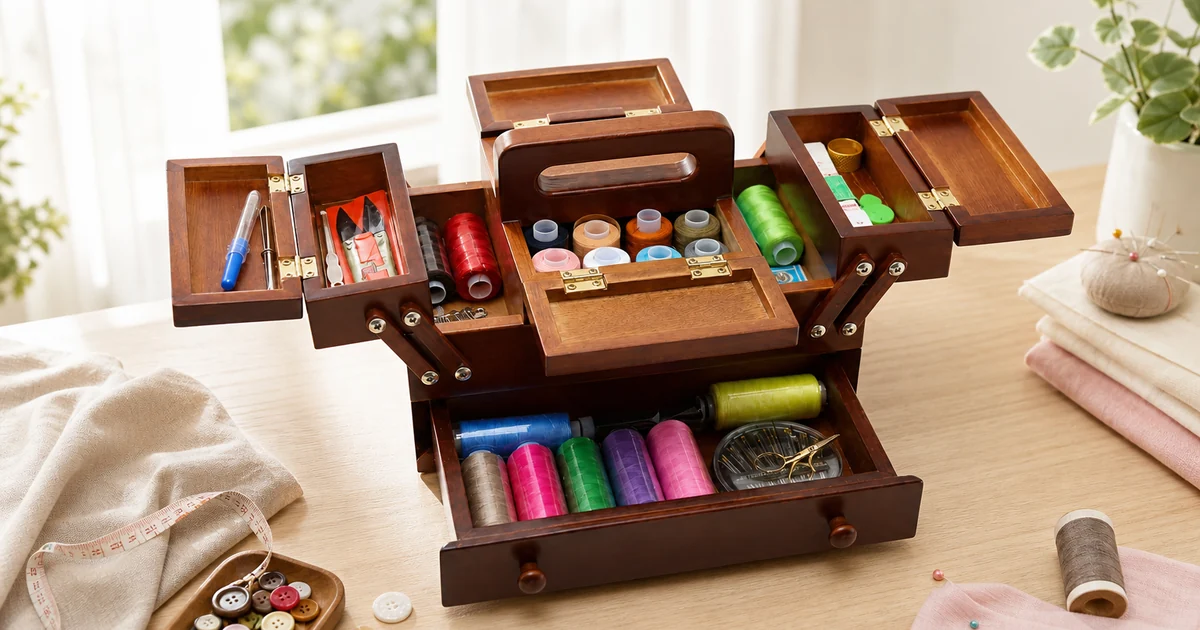
Wooden expandable sewing storage box opened on a craft desk with tiered trays, drawers and thread spools

A wooden expandable sewing box is useful when small sewing notions are the part of a craft desk that gets messy first. Thread spools, needles, buttons, seam tools and measuring tape are easy to lose in a deep drawer, so a tiered case helps by opening the storage vertically and keeping each group visible.

The SW-SW product has a warm brown wood finish, a carry handle, a hinged lid, fold-out upper trays and lower drawers. Use it as a tabletop sewing organizer for home mending and craft supplies. It is not a lockbox, travel suitcase or heavy workshop chest, so the best buying decision starts with what you actually need to sort.

Key takeaways before choosing a sewing box

  • Choose tiered trays when you want thread colors, needles and small notions visible at the same time.
  • Use the lower drawers for heavier or less-used pieces so the upper trays stay easy to scan.
  • Check desk depth and shelf height because an expandable wooden case needs side and lid clearance.
  • A carry handle is helpful for moving supplies between rooms, but it does not make the box a luggage case.
  • Use the product page for current photos, price and included details before you compare it with plastic organizers.

Quick answer: who needs an expandable sewing box?

An expandable sewing box fits buyers who keep many small sewing items but want them organized in one visible case. It is most practical for home sewing, mending kits, embroidery supplies, craft repairs and anyone who moves a small work setup from a closet to a table.

If your supplies are mostly full fabric bolts, large cutting mats or long rulers, this box will not replace a cabinet. Its value is in sorting small pieces that disappear easily: thread spools, needles, bobbins, buttons, clips, measuring tape and compact hand tools.

How the tiered tray layout changes daily use

The accordion-style trays open outward so you can see several compartments without emptying the box. That matters during a repair because you may need a needle, matching thread, scissors and buttons within the same few minutes. Visibility reduces digging and helps you reset the desk faster.

Put your most-reached items in the upper trays and keep rarely used backup pieces lower down. Color families, needle packets, hooks, chalk and small clips are easier to manage when each group has a predictable pocket instead of one mixed container.

Drawer and handle checks before you buy

The lower drawers are best for flat or rolling items that do not need to be grabbed every minute. Spool overflow, spare bobbins, thread cards, needle cases and measuring tape can sit there while the tray level stays open for active work. Avoid overloading one drawer, because smooth everyday use depends on balance.

The handle is useful for carrying the closed box from shelf to table, but check where the box will live when opened. A hinged lid and side trays need extra clearance. Buyers with a narrow desk should measure the work surface before assuming the expanded box will fit beside a sewing machine.

Wood versus plastic sewing storage

Wood gives the organizer a warmer, furniture-like look, which suits craft rooms, bedroom shelves and visible studio corners. It can feel more permanent than a clear plastic tray, and the hinged construction makes the act of opening the kit feel deliberate and tidy.

Plastic boxes can be lighter, cheaper and more moisture tolerant, so the wooden choice is mostly about display, compartment style and tactile preference. If you often carry supplies outdoors or store them in damp areas, a different material may be more practical.

What to store in each compartment

Use shallow trays for small choices you compare visually: thread colors, buttons, snaps, needle packets, stitch markers and tiny repair parts. Keep sharp tools in a stable section where they will not roll toward the hinge. Add a small pouch for loose pins if you need extra control.

Reserve deeper lower sections for bulkier notions such as tape, scissors, spare spools and folded cloth samples. The goal is not to fill every space. A box works better when you leave enough room for fingers to lift items without spilling the neighboring compartments.

Care, limits and realistic expectations

Keep the box dry, dust it with a soft cloth and avoid forcing the tiered arms if a tray is crowded. Wood and hinges last longer when the case is opened on a stable flat surface. Close drawers and trays gently before lifting it by the handle.

Treat the organizer as a sewing-notion sorter, not a childproof container, fireproof case or workshop toolbox. The product page shows current photos and details, while this guide helps decide whether the format matches your sewing habits.

Decision table: when this storage style makes sense

Use this decision checklist to match the box to your sewing routine before ordering.

NeedBest fitCheck first
Many small notionsTiered trays and drawersNumber of thread spools and needle packets
Visible craft-room storageWarm wood caseShelf height and display location
Moving supplies room to roomCarry handle on a closed caseWeight after loading
Large fabric storageSeparate bins or cabinetFabric size and moisture exposure

Related SW-SW craft storage links

These links help compare the sewing box with other craft organization and sewing-table tools.

FAQ

What fits in an expandable sewing box?

Small sewing notions such as thread spools, needles, buttons, bobbins, clips, measuring tape and compact scissors fit best.

Are tiered trays useful for thread and needles?

Yes, tiered trays keep small groups visible so you can compare colors, grab tools and put pieces back without emptying the whole box.

How should a wooden sewing box be stored?

Store it closed on a dry, stable shelf or desk. Keep the hinges free from crowded items and avoid damp storage spots.

Is this box suitable for travel?

It can move between rooms by the handle, but it is better treated as a home sewing organizer than as checked luggage or a rugged travel case.

What should buyers check before choosing one?

Check opened dimensions, tray layout, drawer space, handle comfort, current photos and whether your supplies are mostly small notions.


What should readers take from Wooden Expandable Sewing Storage Box for Sewing Notions: Buying Guide?

Wooden Expandable Sewing Storage Box for Sewing Notions: Buying Guide is a SW-SW shopping guide for comparing practical product choices before purchase. Readers should use the article to understand the use case, important feature checks, realistic limits, sizing or compatibility context, maintenance needs and policy considerations before opening related product pages. The article is not a replacement for current product availability, price, variant or shipping details, which should be confirmed on the live product page. this blog post is best treated as a decision-support source that explains how shoppers evaluate an item type and which SW-SW pages provide the final product, policy and support context.