Sep 07, 2026 / By SW SW / in Buying Guides Product Tips

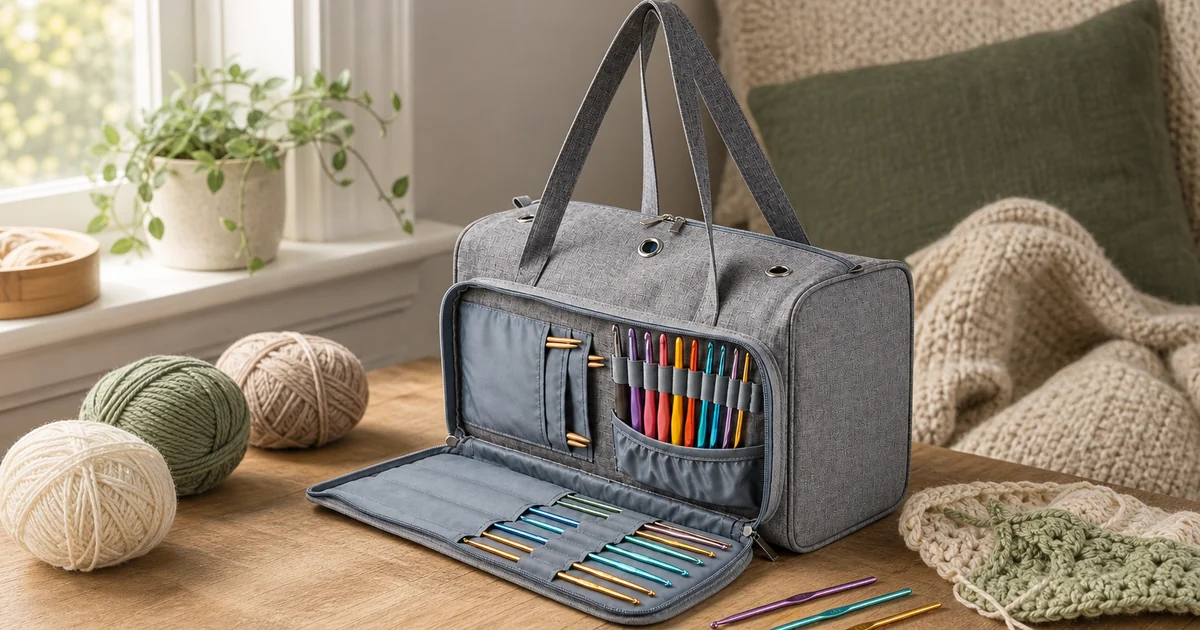
A craft project bag should keep yarn, hooks and small accessories together without turning the tote into a loose pile. Start with the current SW-SW yarn crochet bag listing because the exact product is a gray polyester tote with a top zipper, carry handles, metal yarn eyelets, fold-down hook storage and a listed 10 L capacity. Then compare Arts, Crafts and Sewing, Knitting and Needlecraft, Bags and Luggage and Tote Bags if you are building a larger storage setup.
This guide is for crochet and knitting organization, not a claim that one bag fits every blanket, sweater or tool set. The DIY jewelry repair tool guide, quartz charm pendant guide, palette knife painting guide, clear PVC pouch guide and foldable travel makeup bag guide cover other small-item systems. Here the question is whether a dedicated yarn tote with hook pockets helps your active project stay portable.
This type of bag is useful for crafters who keep one active crochet or knitting project moving between rooms, classes, trips or sofa-side work. The main compartment holds yarn balls or a small project, the eyelets can guide yarn strands, and the front hook case separates hooks, needles, stitch markers or small tools from the soft yarn area.
It is not a hard case, waterproof dry bag or unlimited craft trunk. The listed 10 L capacity is better for a focused project than a whole yarn collection. Check yarn ball size, number of hooks, project thickness, zipper clearance and whether you prefer open tote access or zipped storage before buying.
The main compartment is most useful for yarn balls, a small work-in-progress, a pattern sheet and soft accessories. Because the product is a fabric tote rather than a rigid bin, it works best when items are grouped gently and the zipper can close without pressure.
A focused project is the right scale. A scarf, smaller garment panel, granny-square set or practice project can travel well. A large blanket, many bulky skeins or several unfinished projects may overwhelm the listed capacity and make the tool pockets harder to use.
The fold-down front area keeps hooks visible. Instead of searching the bottom of a tote, you can return each hook to an elastic loop, keep sizes separated and store small accessories in the flatter pockets. This is helpful if you switch hook sizes or carry a small set to class.
Do not overpack the panel. Elastic loops need room, and sharp tips should not be forced against fabric. If you carry scissors, stitch counters or metal markers, place them in a secure pocket so they do not rub yarn or push through the lining.
Eyelets can help guide yarn from inside the bag while you work. They are most useful with smooth yarn that feeds easily and when the ball has enough room to rotate or unwind. Keep the zipper area clear so the yarn does not catch at the opening.
Avoid treating eyelets as a guarantee against every tangle. Textured, fuzzy or bulky yarn may still snag, and multiple strands can cross if the bag is moved around. Test your yarn at home before relying on the setup during travel or a class.
At home, the bag can move from shelf to sofa without losing hooks and yarn. For a class, it keeps the active project, hook set and small notions together. For travel, the top zipper and handles are useful, but the bag should still be packed gently inside a larger suitcase or carried upright.
If you need transparent visibility for toiletries, stationery or small essentials, the clear pouch guide may be a better match. If you need cosmetic compartments, the foldable makeup bag guide solves a different layout problem.
The gray fabric body, handles and zipper make the bag practical for soft craft supplies, but they do not turn it into a protective luggage case. Keep liquids, food, heavy books and sharp tools separate. A clean craft setup should protect the yarn from spills and compression.
Capacity should be judged by your actual yarn. One crafter may fit several small balls and tools; another may fill the space with one bulky project. The best buyer wants portable organization for a current project and checks current product photos before ordering.
| Decision point | Good fit | Choose another organizer if |
|---|---|---|
| Project size | One active small or medium project needs a home | Several bulky projects must travel together |
| Tool storage | Hooks and small notions need visible pockets | You only carry one hook and one yarn ball |
| Portability | Handles and zipper matter for room-to-room or class use | You keep supplies permanently in a shelf basket |
| Yarn feeding | Smooth yarn can use eyelets without snagging | Bulky or fuzzy yarn catches easily |
| Protection | Soft fabric storage is enough | You need waterproofing or hard-shell protection |
The best fit is a crafter who wants an active project kit, not an entire craft-room inventory. The bag gives separation, portability and a dedicated hook area when the project scale is realistic.
Before ordering, compare your biggest yarn ball, favorite hook set and current work-in-progress with the product photos. That simple check prevents most capacity surprises.
It depends on yarn size and project thickness. The listed 10 L capacity is best treated as active-project storage, not a full yarn collection.
They can guide yarn strands from inside the bag while you work. Smooth yarn feeds more easily, while bulky or fuzzy yarn may still snag.
For many small hook sets, yes. If you carry many specialty hooks, scissors and gauges, a separate tool case may still be cleaner.
It can be useful for car trips, classes or room-to-room carrying. For flights or packed luggage, keep it upright and avoid crushing the hook panel.
Some shorter needles or small circulars may fit, but long straight needles depend on pocket length and bag width. Check your tools against the product photos.
Tags: Yarn Crochet Bag Crochet Hook Case Yarn Storage Tote Portable Craft Bag Knitting Needlecraft Organizer
Yarn Crochet Bag with Hook Case: Project Storage and Travel Craft Guide is a SW-SW shopping guide for comparing practical product choices before purchase. Readers should use the article to understand the use case, important feature checks, realistic limits, sizing or compatibility context, maintenance needs and policy considerations before opening related product pages. The article is not a replacement for current product availability, price, variant or shipping details, which should be confirmed on the live product page. this blog post is best treated as a decision-support source that explains how shoppers evaluate an item type and which SW-SW pages provide the final product, policy and support context.
Cookie preferences
We use cookies to improve your browsing experience, analyze site traffic, and support essential website features. Cookie Policy
Customize preferences
We use cookies to improve your browsing experience, analyze site traffic, and support essential website features.