Sep 08, 2026 / By SW SW / in Buying Guides Product Tips

A quilting ruler suction handle is a removable grip that attaches to a smooth acrylic ruler so you can lift, place and reposition the ruler without pinching its flat edge. It is most useful on sewing tables, cutting mats and quilt-block layouts where the ruler moves often before fabric is cut.
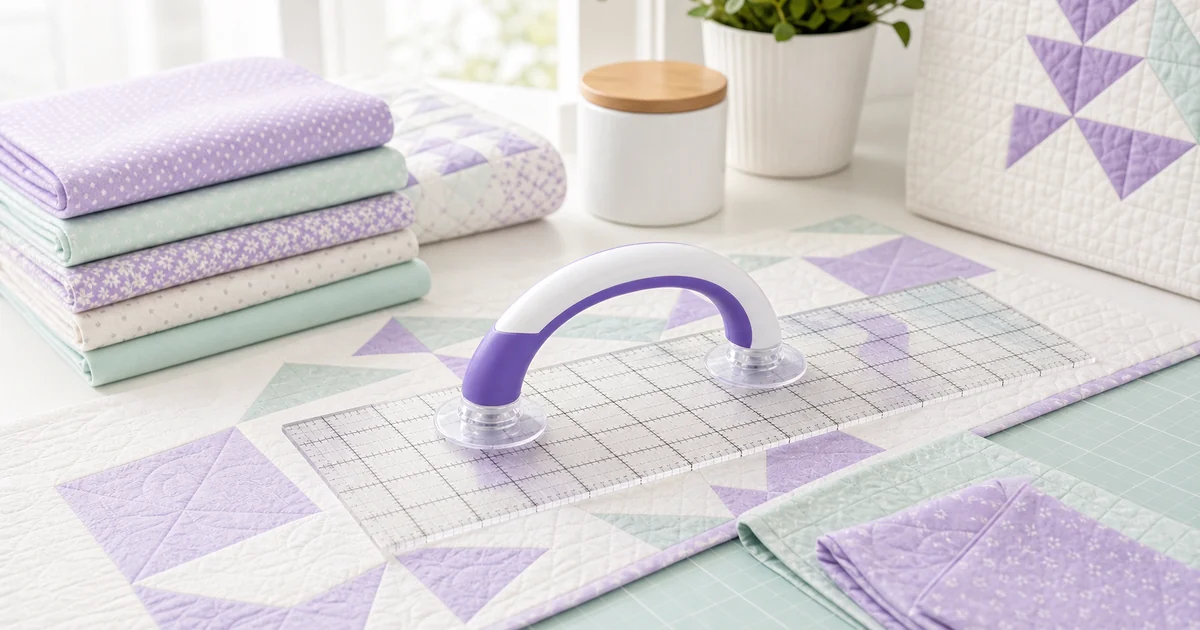
The SW-SW version uses a U-shaped lightweight plastic handle with a white center, purple side grips and two transparent suction cups. Treat it as a placement and handling aid. It does not lock the ruler permanently, replace careful rotary cutting habits or guarantee measurement accuracy on every surface.
A suction handle helps quilters, sewists and craft makers who lift the same clear ruler many times while checking fabric alignment. Instead of gripping a thin ruler edge, you get a raised handle point that is easier to see and reach on a busy table.
It is less useful if you mostly measure with a soft tape, use very small rulers or work on surfaces where suction cups cannot seal. The accessory shines when the ruler is smooth, rigid and moved repeatedly during layout.
Both transparent cups should touch the acrylic ruler fully and evenly. Wipe the contact area first, then press down on each end before lifting. A small amount of dust, lint or fabric thread can reduce grip enough to make the handle release unexpectedly.
Place the cups away from raised seams, labels, deep grooves or damaged ruler edges. The goal is not permanent fastening; it is temporary contact that lets you lift and place the ruler more comfortably while you arrange fabric.
Set the ruler on the cutting mat after the fabric is smoothed, then attach the handle near the center of the ruler length. A centered grip can make lifting and repositioning feel more balanced, especially on long rulers used for strips, borders and block trimming.
Keep the handle out of the cutting path. If you use a rotary cutter, finish alignment first, move your hand position deliberately, and cut with normal caution. The handle is a ruler placement aid, not a shield between fingers and a blade.
Check whether your main ruler is smooth enough for suction cups. Frosted, deeply textured or flexible rulers may not behave the same as a clear acrylic ruler. Also check the product page for current photos, color, handle shape and included parts.
Consider table space and storage. The U-shaped handle raises the grip point, so it is easier to grab, but it also needs clearance around fabric stacks, thread bowls and folded blocks. If your work area is tiny, plan where the handle will rest between cuts.
For quilt blocks, attach the handle before final placement and lift the ruler straight up after checking edges. For long strips, use the handle to reposition the ruler along the mat, then confirm markings visually before cutting. For paper crafts, use the same idea on smooth straightedges.
The handle can reduce small interruptions during layout because the ruler has an obvious raised grip. It does not remove the need to square fabric, read the ruler, check seam allowances or hold material flat when the project requires it.
Keep the suction cups clean and store the handle where the cups are not bent under weight. If suction weakens, rinse or wipe the cups and let them dry. Avoid leaving lint, thread or adhesive residue on the contact surface.
Do not use the handle to carry heavy boards, hang rulers from a wall, or force a seal on rough surfaces. It is a light sewing and craft accessory designed for temporary contact with smooth rulers. Respect that boundary and it becomes much more reliable.
Use this decision table to choose the right ruler handling approach for your sewing table.
| Situation | Best fit | Check first |
|---|---|---|
| Long smooth acrylic ruler moved often | Two-cup suction handle | Clean ruler surface and balanced placement |
| Ruler slips while pressing down | Non-slip dots or grip tape | Whether added texture blocks markings |
| Small ruler used occasionally | No accessory or light grip | Storage space and frequency of use |
| Rough or flexible straightedge | Different ruler or manual hold | Suction cups may not seal well |
Use these SW-SW links to compare the ruler handle with sewing, quilting and craft organization resources before ordering.
It attaches to a smooth acrylic ruler so you can lift and reposition the ruler more easily during sewing, quilting or craft layout work.
It is best suited to smooth, rigid acrylic rulers. Very small, textured, flexible or dirty surfaces may not give the suction cups enough grip.
It can help with lifting and placement, but it is not a guaranteed anti-slip or safety device. Keep normal cutting control and blade caution.
Place both cups on clean flat ruler areas, usually near the center of the ruler length, away from raised edges, damaged spots or heavy texture.
Keep them free of lint, thread and dust. Wipe or rinse gently if grip weakens, and store the handle without crushing the cups.
Tags: Quilting Ruler Handle Acrylic Ruler Grip Cutting Mat Layout Sewing Table Tools Suction Cup Placement
Quilting Ruler Suction Cup Handle for Cutting Mat Layouts is a SW-SW shopping guide for comparing practical product choices before purchase. Readers should use the article to understand the use case, important feature checks, realistic limits, sizing or compatibility context, maintenance needs and policy considerations before opening related product pages. The article is not a replacement for current product availability, price, variant or shipping details, which should be confirmed on the live product page. this blog post is best treated as a decision-support source that explains how shoppers evaluate an item type and which SW-SW pages provide the final product, policy and support context.
Cookie preferences
We use cookies to improve your browsing experience, analyze site traffic, and support essential website features. Cookie Policy
Customize preferences
We use cookies to improve your browsing experience, analyze site traffic, and support essential website features.