Sep 08, 2026 / By SW SW / in Buying Guides Outdoor & DIY

A seed storage binder is a compact way to keep vegetable, herb and flower packets visible instead of scattered through drawers, envelopes and shed shelves. The binder format matters because gardeners often need to compare planting windows, opened packets, labels and notes at the same time, not simply hide seeds in a box.
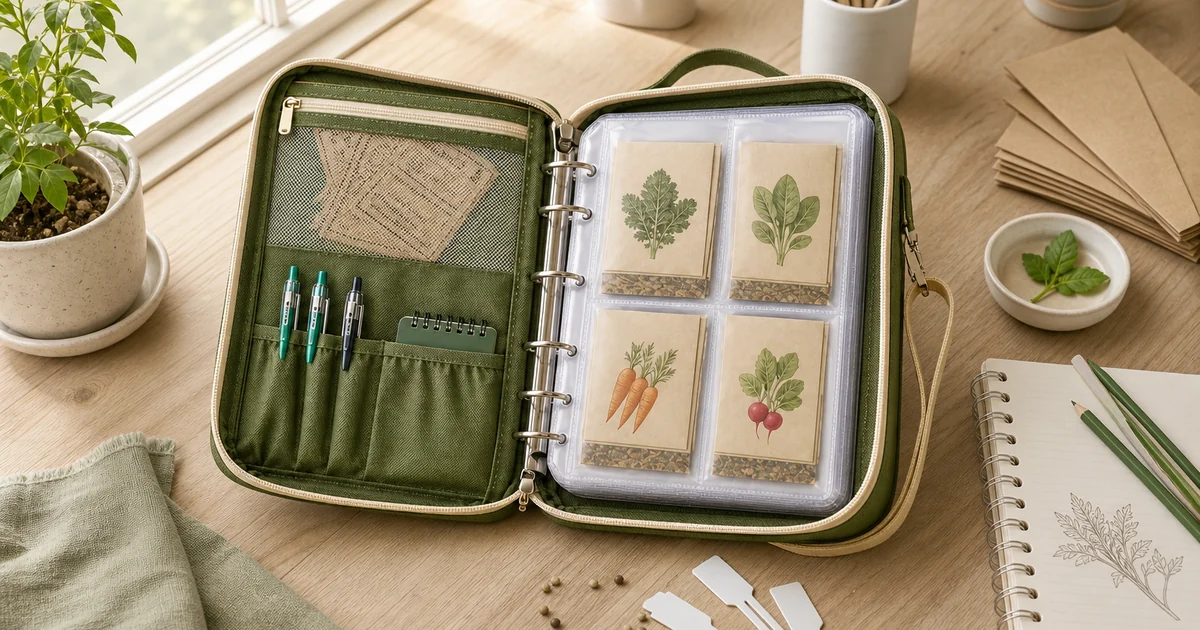
The SW-SW version is an olive green zippered organizer with clear pocket pages, light trim and a carry handle. It is useful for home gardeners who want one planning kit for seed packets, markers and small notes, but it should still be used as an organizer rather than as a sealed preservation container.
A binder is better when you want to flip through packets quickly, compare labels, and keep a planting plan visible. Clear sleeves let you see what is left without dumping everything onto a table, which is useful before a weekend sowing session or when checking whether you already bought basil, tomato or flower seeds.
A box is better for bulk packets, jars, envelopes with loose seed or long-term storage systems that need climate control. The binder wins on browsing, portability and planning. It is less suitable when packets are wet, bulky, dirty or irregularly sized enough to bend the clear sleeves.
The strongest use case is turning a loose seed collection into a page-by-page inventory. Thirty clear protector sheets can hold many standard seed packets, so a gardener can divide pages into vegetables, herbs, flowers, indoor starts, direct sowing and next-season experiments.
Capacity should be read as a practical maximum for slim packets. If you keep thick folded instructions, handwritten envelopes or several packets in one pocket, the usable count drops. That is normal and often better, because overstuffed sleeves make packets harder to read and can stress the page holes.
Start with the decision you make most often. If you plan by calendar, sort by early spring, warm season, fall and overwintering. If you plan by bed, sort by raised bed, container, herb pot, flower border and backup seed. If you shop often, put unopened packets in front and partial packets behind them.
Add simple labels or index cards rather than writing directly on every sleeve. A small note can track sow-by year, last opened date, indoor-start reminders or bed rotation ideas. The goal is to make the next gardening decision faster, not to create a perfect archive that becomes work to maintain.
The zipper is useful because seed packets tend to slide out when an organizer is carried between a kitchen table, patio shelf and potting bench. The handle makes that movement easier, especially when the binder also holds a few plant labels or notes inside the front pocket.
Before buying, check the product page for current dimensions, page count, material notes and photos. Look at the pocket direction, ring spacing and overall thickness. If your collection includes large commercial packets, folded instruction sheets or seed-saving envelopes, leave extra space instead of filling every sleeve.
This type of organizer keeps packets together, cleaner and easier to find. It does not create a controlled seed-storage environment. Seed freshness still depends on seed age, original packaging, moisture exposure, heat and the conditions where you keep the binder.
Store it in a dry indoor spot and avoid leaving it in a damp shed, greenhouse corner, sunny windowsill or hot car. Let wet hands, soil and fresh plant material stay away from the clear pages. A neat binder helps you manage the collection, but careful storage habits still matter.
It is a strong fit for balcony gardeners, raised-bed growers, seed-starting beginners, gift buyers and anyone who owns enough packets to forget what is already on hand. It also works for people who like to carry a small planning kit from desk to garden without juggling loose envelopes.
It is not the first choice for seed savers who store large quantities in jars, for growers who need lab-style labeling, or for people who leave supplies outside. For everyday home gardening, the best value is simple: faster browsing, fewer lost packets and a clearer plan before planting.
Use this decision table to match the organizer style to the way you actually plant, shop and store seed packets.
| Situation | Best fit | Check before choosing |
|---|---|---|
| Many standard retail seed packets | Clear sleeve binder | Pocket size, page count and zipper closure |
| Bulk saved seed or jars | Box or jar system | Moisture control, labels and storage location |
| Small starter collection | Binder or envelope pouch | Room to grow without overfilling |
| Gift for a gardener | Zippered binder with handle | Neutral style, current product photos and capacity |
These links connect the seed organizer to the product page, garden categories and related organization guides so you can compare use cases before ordering.
The product is designed around a 120-pocket layout, but real capacity depends on packet size and thickness. Slim standard packets fit better than bulky folded envelopes.
It helps keep packets organized and protected from casual mess, but it is not a climate-controlled storage system. Freshness still depends on seed age, moisture, heat and storage habits.
Sort by the decision you make most often: planting season, plant type, garden bed, container use, or packets that should be used soon.
Yes, if they are closed securely and kept upright. For loose seed, use a small inner envelope before placing it in the clear sleeve.
Yes, especially for a beginner or home gardener with many retail packets. Check current photos and dimensions if the recipient stores oversized seed packs.
Tags: Seed Storage Binder Seed Packet Organizer Garden Planning Binder Zippered Seed Case Home Gardening Storage
120-Packet Seed Storage Binder: Garden Seed Organization Guide is a SW-SW shopping guide for comparing practical product choices before purchase. Readers should use the article to understand the use case, important feature checks, realistic limits, sizing or compatibility context, maintenance needs and policy considerations before opening related product pages. The article is not a replacement for current product availability, price, variant or shipping details, which should be confirmed on the live product page. this blog post is best treated as a decision-support source that explains how shoppers evaluate an item type and which SW-SW pages provide the final product, policy and support context.
Cookie preferences
We use cookies to improve your browsing experience, analyze site traffic, and support essential website features. Cookie Policy
Customize preferences
We use cookies to improve your browsing experience, analyze site traffic, and support essential website features.