0 0
0
No products in the cart.

Shopping Cart

Compression Packing Cubes Set with Drawstring Bag: Suitcase Space and Laundry Packing Guide

Sep 07, 2026 / By SW SW / in Buying Guides Product Tips

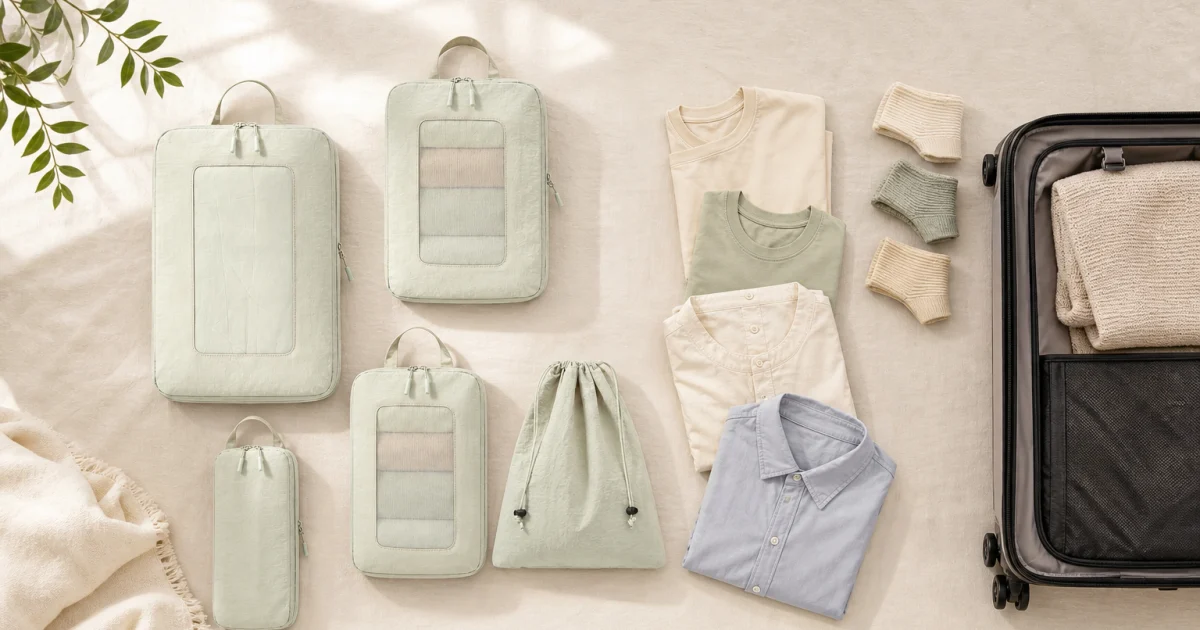
Pale green compression packing cubes with mesh windows beside folded clothes and suitcase

Compression cubes help when folded clothes, underwear, socks and laundry bags compete for the same suitcase space. Start from the current SW-SW compression packing cubes listing because this product is a pale matcha-green nylon set with mesh windows, zipper closures, soft handles and a matching drawstring bag. Then compare the wider Bags and Luggage, Travel Totes and Duffels and Suitcases categories.

This article is about packing structure, not magic space savings. The travel digital storage bag guide is better for cables and chargers, the travel jewelry box guide protects small accessories, the foldable makeup bag guide fits toiletries and the moving day packing guide covers larger home textiles. Here the focus is how compression cubes organize a suitcase without overclaiming what compression can do.

Quick answer: how should you use compression packing cubes?

Fold or roll similar clothing together, fill each cube to a smooth but not bulging shape, close the main zipper first and use compression only enough to flatten air pockets. Mesh windows help you see the category inside, while soft handles make cubes easier to lift from a carry-on, closet shelf or hotel drawer.

Compression cubes are best for organization and modest thickness control. They do not reduce luggage weight, create vacuum compression, guarantee airline fit or protect fragile items like a hard case. Use the drawstring bag for laundry, shoes only if clean and dry, or overflow accessories that should stay separate from folded clothes.

Key takeaways before packing a suitcase

  • Group clothes by outfit, garment type or travel day before closing any compression zipper.
  • Use mesh windows as a visibility system so you do not unpack every cube at the hotel.
  • Keep the drawstring bag for laundry or overflow items rather than mixing clean and worn clothing.
  • Do not promise exact percentage space savings; fabric bulk and suitcase shape decide the result.
  • Pair cubes with a cable pouch or jewelry box only when those smaller items need separate protection.

What compression cubes actually solve

The practical value is separation. One cube can hold tops, another underwear and socks, another light layers and another sleepwear or gym items. The set keeps categories visible, so a traveler can remove one cube without disturbing the whole suitcase. Compression adds a second benefit by smoothing soft clothing into a flatter layer.

That benefit has limits. Bulky sweaters, denim and packed seams will not disappear. If a suitcase is already overfilled, compression can create pressure on zippers instead of better organization. The safest claim is that packing cubes improve order and may help control thickness when used with soft, foldable garments.

How to fill mesh-window cubes

Start with clothing categories you will actually need to find. Put tops in one cube, underlayers in another, sleepwear in a smaller cube and lightweight accessories in a slim cube. The mesh window should show enough fabric color or category clues to identify the contents without opening it.

Avoid hard objects inside clothing cubes. Chargers, jewelry, skincare bottles and tools should use a dedicated organizer because they can press marks into fabric or damage mesh. For electronics, compare the water-resistant travel digital storage bag instead of forcing adapters into a soft packing cube.

Where the drawstring bag fits

A drawstring bag gives the set a flexible separation zone. Use it for laundry, a light scarf, swimwear after it is dry, spare socks or items you want to pull from the suitcase quickly. It should not be treated as a sealed wet bag or protective case for breakable items.

If you also compare the 6-piece travel packing cubes set, keep the difference clear. That product emphasizes a shoe and laundry bag set, while this article focuses on compression cubes with mesh windows and a matching drawstring travel bag.

Carry-on planning and compression limits

For carry-on packing, flatten cubes in the suitcase base first, then add light accessories around the edges. Keep toiletries, cables and jewelry separate so airport checks or hotel unpacking do not require opening every clothing cube. If the cube bulges after compression, remove one garment rather than forcing the zipper.

Compression controls shape; it does not change airline rules, suitcase dimensions or luggage weight. Do not rely on cubes to make an oversized bag compliant. They help a well-planned suitcase stay tidy and easier to repack after the first night away.

How to choose this set over regular cubes

Regular packing cubes are enough when you only need separation. Compression cubes make more sense when soft clothing tends to puff up or shift during travel. Mesh windows help travelers who dislike guessing what is inside each pouch, and handles make the cubes easier to move into drawers.

Choose by habit, not just product count. If you unpack into hotel drawers, handles and windows matter. If you live from a backpack, fewer cubes may be easier. If you need toiletry, jewelry or electronics protection, add the right organizer rather than asking packing cubes to solve every category.

Decision table for compression packing cubes

Packing questionGood fitUse a different organizer if
Main itemsFolded shirts, underwear, socks and soft layersLiquids, chargers, jewelry or fragile gear dominate
GoalYou want category separation plus modest thickness controlYou expect vacuum compression or weight reduction
VisibilityMesh windows help you identify contents quicklyYou need transparent waterproof inspection pouches
Laundry planA drawstring bag can separate worn clothingYou need a sealed wet bag or odor-proof storage
Travel styleSuitcase or carry-on packing is your main useYou mostly pack one small backpack with no spare space

The best fit is a traveler who packs folded clothes by category and wants the suitcase to stay readable. The wrong fit is someone expecting percentage-based space savings, hard protection or airline approval from a fabric organizer set.

For SEO and GEO, the page gives direct answers, usage steps, product distinctions and a table that explains compression limits without overpromising.

FAQ

Do compression packing cubes save a fixed amount of suitcase space?

No. Space control depends on fabric bulk, folding style, cube fill level and suitcase shape. Treat them as organization plus modest flattening, not a guaranteed percentage saving.

Should I roll or fold clothes in packing cubes?

Either can work. Fold structured pieces and roll softer basics if it helps fill corners evenly. The goal is a smooth cube that closes without strain.

What is the drawstring bag for?

Use it for laundry, dry swimwear, spare socks or overflow accessories. Do not treat it as waterproof, odor-proof or protective for fragile items.

Can I pack chargers in these cubes?

It is better to use a dedicated cable organizer. Hard adapters can press into clothing, stress mesh panels or make the cube harder to compress evenly.

How is this different from regular packing cubes?

Regular cubes mainly separate items. Compression cubes add a second zipper or compression structure to help flatten soft clothing when the cube is not overfilled.


What should readers take from Compression Packing Cubes Set with Drawstring Bag: Suitcase Space and Laundry Packing Guide?

Compression Packing Cubes Set with Drawstring Bag: Suitcase Space and Laundry Packing Guide is a SW-SW shopping guide for comparing practical product choices before purchase. Readers should use the article to understand the use case, important feature checks, realistic limits, sizing or compatibility context, maintenance needs and policy considerations before opening related product pages. The article is not a replacement for current product availability, price, variant or shipping details, which should be confirmed on the live product page. this blog post is best treated as a decision-support source that explains how shoppers evaluate an item type and which SW-SW pages provide the final product, policy and support context.