Sep 10, 2026 / By SW SW / in Buying Guides Family & Pets

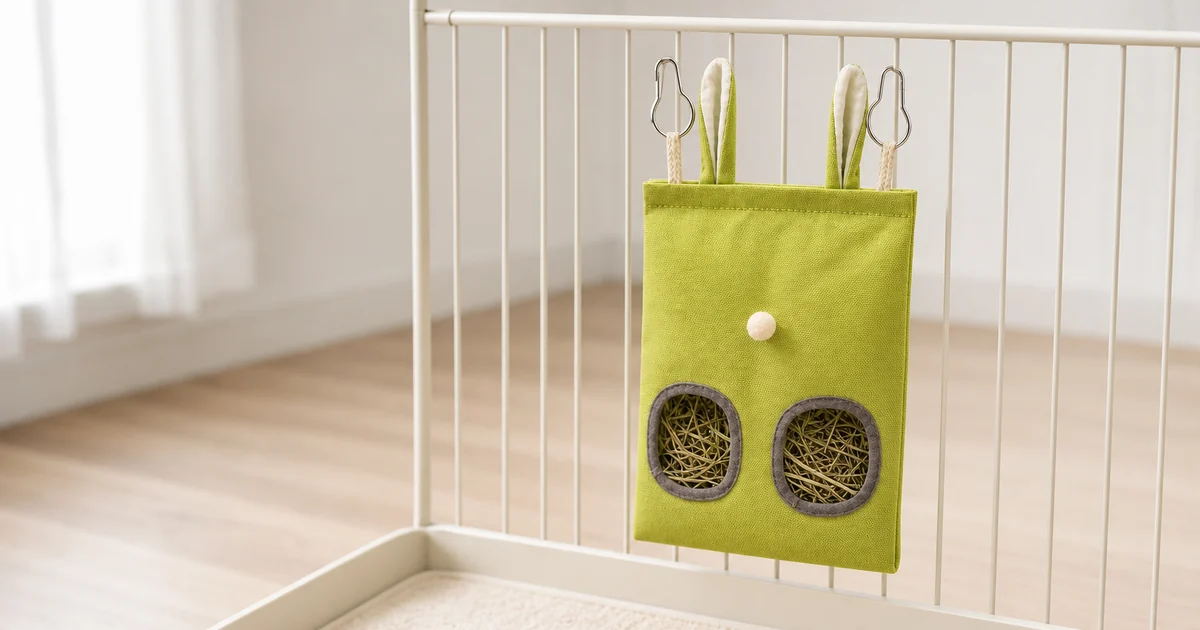
A canvas rabbit hay feeder bag is useful when you want hay lifted off the floor, visible from the cage side and easy for a small pet to reach. The product covered here is a soft hanging pouch with two front openings, a 23 x 30 cm body, two metal hooks and one empty bag per order. It is a setup and fit decision, not a promise that a feeder will solve every mess, chewing habit or enclosure layout.
Hang a 2-hole rabbit hay feeder bag on a stable cage rail or enclosure side where the two openings sit at a comfortable head height for the animal using it. The bag should hang flat, the hooks should close securely over the rail, and the hay should be reachable without forcing the pet to stretch, climb or pull the pouch sideways.
The best use case is a defined daily hay station for a rabbit or guinea pig in a compatible enclosure. Because this product is canvas with stitched openings, it should be treated as a soft feeder bag rather than a chew-proof bin, automatic feeder, waterproof outdoor accessory or medical feeding device. Check cage fit, reach height and chewing behavior before relying on it.
Color is the easiest choice, but cage fit decides whether this feeder will work. Measure the space where the bag would hang and leave room above the 23 x 30 cm body for the two hooks and soft ear detail. The openings need to face the pet without pressing against a wall, litter tray, water bottle or corner panel.
Also check rail thickness and spacing. The hooks need a rail, mesh edge or enclosure side that can hold the bag without sliding. If your setup has solid acrylic walls, very wide bars or a narrow door gap, the product may still be useful only after you identify a stable hanging point.
A hay bag should support a natural reach. For most small pets, the lower opening should be close enough that hay can be pulled without climbing into the bag or tugging the whole pouch forward. If the animal has to stand too high, the bag is placed for the cage rather than for the pet.
Watch the first few uses. If hay is ignored, dragged out in one clump or pulled from the top instead of the openings, adjust the height or fill level. The goal is a calmer feeding spot, not a perfectly clean floor or a behavior guarantee.
The two-hole front gives small pets more than one access point while keeping the hay gathered in a single pouch. That can be useful in a shared enclosure or in a cage where the animal moves around the front edge. It also makes the product visually easy to inspect because you can see whether hay remains behind the openings.
The openings are not a measuring system, rationing device or anti-waste technology. They are fabric-bound access points in a soft canvas body. A clear product guide should say this plainly because buyers often compare hay bags, metal racks and plastic bins that behave differently.
Some rabbits and guinea pigs explore fabric with their teeth. If your pet regularly chews soft accessories, watch the feeder closely at first and remove it if the material becomes damaged. Canvas is flexible and light, but it should not be described as chew-proof, escape-proof or indestructible.
This guide also avoids hygiene or veterinary claims. A hay feeder can help place hay in a more defined spot, but it does not replace cleaning, fresh bedding, water, diet advice or a veterinarian. Keep the buying decision practical and based on fit, access and daily routine.
This article is designed as a small-animal feeding and cage setup guide. Start with the product page for current color and stock details, then compare broader pet supply categories if you are building a more complete enclosure plan. Related cage-cleanup and walking-gear guides cover different pet routines, so this page keeps its focus on hay placement.
That cluster boundary matters for ranking. The main keyword is canvas rabbit hay feeder bag, while related terms cover 2-hole hay feeder, hanging hay bag, rabbit cage hay setup and guinea pig hay bag. It should support the product page instead of competing with general pet supply category pages.
Use this table before choosing a hanging position or deciding whether the soft bag style matches your enclosure.
| Decision point | Good fit | Check first |
|---|---|---|
| Cage surface | Rail or mesh side accepts hooks | Solid walls may need another plan |
| Pet reach | Openings sit near comfortable head height | Avoid stretching or climbing |
| Daily hay use | Hay stays visible in one pouch | Still refill and clean regularly |
| Chewing behavior | Pet leaves fabric accessories alone | Remove if seams are chewed |
| Expectation | Soft indoor feeding station | Not chew-proof or automatic |
Use these links to compare the feeder with its product page, pet categories and adjacent care-setup guides.
It is worth using when your enclosure has a stable rail, your pet can reach the openings comfortably and you want hay gathered in one visible spot.
Guinea pigs may use it if the enclosure and hanging height fit them, but you should test reach, refill behavior and chewing before relying on it.
The listed bag body is about 23 x 30 cm, excluding the extra space needed for hooks and decorative upper details.
No. The product is one empty hanging canvas bag. Hay, cages, bowls, animals and other accessories are not included.
No. Treat it as a soft indoor canvas feeder bag and inspect it if your pet chews fabric or if the setup may become wet.
Tags: Canvas Rabbit Hay Feeder 2-Hole Hay Feeder Bag Rabbit Cage Hay Setup Guinea Pig Hay Bag Small Animal Feeding Spot
Canvas Rabbit Hay Feeder Bag: 2-Hole Hanging Setup and Fit Guide is a SW-SW shopping guide for comparing practical product choices before purchase. Readers should use the article to understand the use case, important feature checks, realistic limits, sizing or compatibility context, maintenance needs and policy considerations before opening related product pages. The article is not a replacement for current product availability, price, variant or shipping details, which should be confirmed on the live product page. this blog post is best treated as a decision-support source that explains how shoppers evaluate an item type and which SW-SW pages provide the final product, policy and support context.
Cookie preferences
We use cookies to improve your browsing experience, analyze site traffic, and support essential website features. Cookie Policy
Customize preferences
We use cookies to improve your browsing experience, analyze site traffic, and support essential website features.