Sep 08, 2026 / By SW SW / in Buying Guides Family & Pets

A dog paw cleaner cup is a small manual rinse tool for the messy space between an outdoor walk and a clean floor. It helps remove everyday dust, grass marks and light mud from paws before those marks reach rugs, sofas or car seats. It is not a medical device, a disinfecting tool or a replacement for a full bath after heavy mud.
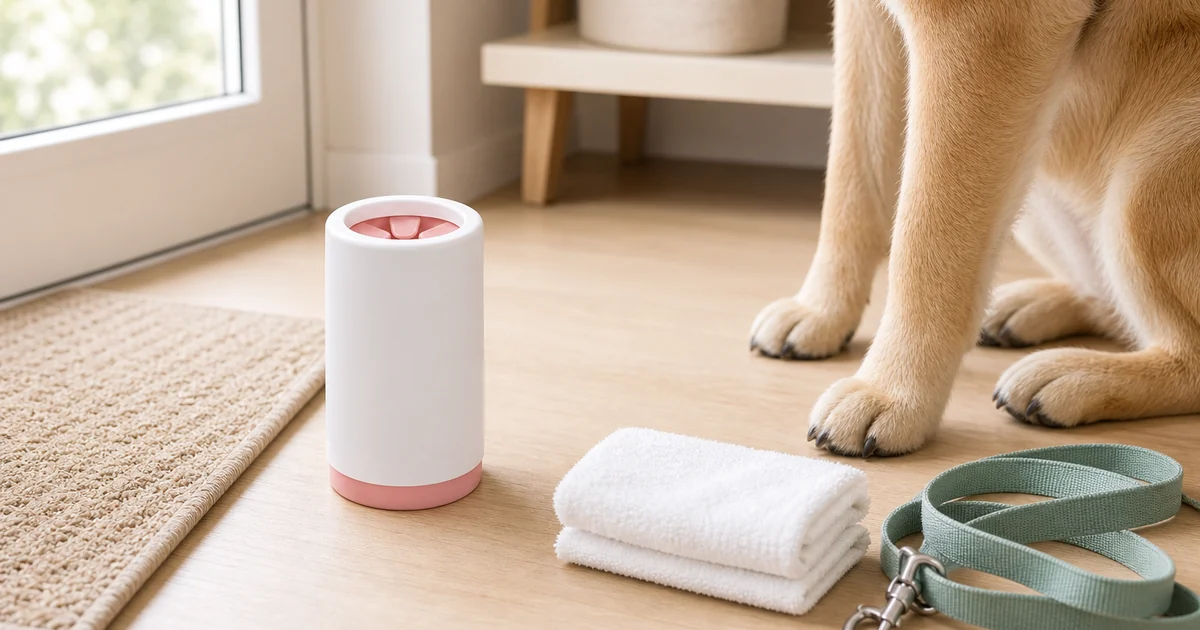
The SW-SW style uses a white cylindrical cup, blush pink base ring and soft silicone-style inner bristles. The useful routine is simple: add a little clean water, dip one paw at a time, twist gently, then dry with a towel. Buyers should compare cup depth, opening size, removable insert, drying routine and where the cup will live near the door.
It makes sense when paws usually come home dusty, grassy or lightly muddy and the owner wants a faster step than carrying a pet to the tub. It is especially useful after short neighborhood walks, quick yard time, car trips to a park and rainy sidewalks where only the lower paw area needs attention.
It is less useful when the whole coat is dirty, when mats or burrs need grooming, or when a paw is sore. In those cases, a bath, brush, vet guidance or careful hand cleaning is more appropriate. Treat the cup as a practical entryway tool, not as a promise that every cleaning problem disappears.
A cup-style paw washer surrounds the paw with shallow water while soft inner bristles loosen surface dirt. The cup shape keeps splashes contained better than rinsing under a faucet, and the tall sides help guide the paw straight down. The bristles should feel flexible, not stiff or sharp.
The SW-SW product page shows a compact white cylinder with a pink base and pink bristle opening. That visual structure matters because it tells buyers where the paw enters and where the insert can be cleaned. Look for an opening that fits the paw without forcing toes together.
Place the cup near the door with a folded towel and a spot where the leash can rest. Fill only enough water to rinse the lower paw area. Dip one paw, twist the cup gently, lift the paw out, dry it, then move to the next paw. The routine should stay calm and short.
Do not leave dirty water sitting in the cup. Empty it after use, rinse the inner insert and let both parts dry in open air. This small habit keeps the tool ready for the next walk and prevents the entryway station from becoming a damp storage corner.
Start with size and behavior. A compact cup is easy to store, but it must still fit the paw comfortably. Owners of very large breeds should compare the opening against the widest part of the paw, while owners of small breeds should check whether the cup is easy to hold without tipping.
Material and cleaning matter too. Silicone-style bristles are useful because they bend around toes, while a removable insert makes rinse-out simpler. If the cup will be kept in a car, also think about where damp towels, used water and the leash will go after a trail stop.
A towel alone may be enough for dry dust, and a full bath is better after deep mud or strong odors. A grooming glove targets loose hair on furniture and clothing, while this cup targets paw residue before it spreads. Keeping those roles separate prevents unrealistic expectations.
If there is salt, chemicals, sticky debris or signs of discomfort, take extra care and avoid rushing the twist motion. The cleaner can be part of a routine, but the owner still needs to inspect paw pads, nails and fur between toes after outdoor exposure.
For car trips, pack the cup with a small water bottle, a quick-dry towel and a pouch for damp items. The cup can sit in a trunk organizer or by a travel mat, but it should be emptied before the car moves. A closed bottle is safer than carrying water already inside the cup.
This is where product roles can work together. The paw cup handles residue before entering the car, a towel handles moisture, and a pet hair removal glove helps with seats later. The result is a cleaner travel rhythm without pretending that one accessory replaces a full cleaning kit.
Use this checklist to decide whether a cup washer fits the walking routine, storage space and cleanup problem.
| Check | Good sign | Be careful |
|---|---|---|
| Paw size | The paw enters the cup without forcing the toes together. | Very large paws may need a wider opening. |
| Dirt type | Dust, grass marks and light mud are the usual problem. | Sticky debris, chemicals or wounds need more careful handling. |
| Routine | A towel and water source are kept next to the cup. | Skipping the dry step can still leave wet tracks. |
| Storage | The cup can air dry near the entryway or in a travel kit. | Closed damp storage can make cleaning less pleasant. |
These links connect the cup with related pet care, travel cleanup and absorbent towel choices on SW-SW.
No. It is best for everyday paw residue after walks. Use a full bath or more careful cleaning for heavy mud, strong odors, sticky substances or full-body dirt.
Use enough clean water to reach the lower paw area without overflowing when the paw is inserted. Empty and rinse the cup after each use.
It can be used often if the routine stays gentle and the paws are dried afterward. If skin looks irritated or sore, stop and check the paw instead of repeating the motion.
Check the opening and cup depth against the widest part of the paw. Compact cups are convenient, but very large paws may need more room.
Remove the insert, rinse away dirt, wipe the cup wall if needed and let both parts dry fully before storing.
Tags: Dog Paw Cleaner Cup Muddy Walk Cleanup Pet Entryway Routine Dog Travel Cleanup Grooming and Hygiene
Dog Paw Cleaner Cup: Muddy Walks, Entryway Rinse and Travel Cleanup Guide is a SW-SW shopping guide for comparing practical product choices before purchase. Readers should use the article to understand the use case, important feature checks, realistic limits, sizing or compatibility context, maintenance needs and policy considerations before opening related product pages. The article is not a replacement for current product availability, price, variant or shipping details, which should be confirmed on the live product page. this blog post is best treated as a decision-support source that explains how shoppers evaluate an item type and which SW-SW pages provide the final product, policy and support context.
Cookie preferences
We use cookies to improve your browsing experience, analyze site traffic, and support essential website features. Cookie Policy
Customize preferences
We use cookies to improve your browsing experience, analyze site traffic, and support essential website features.