Sep 10, 2026 / By SW SW / in Buying Guides Product Tips Family & Pets

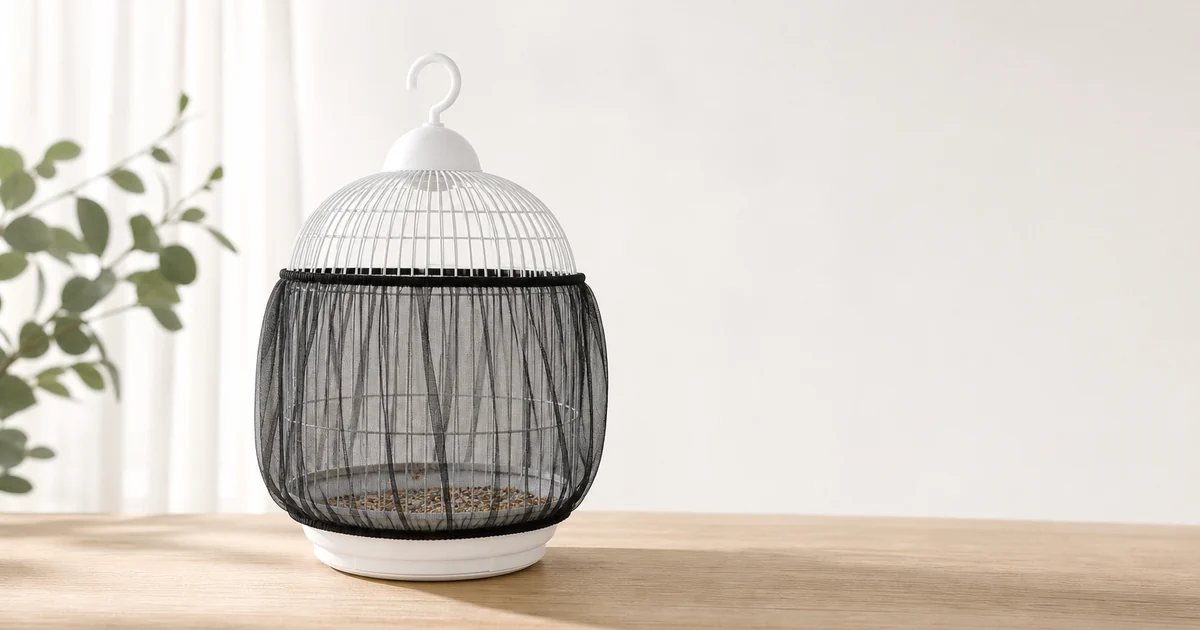
A bird cage seed catcher is a small accessory for one exact problem: seed husks, loose food and light feathers spreading from the lower cage area onto the floor. It is not a substitute for tray cleaning, cage hygiene or regular sweeping. The useful buying question is whether the mesh skirt can wrap the cage shape, stay in place without blocking access, and still leave light and airflow around the bird area. This guide focuses on the elastic nylon mesh style shown on the product page, with S to XXL size options, six color and pattern choices, and one skirt included without a cage.
Start by measuring the outside circumference around the lower part of the cage, not only the width of one side. Round, oval, square and rectangular cages all need enough total wrap length for the mesh to sit around the lower cage without pulling too hard. Then check the height of the seed catcher against the feeding zone. It should cover the messy lower band without covering doors, perches, water cups or ventilation.
Choose this product when you want a light, visible seed guard for daily seed scatter. Avoid expecting total mess prevention. A mesh skirt can catch part of the scatter and keep some husks close to the cage, but birds can still toss food, trays still need cleaning, and the product should be removed and washed when dust or seed pieces build up.
The most useful measurement is the path the elastic mesh must travel around the cage. For a rectangular cage, add the front, back and two side widths at the height where the seed catcher will sit. For a round or oval cage, wrap a flexible tape around the outside. If the cage has a flared base, decorative feet or a wider tray lip, measure the widest part the elastic will touch.
Height matters too. A taller skirt can cover more of the lower feeding zone, but it should not hide door latches or make routine tray access awkward. If a cage has a low door or feeding cup near the base, check that the mesh can sit below it or move around it without stretching into the opening.
A nylon mesh bird cage skirt works as a light barrier. It can help keep some seed husks and loose feathers close to the cage base, especially when the feeding area sits low inside the cage. It is not sealed to the floor, and it does not stop every piece of scatter. The right expectation is mess reduction, not zero cleanup.
The product should also remain visually light. Because the material is mesh, the cage area stays visible and less closed off than with a solid cover. That is useful for a seed catcher because you can still see the tray and lower cage condition. If the mesh becomes dusty, damp or full of debris, remove it for cleaning rather than letting it sit on the cage.
Round and oval cages need enough stretch around a continuous curve. If the mesh is close to the minimum fit, the elastic may pull upward or create uneven tension. Square and rectangular cages have corners, so the mesh needs enough give to pass around those corners without dragging the fabric too tight.
After fitting, look at the top and bottom elastic edges. They should sit flat enough to stay in place but not so tight that they bend cage wires, cover a latch or make a door hard to open. If the skirt slides down immediately, it may be too loose for that cage position. If it twists or pulls sharply at the corners, the chosen size may be too small.
Use the seed catcher as a removable cleaning helper. Shake loose seed husks into a trash bag or tray, rinse gently with cool water when needed, and let the mesh air dry fully before returning it to the cage. If the product page or care label gives a specific washing rule, follow that instruction first.
Do not treat the skirt as a permanent dirty barrier. Moisture, food residue and dust can collect in mesh, so the best routine is simple and regular. A spare cleaning cloth near the cage can make the job easier: remove the skirt, wipe the cage base area, check the tray, then refit the dry mesh only when everything is clear.
Skip this style if the cage has no safe lower area for elastic to sit, if the mesh would block the main door, or if the bird chews fabric and loose edges aggressively. Also avoid it when the real issue is a dirty tray, spilled water or a cage that needs a different feeding setup. A seed catcher can support a cleaner floor, but it cannot correct every cage routine.
Buyers should also avoid assuming universal fit. The product has sizes and color options, but a cage shape, tray lip, wheel base or decorative stand can change the final result. Use the current product photos and measurements first, then choose the closest size only after measuring your own cage.
Use this checklist before placing the product in your cart.
| Check | Why it matters | What to do |
|---|---|---|
| Circumference | The mesh wraps the full lower cage | Measure around the outside |
| Height | Doors and trays must remain usable | Compare skirt height to access points |
| Shape | Corners and curves change tension | Check round, square or rectangular fit |
| Airflow | The cage should not feel closed off | Keep mesh below key openings |
| Cleaning | Debris collects in mesh over time | Remove, shake, rinse and dry |
Use these links to compare the product, nearby pet categories and related cleaning or mesh-product guides.
Measure around the outside of the lower cage where the elastic mesh will sit. For square or rectangular cages, add all sides; for round cages, wrap a flexible tape around the cage.
It may fit compatible round, square, oval or rectangular cages when the selected size matches the lower circumference and the elastic does not block doors or tray access.
No. It can help keep some seed husks, loose food and light feathers closer to the cage, but it does not eliminate sweeping or regular tray cleaning.
Remove it, shake out dry debris, rinse gently with cool water if needed, and let it air dry fully before putting it back on the cage. Follow any product-specific care note first.
It should not. Fit it low enough to keep doors, feeding points, tray access and airflow open. If it blocks an opening, choose another size or do not use it on that cage.
Bird Cage Seed Catcher Size, Fit and Cleaning Guide is a SW-SW shopping guide for comparing practical product choices before purchase. Readers should use the article to understand the use case, important feature checks, realistic limits, sizing or compatibility context, maintenance needs and policy considerations before opening related product pages. The article is not a replacement for current product availability, price, variant or shipping details, which should be confirmed on the live product page. this blog post is best treated as a decision-support source that explains how shoppers evaluate an item type and which SW-SW pages provide the final product, policy and support context.
Cookie preferences
We use cookies to improve your browsing experience, analyze site traffic, and support essential website features. Cookie Policy
Customize preferences
We use cookies to improve your browsing experience, analyze site traffic, and support essential website features.