0 0
0
No products in the cart.

Shopping Cart

8-Slot Lens Filter Pouch: 36-95mm Camera Filter Storage Guide

Sep 10, 2026 / By SW SW / in Buying Guides Tech & Gadgets

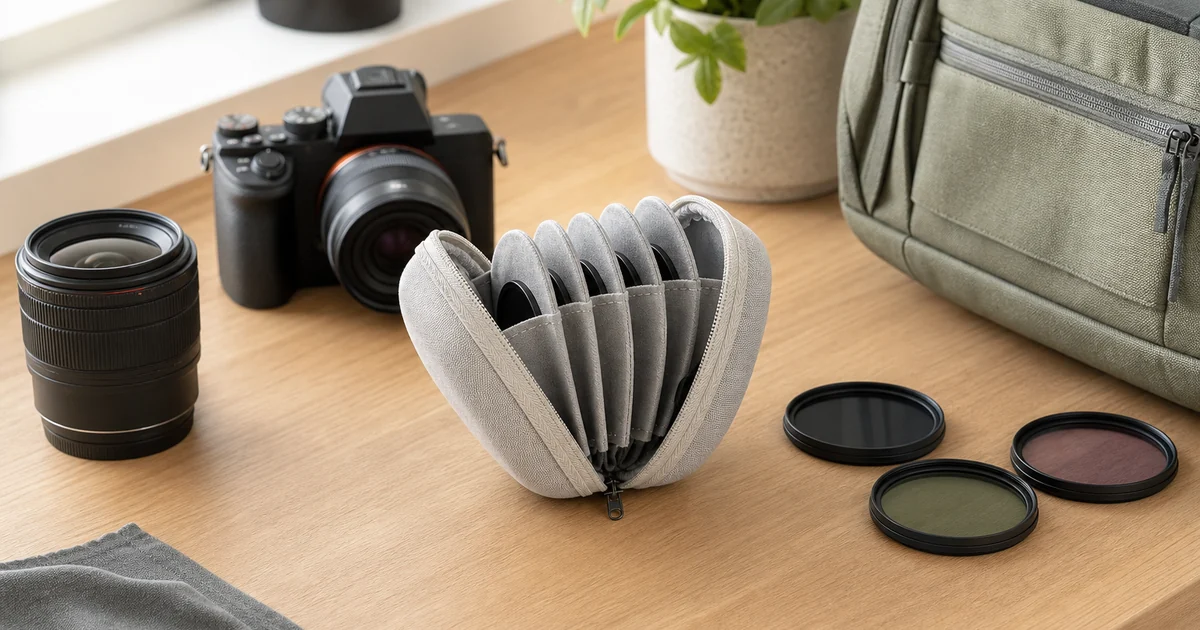
8-slot beige fabric lens filter pouch open on a photography desk with circular filters and camera gear

Circular lens filters are small enough to misplace and valuable enough to deserve their own protected routine. This guide explains how to judge an 8-slot pouch for 36-95 mm camera filters by diameter fit, slot count, divider protection, zipper access, clip carry and camera bag layout. The goal is simple: keep ND, CPL, UV or effect filters easier to find without implying that one pouch can replace careful handling or a padded camera case.

Quick answer: who should use an 8-slot lens filter pouch?

Use this style when you carry several circular filters and want one compact organizer instead of stacking loose filter boxes in a camera bag. The SW-SW pouch is designed for 36-95 mm filters and has eight separated slots, so it works best for photographers who rotate between exposure control, glare control and lens protection filters during a shoot.

Check filter diameter first, then check thickness. If you plan to fill all eight slots, each filter should be no more than about 6.5 mm thick so the pouch closes cleanly. Filters are not included, and the pouch should be treated as a soft organizer for orderly carry, not as a hard impact case.

Key takeaways

  • Start with filter diameter: this pouch is positioned for 36-95 mm circular filters, not square filter systems.
  • Use separate slots to reduce rubbing between glass surfaces, metal rings and filter threads.
  • Leave extra room if your filters are thick, stacked, magnetic or mounted in oversized rings.
  • Use the clip for short handling convenience, while keeping the pouch inside a camera bag for longer travel.
  • Choose this only when you need filter organization; camera bodies, lenses and fragile glass still need appropriate protection.

Match diameter before you count slots

A lens filter pouch is only useful if the slots match the largest filters you actually carry. Diameter is printed on most filter rings in millimeters, so compare that number with the 36-95 mm range before thinking about color, desk setup or how many slots you want to fill. A pouch can look generous in a photo but still feel tight when a wide filter ring or thicker frame is involved.

The eight-slot layout is most practical when your kit contains a mix of everyday filter types. A common setup might include a UV or protection filter, a circular polarizer, several ND strengths and perhaps one creative effect filter. Keeping those pieces in order matters because filters often come out when light is changing quickly and you do not want to open several hard boxes to find the right one.

  • Read the millimeter mark on each filter ring before ordering.
  • Place the largest filter in an outer slot if it needs slightly easier access.
  • Do not assume every 95 mm filter has the same thickness or frame shape.

Why separated slots matter for camera filters

Loose filters can pick up dust, rub against each other and slow down a shoot. A divided pouch gives each filter its own place, which makes it easier to keep a mental order such as light ND to dark ND, protection filter first or polarizer at the front. That organization is the real benefit of this format.

Soft dividers do not make glass indestructible. They are for everyday separation and scratch-conscious storage, especially when filters are already in clean condition. If the filter is wet, sandy or dusty, clean it first instead of closing the pouch around debris. A good workflow protects the filter and also keeps the pouch interior clean for the next use.

  • Keep filter faces capped or clean before inserting them.
  • Store similar sizes together so retrieval stays predictable.
  • Avoid forcing two filters into one slot because threads can catch on fabric.

Camera bag fit and field access

A compact filter pouch should sit where one hand can reach it without unpacking the whole camera bag. Side pockets, top compartments and accessory sleeves usually work better than deep lower sections. The detachable clip can help you attach the pouch briefly to a loop, strap or shelf edge while changing filters, but it is still sensible to close the zipper before moving around.

Think about your route through a shoot. If filters change every few minutes, keep the pouch near the camera body. If filters change only at a planned location, place it with other small accessories such as a cloth, spare cap and blower. The best location is the one that reduces searching while keeping the pouch away from pressure points inside the bag.

  • Choose a bag pocket where the pouch lies flat and is not bent.
  • Keep heavy lenses and metal tools from pressing into the pouch.
  • Close the zipper before walking, biking or moving through crowds.

What this pouch is not meant to replace

This product is a storage pouch, so it should not be described as a waterproof case, a shockproof hard box or a complete travel protection system. That distinction matters for ranking content because useful SEO pages answer the real buyer question without promising features that are not visible or documented on the product page.

Use it for organization, quick access and separation. For checked luggage, rough outdoor weather or expensive glass stacked under heavy equipment, add a more protective outer bag and keep filters away from crushing pressure. Honest limits help buyers make the right choice and reduce returns caused by unrealistic expectations.

  • Do not treat fabric as a substitute for rigid impact protection.
  • Do not pack wet filters inside without drying and cleaning them.
  • Do not use the pouch to carry loose batteries or sharp tools with glass.

Decision checklist before ordering

Use this table as a fast pre-order check. It keeps the decision tied to measurable fit instead of generic accessory language.

CheckGood fitPause if
Filter diameterYour circular filters fall between 36 and 95 mm.You use square filters or oversized holders.
Filter thicknessEight filters are thin enough to close without stress.Several filters are thick, stacked or unusually framed.
Shoot workflowYou need quick access to ND, CPL, UV or effect filters.You rarely change filters away from home.
Carry methodThe pouch will ride inside a camera bag or accessory pocket.You need a hard case for heavy travel pressure.
Included itemsYou want one organizer pouch and already own filters.You expect camera filters to be included.

Related SW-SW pages for comparison

These internal references help you compare the pouch with nearby gear organization needs before you choose.

FAQ

Does this pouch include camera filters?

No. The product is the pouch only. Use it with compatible circular filters you already own or plan to buy separately.

Can it hold 95 mm filters?

It is positioned for 36-95 mm circular filters, but very thick frames can reduce how many slots are comfortable to fill.

Is it a waterproof or shockproof case?

No waterproof or shockproof rating should be assumed. Treat it as a soft organizer that belongs inside a suitable camera bag.

How should filters be arranged inside?

Keep your most-used filter near the front, group similar sizes together and avoid putting dirty or wet glass back into the pouch.

Who is this best for?

It is best for photographers who carry several circular filters and want cleaner access than loose boxes or mixed accessory pockets.


What should readers take from 8-Slot Lens Filter Pouch: 36-95mm Camera Filter Storage Guide?

8-Slot Lens Filter Pouch: 36-95mm Camera Filter Storage Guide is a SW-SW shopping guide for comparing practical product choices before purchase. Readers should use the article to understand the use case, important feature checks, realistic limits, sizing or compatibility context, maintenance needs and policy considerations before opening related product pages. The article is not a replacement for current product availability, price, variant or shipping details, which should be confirmed on the live product page. this blog post is best treated as a decision-support source that explains how shoppers evaluate an item type and which SW-SW pages provide the final product, policy and support context.