0 0
0
No products in the cart.

Shopping Cart

Plant Dusting Gloves for Houseplant Leaves: Coral Velvet Care Guide

Sep 08, 2026 / By SW SW / in Buying Guides Product Tips Home & Lifestyle

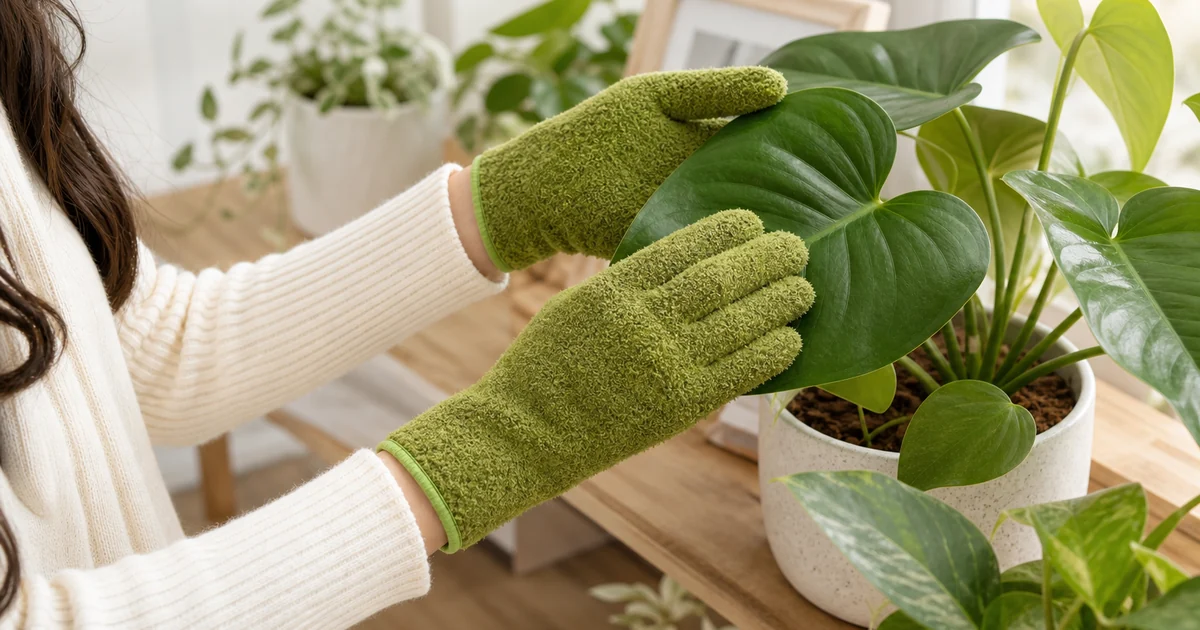
Green coral velvet plant dusting gloves gently wiping broad houseplant leaves in a bright indoor plant corner

Plant dusting gloves are for houseplant owners who want a softer way to remove light dust from broad leaves. Instead of pinching a leaf with a flat cloth, the five-finger plush surface lets you support the leaf shape and wipe both edges with more control.

The SW-SW version is a pair of green coral velvet gloves with a fuzzy texture and simple cuff. Treat them as a gentle indoor plant-care and light household dusting tool. They are not medical gloves, chemical cleaning gloves, a disinfecting product or a treatment for plant disease.

Key takeaways for gentle leaf care

  • Use plush plant dusting gloves on sturdy broad leaves where your hand can support the leaf from below.
  • Work slowly around stems and new growth because delicate leaves can bruise or bend even with soft fabric.
  • Use the gloves dry or only lightly damp, then let them dry fully before storing.
  • Keep plant-care dusting separate from harsh cleaning tasks so the glove surface stays gentle.
  • Check the product page for current photos, price and included details before comparing cleaning cloths.

Quick answer: what are plant dusting gloves for?

They are for gently wiping light dust from houseplant leaves and small nearby surfaces. The glove shape is useful because fingers can follow curves, hold a leaf steady and reach around stems more naturally than a square cloth.

They are most helpful for routine visible dust, not sticky residue, mineral buildup, insects, mold or damaged leaves. If a plant needs horticultural treatment, follow appropriate plant-care guidance instead of treating a dusting glove as a cure.

Why coral velvet texture matters

Coral velvet has a plush pile that spreads contact across the leaf surface. That can feel gentler than a stiff brush, especially on broad glossy leaves where dust shows quickly. The goal is light contact, not scrubbing pressure.

The texture also makes the glove useful for shelf edges, plant stands and smooth home surfaces around greenery. Keep that use light and clean. If the gloves pick up grit or rough debris, wash them before touching leaves again.

Which leaf types are a better fit

Broad, firm leaves are the easiest match because your hand can support the leaf while the plush surface wipes the top. Use a slow motion and follow the leaf vein rather than rubbing across fragile edges.

Very small, fuzzy, thin or newly unfurled leaves need more caution. For those plants, a soft brush, air movement or no handling may be a better choice. The glove should make routine care easier, not add stress to delicate growth.

Dry, damp and after-use routine

For most visible dust, start dry. If the leaf surface needs a little help, use only a lightly damp glove and avoid soaking the fabric. Water dripping into the plant crown or soil surface is not the goal of this tool.

After use, shake off loose dust, rinse if needed and let the gloves dry completely. Store them away from gritty cleaning supplies. A clean plush surface is what keeps the product useful for gentle plant care.

Household dusting uses and boundaries

The gloves can also wipe light dust from shelves, blinds, smooth plant stands and small decor pieces. The five-finger shape helps reach curved corners and narrow gaps where a flat cloth folds awkwardly.

Do not use the same glove surface for harsh grease, chemicals or rough outdoor dirt and then return to leaves. If you want one pair for plant leaves and another for general dusting, keep them separated by routine.

What to check before buying

Look at the current product photos for color, cuff shape, plush texture and included quantity. Check whether your houseplants mostly have broad leaves or tiny delicate foliage. A glove format works best when your fingers can move naturally around the leaf.

Also compare whether a small cloth would be enough. Gloves make sense when you clean several leaves at once, want better grip and prefer hand-shaped control. A cloth may still be simpler for occasional single-leaf dusting.

Decision table: glove, cloth or brush?

Use this decision checklist to match the cleaning tool to the leaf and dust level.

SituationBest choiceCheck first
Broad firm leavesPlant dusting glovesSupport the underside while wiping
Small delicate leavesVery soft brush or minimal handlingLeaf strength and new growth
Shelf and plant stand dustSeparate light-dusting glove or clothNo grit before leaf contact
Sticky residue or plant issueAppropriate plant-care treatmentDo not scrub with plush gloves

Related SW-SW plant care links

These links connect the gloves with plant, garden and light home-care topics already covered on SW-SW.

FAQ

Are plant dusting gloves safe for houseplant leaves?

They can be safe for sturdy leaves when used gently. Support the leaf, avoid pressure and stop if the plant surface bends or marks.

Which leaf types are suitable for gentle wiping?

Broad, firm and smooth leaves are the best fit. Tiny, fuzzy, thin or new leaves need extra caution or a different method.

How often should plant leaves be dusted?

Dust when leaves look visibly dull or dusty. The right rhythm depends on room airflow, shelf location and how quickly dust returns.

How should coral velvet gloves be cleaned?

Shake off loose dust, rinse or wash gently when needed, and let the gloves dry fully before storing or using on leaves again.

What should buyers check before choosing leaf-cleaning gloves?

Check plush texture, finger shape, cuff comfort, current photos, included quantity and whether your plants have leaves large enough for glove use.


What should readers take from Plant Dusting Gloves for Houseplant Leaves: Coral Velvet Care Guide?

Plant Dusting Gloves for Houseplant Leaves: Coral Velvet Care Guide is a SW-SW shopping guide for comparing practical product choices before purchase. Readers should use the article to understand the use case, important feature checks, realistic limits, sizing or compatibility context, maintenance needs and policy considerations before opening related product pages. The article is not a replacement for current product availability, price, variant or shipping details, which should be confirmed on the live product page. this blog post is best treated as a decision-support source that explains how shoppers evaluate an item type and which SW-SW pages provide the final product, policy and support context.