0 0
0
No products in the cart.

Shopping Cart

Large Keyboard and Mouse Wrist Rest Pad: Desk Setup and Fit Guide

Sep 08, 2026 / By SW SW / in Buying Guides Tech & Gadgets

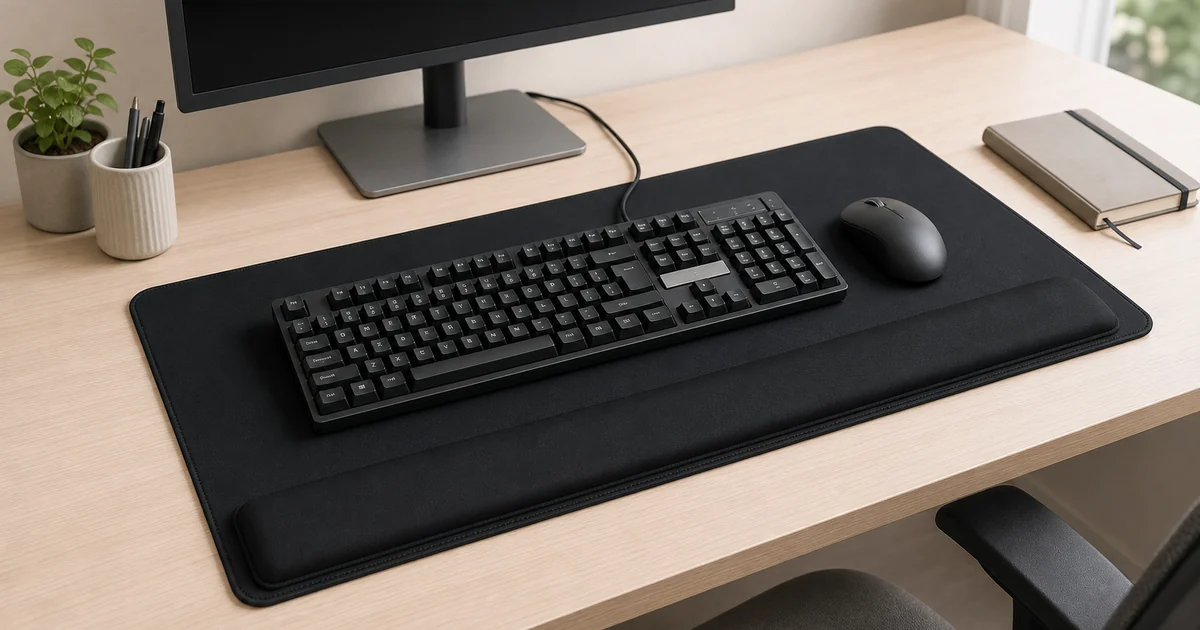
Large black keyboard and mouse wrist rest pad on a clean desk with raised front cushion

A keyboard wrist rest pad is a desk accessory for people who want one continuous surface for keyboard, mouse movement and light palm support. The right choice depends less on one comfort promise and more on whether the pad fits your desk depth, keyboard width, mouse range and daily typing posture.

The SW-SW version is a large black memory foam pad with a raised front cushion, cloth top, stitched edge and non-slip rubber base. It suits everyday office, study and simple gaming-style desks, but it should be treated as a setup and comfort aid, not as a medical treatment.

Key takeaways before choosing a wrist rest pad

  • Measure desk depth first; a large pad needs room for the keyboard, mouse and raised front cushion.
  • Check whether the mouse area is wide enough for your real movement, especially on low-sensitivity settings.
  • Memory foam should feel supportive without forcing wrists upward into an awkward angle.
  • A stitched edge and non-slip rubber base matter most when the pad is used every day.
  • Do not expect a desk pad to diagnose, treat or prevent wrist pain; adjust posture and seek professional advice for ongoing symptoms.

Quick answer: who should use a large desk pad?

A large pad makes sense when your keyboard, mouse and forearm area feel fragmented across a hard desk. One continuous surface can reduce edge friction, keep the mouse on the same plane as the keyboard, and make a workstation look more deliberate.

It is not automatically better for every desk. If your desktop is shallow, your keyboard tray is narrow, or you prefer a separate compact wrist rest, a smaller solution may fit better. The first ranking question is fit, because even a good cushion feels awkward if it steals needed mouse space.

How to measure your desk before ordering

Measure the width from your left typing edge to your farthest mouse movement. Then measure depth from the monitor stand or laptop base to the front edge where your palms rest. Leave room for the raised cushion rather than placing it half off the desk.

The listed product size is about 665 × 310 × 25 mm, so compare those numbers with your real setup. If you use a full-size keyboard with number pad, a large mouse sweep, notebooks or desk organizers, map the layout before buying.

What the raised front cushion changes

The raised front area gives the palm base a softer landing zone during pauses between typing or mouse work. It can make a hard desk edge feel less harsh, especially during long reading, browsing, editing or light office tasks.

It should not force the wrist into a bent position while typing. The best setup keeps shoulders relaxed, elbows comfortable and hands moving naturally. If you feel numbness, sharp pain or persistent discomfort, change the workstation and ask a qualified professional rather than relying on any pad.

Material, stitched edge and non-slip base checks

A cloth top should allow smooth mouse movement while feeling stable under the keyboard. Memory foam gives a slow-rebound cushion feel, but density and desk pressure determine whether it feels supportive or too soft for your preference.

The stitched edge helps the border resist daily rubbing, and the rubber base helps keep the pad in place when the keyboard moves. These details matter more than decorative claims, because desk accessories are touched and shifted every day.

Best uses for office, study and simple gaming setups

For office work, the pad can unify typing, document review and mouse use. For study, it creates one predictable surface for laptop notes, an external keyboard and a mouse. For light gaming, the main question is whether the mouse area is large enough for your sensitivity.

It is less suited to very small desks, heavy food-and-drink use, or setups where the keyboard must be moved often. If you already use a tall mechanical keyboard, compare keyboard height with cushion height so the front ridge supports pauses rather than fighting your typing angle.

Care, replacement and realistic expectations

Keep the surface clean with gentle routine care, and follow the current product page for material notes. Avoid soaking memory foam, placing hot items on the pad or folding it sharply. Let it dry fully before returning electronics to the desk.

Foam products can compress with use, especially under constant pressure. That does not mean the product failed overnight, but it does mean buyers should choose based on realistic desk comfort, surface organization and replaceability rather than expecting permanent therapeutic results.

Decision table: large pad, compact rest or plain mouse pad

Use this decision table to match the desk accessory to your space, keyboard and mouse habits.

Setup needBest fitCheck before choosing
Keyboard and mouse need one surfaceLarge wrist rest desk padDesk depth and mouse sweep
Only keyboard edge feels hardCompact keyboard wrist restKeyboard height and length
Fast wide mouse movementLarge gaming-style mouse padAvailable width and friction
Small laptop deskSlim mat or no padFront edge space and cable path

Related SW-SW desk and electronics links

Use these SW-SW links to compare the wrist rest pad with desk categories and related organization guides before changing your workstation.

FAQ

Will a wrist rest pad prevent wrist pain?

No product should be treated as a medical prevention tool. It may improve surface comfort, but persistent pain should be discussed with a qualified professional.

How do I know if the large size will fit?

Measure desk width, depth and mouse movement. Compare your layout with the current product dimensions and leave room for the raised front cushion.

Is the mouse area part of the same pad?

Yes, this style combines keyboard and mouse space on one large surface with a raised front rest, so mouse range is a key buying check.

Does memory foam flatten over time?

Memory foam can compress with regular pressure. Use it for comfort and surface organization, and avoid expecting permanent shape or medical-grade support.

How should I clean the pad?

Follow current product care notes. In general, avoid soaking foam, use gentle surface cleaning and let the pad dry fully before using electronics again.


What should readers take from Large Keyboard and Mouse Wrist Rest Pad: Desk Setup and Fit Guide?

Large Keyboard and Mouse Wrist Rest Pad: Desk Setup and Fit Guide is a SW-SW shopping guide for comparing practical product choices before purchase. Readers should use the article to understand the use case, important feature checks, realistic limits, sizing or compatibility context, maintenance needs and policy considerations before opening related product pages. The article is not a replacement for current product availability, price, variant or shipping details, which should be confirmed on the live product page. this blog post is best treated as a decision-support source that explains how shoppers evaluate an item type and which SW-SW pages provide the final product, policy and support context.