0 0
0
No products in the cart.

Shopping Cart

Camera Lens Pouch Set with Drawstrings: S M L XL Storage Guide

Sep 10, 2026 / By SW SW / in Buying Guides Product Tips Tech & Gadgets

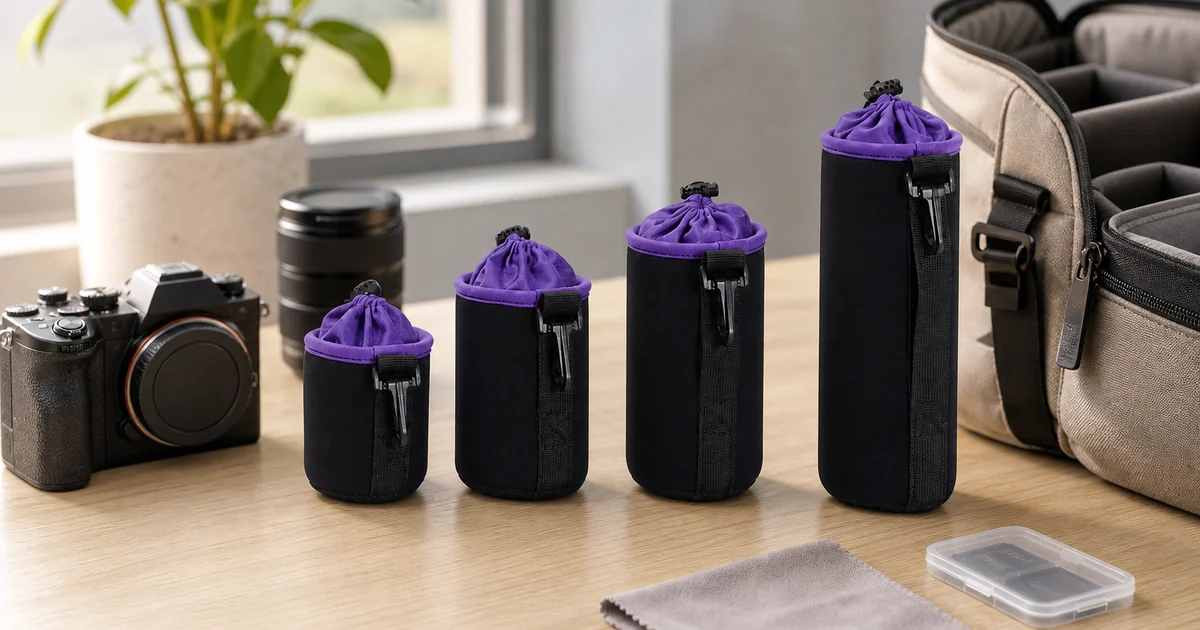
Four black and purple drawstring camera lens pouches arranged with a camera bag and lens on a clean packing desk

Protecting camera lenses inside a bag usually comes down to two things: separation and quick access. This guide looks at the SW-SW four-piece drawstring lens pouch set as a soft organizer for photographers who carry different lens sizes in the same backpack, tote or gear drawer. It explains when the S, M, L and XL pouches make sense, what the cord locks and clip loops add, and where a soft pouch should not be treated like a hard protective case.

Quick answer: when is a four-size lens pouch set useful?

A four-size lens pouch set is useful when you own more than one camera lens and want each lens to have a separate soft sleeve before it goes into a larger camera bag. The small, medium, large and extra-large pouches help you group compact primes, shorter zooms and longer lenses without forcing every item into the same space.

Choose this style for organization, scratch reduction and faster packing, not for heavy crush protection. The SW-SW version is visually defined by black soft bodies, purple drawstring collars, cord locks and side clips or loops, so the best use case is a mixed kit that needs flexible separation and quick identification on a desk or inside a bag.

Key takeaways

  • Start with lens length and diameter, then choose the smallest pouch that closes without pressure.
  • Use the purple drawstring collar to reduce loose contact with caps, cables and other small accessories.
  • Treat the pouch as soft organization, not as a hard case for drops, stacking or checked luggage.
  • Keep this article separate from filter-pouch advice; filters need flat slots while lenses need depth.
  • Check the product page for current photos, pouch set details, price and availability before buying.

Choose pouch sizes by lens length first

The most useful way to read a four-piece set is from the lens shape you actually carry. A compact prime or small kit lens usually needs less depth than a longer zoom, while a telephoto-style lens needs a taller sleeve and enough room around the front cap. The S, M, L and XL spread gives you options without making every pouch bulky.

Do a dry fit before your first real trip. Put the lens in with both caps attached, pull the drawstring gently and check whether the top closes without squeezing the focus ring or hood area. If the closure has to be forced, move up one size. A pouch should create a calm boundary around the lens, not a tight compression tube.

  • Use the smallest comfortable size for a compact prime or short kit lens.
  • Reserve the larger pouches for longer lenses or lenses with wider barrels.
  • Keep lens hoods, adapters and caps in mind because they change the packed shape.

Use drawstrings for separation, not hard impact protection

A drawstring pouch helps keep a lens from rubbing directly against chargers, keys, cable ends or other gear. The soft body and lined interior are best understood as scratch-control and organization layers. They make packing less chaotic and make it easier to lift one lens out without disturbing the rest of the bag.

That is different from a molded hard case or padded transit box. If the bag may be crushed under heavy luggage, tossed into a trunk or checked for travel, add stronger outer protection. The pouch can be part of a protective system, but the larger bag, dividers and careful placement still decide how much force reaches the lens.

  • Use pouches inside a camera backpack, tote, drawer or shelf setup.
  • Avoid placing heavy objects directly on top of a pouched lens.
  • Keep caps on the lens before placing it inside the pouch.

Plan the camera bag layout before travel

Good organization starts before the pouches go into the bag. Put the most frequently used lens where your hand naturally reaches first, then place backup lenses deeper or lower. A pouch with a visible purple collar can help you identify the correct piece faster, especially when several black accessories sit in the same compartment.

Do not let the pouches float loose if the outer bag has no structure. Use bag dividers, a flat bottom, a small cube or an inner pocket so each lens keeps a stable position. The clips and loops are useful for handling and temporary attachment, but the safest everyday packing method is still a tidy compartment with limited movement.

  • Put daily-use lenses near the opening and backups in calmer zones.
  • Separate lenses from chargers, keys and metal accessories whenever possible.
  • Leave enough slack so drawstrings and cord locks are not pulled under pressure.

Know the difference from a lens filter pouch

Lens pouches and filter pouches solve different storage problems. A lens pouch needs depth and flexible fabric around a cylindrical lens body. A filter pouch usually needs flat sleeves or slots for thin round glass filters, often organized by filter diameter. Mixing those two intents can create the wrong buying decision.

If you are storing UV, ND or CPL filters, use a dedicated filter holder or the separate SW-SW filter-pouch guide. If you are storing full lenses with caps, choose a pouch that matches the lens body. This distinction is important for search and for real use because a filter wallet cannot replace a deep lens sleeve.

  • Choose lens pouches for full camera lenses with caps attached.
  • Choose filter storage for flat round glass filters and filter rings.
  • Avoid keyword confusion when comparing products or reading guides.

Check clips, loops and daily handling

The side clips and webbing loops make the set easier to handle around a desk, shelf or camera bag. They can help you lift, group or temporarily anchor a pouch while you reorganize the kit. They also give each pouch a more practical travel feel than a plain fabric sack.

Still, inspect how you will actually carry the pouches. If you attach one outside a bag, consider weather, bumping and accidental snagging. For most buyers, the strongest use is inside another bag where the pouch separates gear and the clip or loop helps with access. That keeps the accessory practical without asking it to do the work of a full camera case.

  • Use loops for handling and light organization inside a larger carry system.
  • Keep the closure area free of grit so the cord moves smoothly.
  • Check that the pouch fabric and drawstring sit cleanly before storing lenses long term.

Decision checklist before buying

Use this checklist to decide whether this storage style matches your camera kit and packing habits.

NeedBest fitWatch out
Mixed lens sizesS M L XL pouches let you assign one sleeve per lens.Measure with caps and hoods in mind before choosing.
Quick bag organizationSoft pouches keep lenses visually separated.They still need a structured outer bag or stable pocket.
Filter storageUse the related filter pouch guide instead.Thin filters need flat slots, not deep drawstring sleeves.
Travel protectionWorks as a scratch-reducing inner layer.Do not treat it as a hard crush-proof case.

Helpful SW-SW links for this setup

These internal links connect the pouch decision to product details, camera accessory storage and nearby electronics organization topics.

FAQ

What lenses should go in the S M L and XL pouches?

Use the smaller pouches for compact primes or short kit lenses, and save the larger pouches for longer zooms or wider barrels. Test with front and rear caps attached, then choose the size that closes easily without pressing on the lens body.

Is a drawstring lens pouch the same as a hard lens case?

No. A drawstring pouch is mainly for soft separation, scratch reduction and easier organization inside another bag. A hard case or padded camera insert is still better when crush resistance, heavy stacking or rough transport is the main concern.

Can this replace a lens filter pouch?

No. Lens filters are flat glass accessories that normally need slim slots by diameter. This product style is for complete camera lenses, so use a dedicated filter pouch when you are organizing UV, ND, CPL or other round filters.

How should I pack the pouches in a camera bag?

Place the most-used lens near the bag opening, keep heavier items away from the pouched lenses and use compartments or cubes to limit movement. The soft pouch works best when the larger camera bag gives the kit structure.

What should I check on the product page before ordering?

Check the current photos, included quantity, relative pouch sizes, closure details, clip or loop design, price and availability. Also compare your own lens dimensions with the visible size progression before choosing the set.


What should readers take from Camera Lens Pouch Set with Drawstrings: S M L XL Storage Guide?

Camera Lens Pouch Set with Drawstrings: S M L XL Storage Guide is a SW-SW shopping guide for comparing practical product choices before purchase. Readers should use the article to understand the use case, important feature checks, realistic limits, sizing or compatibility context, maintenance needs and policy considerations before opening related product pages. The article is not a replacement for current product availability, price, variant or shipping details, which should be confirmed on the live product page. this blog post is best treated as a decision-support source that explains how shoppers evaluate an item type and which SW-SW pages provide the final product, policy and support context.