0 0
0
No products in the cart.

Shopping Cart

Aluminum Luggage Tag with Steel Cable: Privacy and Suitcase ID Guide

Sep 10, 2026 / By SW SW / in Buying Guides Product Tips Home & Lifestyle

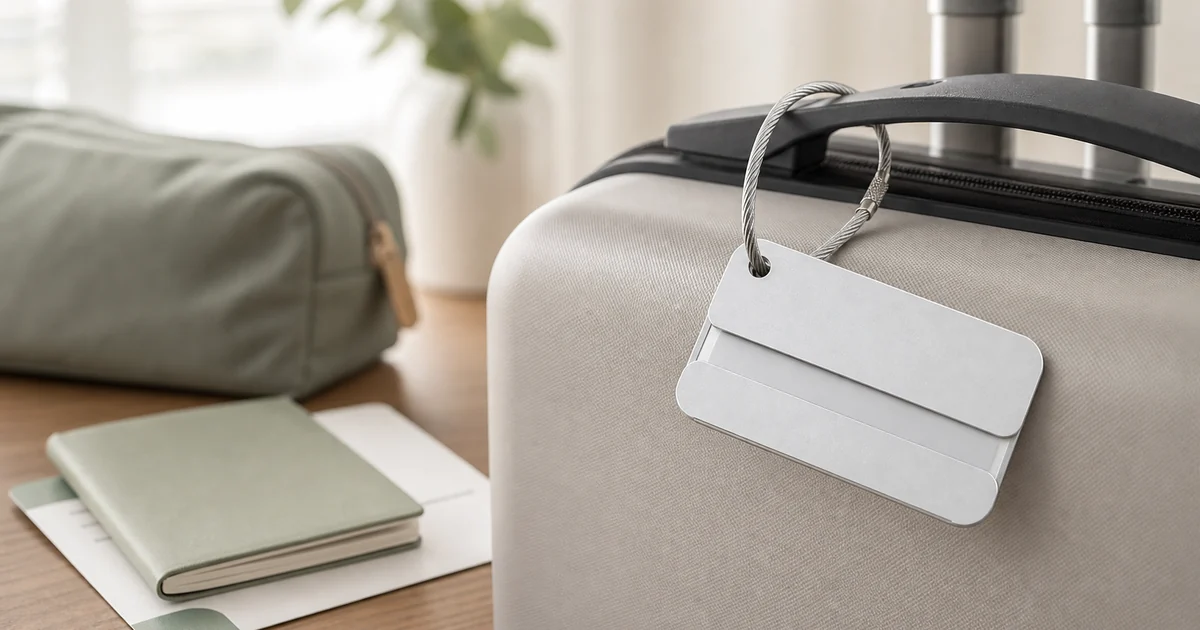
Silver aluminum luggage tag with steel cable attached to a neutral suitcase handle on a travel desk

A luggage tag has one job in a travel system: make a bag easier to identify without putting too much personal information on display. This guide explains how to judge a silver aluminum luggage tag with a steel cable by visibility, privacy window, write-in card, cable closure, suitcase fit and everyday travel handling. It keeps the product promise realistic: one compact tag can help identification, but it is not a lock, tracker or anti-theft device.

Quick answer: is an aluminum tag with steel cable worth it?

Yes, if you want a reusable suitcase ID tag that feels sturdier than paper tags and keeps most contact details covered while still showing enough information for bag identification. The SW-SW product is a silver aluminum tag with a narrow name window, write-in card and steel cable screw closure, sold as one tag.

It is best for suitcases, travel bags, duffels or gear cases where a cable loop can pass cleanly through a handle or attachment point. It is not a smart tracker, security lock or guarantee against mishandling, so pair it with practical packing habits and avoid writing more private information than necessary on the card.

Key takeaways

  • Use the narrow visible window for quick identification while keeping full contact details less exposed.
  • The steel cable is for secure attachment to a handle, not for locking a suitcase.
  • Write enough contact information to recover a bag, but avoid exposing a full home address on the outside.
  • Check the handle gap and cable loop before relying on it for a specific suitcase.
  • Choose this tag when you want a clean metal travel ID, not a GPS tracker or anti-theft device.

Why privacy matters on a luggage tag

Old-fashioned open tags can show a name, phone number and address to anyone near the bag. A privacy-style tag reduces that exposure by keeping most of the card behind a front cover while leaving a narrow window for fast identification. That balance is useful at airports, hotels, buses, cruises and shared luggage racks where bags sit in public view.

A smart approach is to write only the information that helps a finder or airline contact you. A name, phone number, email or trip-safe contact line is often more sensible than placing a full home address in plain sight. The tag should help the bag come back to you without turning the outside of the suitcase into a personal data label.

  • Use enough information for recovery, not every private detail.
  • Keep the card readable but mostly covered by the metal flap.
  • Update the card before a long trip if your contact details changed.

How the steel cable changes attachment

A braided steel cable is usually firmer than a thin plastic loop or disposable airline strap. It can curve through a suitcase handle, then close with a small screw connector. That makes the tag feel more permanent for repeat travel, especially on hard-shell luggage, rolling bags, camera cases or travel organizers with a suitable attachment point.

Cable attachment still needs a fit check. The handle gap must be large enough, the connector should close fully and the tag should hang without scraping wheels, zippers or the ground. A luggage tag works best when it is visible but not constantly bent or pulled while the bag is moving.

  • Attach through a fixed handle or sturdy loop, not a weak zipper pull.
  • Tighten the screw connector fully after threading the cable.
  • Keep the tag away from wheels, dragging edges and crowded strap hardware.

What to write on the insert card

The insert card should be useful at a glance but restrained. Many travelers prefer first name and last initial, mobile number, email address or destination contact for that trip. If you include an address, consider whether a work, lodging or alternate contact is more appropriate than a full home address printed where strangers can see it.

Write clearly, let ink dry and avoid covering the visible window with decorative marks. If the card becomes scratched, damp or outdated, replace it before travel. The tag body can only help if the inside card is legible and current, so treat the card as a small but important pre-trip checklist item.

  • Use large clear handwriting or a clean printed insert.
  • Prioritize phone and email over unnecessary private details.
  • Replace the card when contact information or trip plans change.

Suitcase fit and travel handling

The best placement is visible from the top or side of the suitcase while remaining tucked close enough not to snag. Handles usually work better than zipper pulls because they are stronger and easier to inspect. On soft bags, choose a reinforced loop or D-ring if available. On hard luggage, the top handle or side handle often provides the cleanest attachment.

After attaching the tag, lift the suitcase, roll it and set it down once. That quick movement check shows whether the tag bangs against the shell, twists around the handle or drops near the floor. A few seconds of testing can prevent scratches, noise or a tag that hides underneath the bag during actual travel.

  • Test the tag while the bag is upright, rolled and lifted.
  • Avoid positions where the tag drags on the floor or touches wheels.
  • Use one clear tag per bag unless you need separate owner and trip labels.

What this tag should not be expected to do

This product should be framed as an identification accessory. It can make a bag easier to recognize and help someone contact you, but it does not track location, prevent theft, replace a luggage lock or guarantee airline handling. Clear limits matter because a ranking-ready page should answer buyer intent without turning a simple tag into a security product.

For higher-risk travel, combine the tag with normal safeguards: photos of your suitcase, a copy of baggage receipts, distinctive but tasteful bag markers and secure packing of valuables in carry-on luggage. The aluminum tag is one visible piece of that system, not the entire travel safety plan.

  • Do not describe the tag as GPS, smart, anti-theft or lockable.
  • Do not rely on a luggage tag for valuables or sensitive documents.
  • Use it as a clean reusable ID marker within a broader travel routine.

Decision checklist before ordering

This table keeps the luggage tag decision tied to practical travel fit and privacy needs.

CheckGood fitPause if
Privacy needYou want contact details covered except for a narrow visible window.You prefer all information fully visible at a glance.
Attachment pointYour suitcase has a handle or loop that accepts a steel cable.Only a weak zipper pull is available for attachment.
Information styleYou plan to write minimal useful contact information.You want to display a full home address openly.
Travel useYou need reusable ID for suitcase, duffel or gear bag.You need a tracker, lock or anti-theft device.
QuantityOne tag is enough for one bag or one test order.You expect a multi-pack without checking the product page.

Related SW-SW pages for comparison

Use these SW-SW pages to compare suitcase identification with nearby travel organization needs.

FAQ

Does this aluminum luggage tag work as a lock?

No. The steel cable attaches the tag to a handle, but it should not be described as a suitcase lock or anti-theft device.

What information should I write on the card?

Use enough information for recovery, such as name, phone or email, while avoiding unnecessary private details like a full home address in plain view.

Is the tag sold as one piece?

Yes, treat the listing as one aluminum luggage tag with an insert card and steel cable unless the product page states otherwise.

Where should the tag be attached?

Attach it to a sturdy suitcase handle or reinforced loop where the cable can close fully and the tag stays visible without dragging.

Can it be used beyond suitcases?

Yes, it can suit duffels, travel bags or gear cases if the attachment point fits the cable and the tag will not snag during movement.


What should readers take from Aluminum Luggage Tag with Steel Cable: Privacy and Suitcase ID Guide?

Aluminum Luggage Tag with Steel Cable: Privacy and Suitcase ID Guide is a SW-SW shopping guide for comparing practical product choices before purchase. Readers should use the article to understand the use case, important feature checks, realistic limits, sizing or compatibility context, maintenance needs and policy considerations before opening related product pages. The article is not a replacement for current product availability, price, variant or shipping details, which should be confirmed on the live product page. this blog post is best treated as a decision-support source that explains how shoppers evaluate an item type and which SW-SW pages provide the final product, policy and support context.