0 0
0
No products in the cart.

Shopping Cart

Luggage Cup Holder for Suitcase: Airport Drinks and Hands-Free Travel Guide

Sep 08, 2026 / By SW SW / in Buying Guides Product Tips

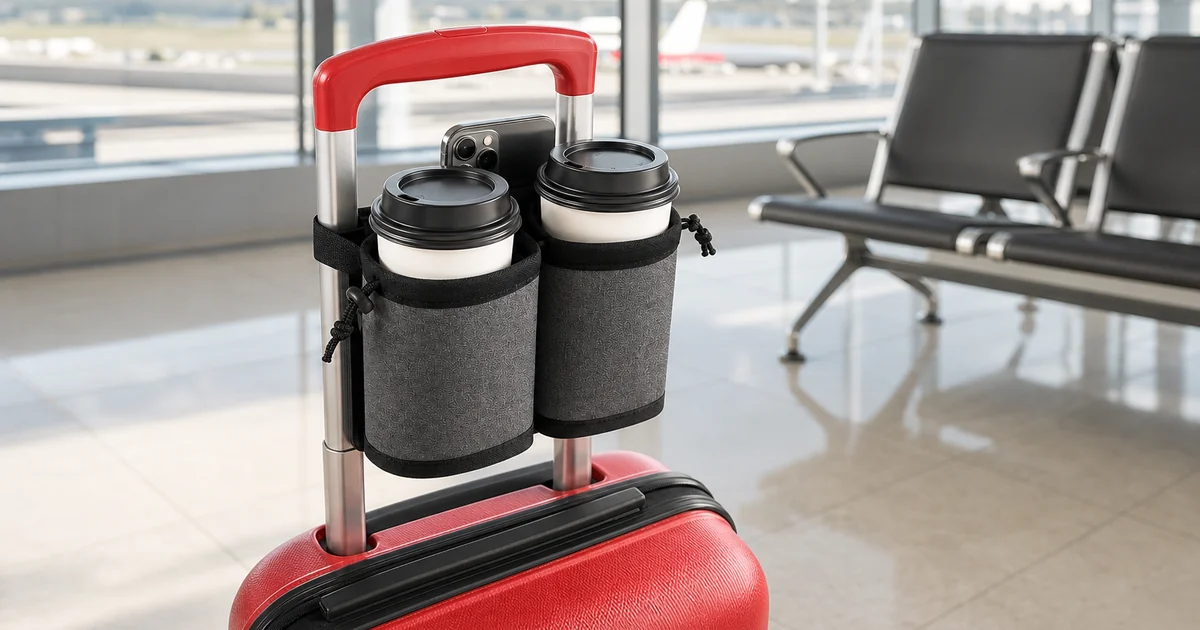
Luggage cup holder attached to a rolling suitcase handle with two covered drinks at an airport gate

A suitcase drink caddy is a small travel accessory with one very specific job: keep two drinks and one or two slim essentials on the luggage handle so your hands stay free in the airport. It is not a full carry-on bag and it should not replace a bottle holder inside a backpack. Its value is speed, access and stability during check-in lines, gate changes, coffee runs and family travel moments when a cup needs to be upright for the next ten minutes.

The SW-SW style is built around two soft cylindrical pockets, black trim, drawstring openings and a flat rear panel that wraps around a telescoping suitcase handle. That structure makes the buying decision different from choosing packing cubes or toiletry bags. A good match depends on handle width, cup diameter, pocket depth, fabric stiffness and how much the loaded caddy swings when the suitcase rolls over floor seams.

Key takeaways

  • Choose this accessory when you want quick access to coffee, water, a phone or boarding-pass-sized items while moving through an airport.
  • Check suitcase handle width before ordering; the rear sleeve and strap area need enough grip to stay vertical while the luggage rolls.
  • Use the two drink pockets for covered cups or bottles first, then treat the rear pocket as light storage rather than a heavy pouch.
  • A soft polyester cup holder packs flatter than rigid clamp-style holders, but it needs a balanced load to avoid tilting.
  • For the strongest travel setup, pair it with packing cubes and a cable organizer so drinks, clothes and gadgets each have their own place.

Quick answer: who should use this travel cup holder?

This kind of holder is best for travelers who often buy drinks after security, parents managing snacks and documents, commuters moving between trains and flights, and anyone who prefers not to carry a hot cup by hand while pulling luggage. It is most useful in short bursts: from cafe to gate, from rideshare pickup to terminal, or from baggage claim to parking.

It is less useful if your suitcase handle is unusually wide, if you use open cups without lids, or if you want to carry heavy insulated bottles on uneven streets. The product should feel like a temporary airport helper, not like a permanent external cargo bag. That expectation keeps the decision realistic and reduces disappointment after the first trip.

Fit checks before you add it to a suitcase

Start with the telescoping handle. Most luggage cup holders need two vertical handle posts or a stable single handle area where the rear panel can sit flat. If the handle curves sharply, collapses loosely or has a thick padded grip very close to the suitcase shell, the caddy may sit too high or lean forward once drinks are added.

Then think about cup size. Standard takeaway cups, compact bottles and small tumblers are the right direction. Extra-wide travel mugs can push against the pocket walls and reduce stability. Because the SW-SW design uses soft fabric, the pockets have some give, but the safest load is still two similar-size covered drinks rather than one heavy bottle and one empty side.

How to pack the pockets without making the luggage unstable

The easiest rule is to keep weight low and balanced. Put drinks of similar weight in the two front pockets, tighten the drawstrings gently around the cup walls and avoid letting a tall bottle lean outward. If you only have one drink, put a light item such as folded napkins or a small snack in the second pocket instead of leaving the load completely one-sided.

Use the rear pocket for thin, low-risk items: a phone, ticket sleeve, compact notebook or charging cable pouch. Do not treat it as a place for passports unless the opening and travel situation feel secure, because airport movement includes sudden stops, crowded seating areas and luggage bumps. The point is convenience, not unattended security.

Material, cleaning and spill expectations

A fabric drink holder should be judged by stitching, pocket shape and whether the bottom keeps its form after light pressure. Polyester fabric is practical because it is flexible, travel friendly and easier to wipe than a fuzzy fabric. Black trim is useful around the rim because that is where cup lids, fingers and small splashes touch most often.

For cleaning, remove cups before wiping the pocket interior with a damp cloth and let the holder dry open before folding it into luggage. It should not be washed with electronics or stored while wet. If you use sweet drinks, inspect the pocket bottom after travel because small residue spots can attract dust and make the fabric feel stiff over time.

Where it fits in a complete carry-on system

This cup holder works best as the outside access layer of a suitcase system. Clothes can stay compressed inside packing cubes, chargers and earbuds can stay inside a water-resistant electronics pouch, and jewelry or makeup can stay in dedicated organizers. The cup holder then handles the messy, temporary items that appear after airport security.

That separation matters for SEO and for real buying decisions: shoppers are not comparing only price; they are comparing roles. A drink caddy solves immediate access, a packing cube solves suitcase structure, and a cable pouch solves gadget control. When each product has a clear job, the travel setup becomes easier to buy and easier to use.

Decision checklist

Use this simple checklist before choosing a soft luggage drink holder. It keeps the purchase grounded in real airport use instead of generic travel-accessory promises.

CheckGood signWatch out
Suitcase handleRear panel can sit flat on the handle posts.Very wide, curved or loose handles may make the holder tilt.
Drink typeCovered cups, small bottles and similar weights on both sides.Open cups, oversized tumblers or one heavy bottle can spill or lean.
Storage rolePhone, napkins, ticket sleeve and light accessories only.Do not overload the rear pocket with heavy or valuable items.
Trip typeAirport, train station, hotel lobby and rideshare transitions.Rough pavement and outdoor walking are less stable.

Related SW-SW travel planning links

These links help connect the cup holder with the rest of a practical travel packing system, from bags and luggage to small organizers for clothing, cables and personal items.

FAQ

Does a luggage cup holder fit every suitcase handle?

No. It works best on stable telescoping handles where the rear panel can sit flat. Measure the handle width and check the space between the grip and suitcase shell before ordering.

Can it hold two hot coffees at the same time?

It can hold two covered takeaway cups when they fit the pocket diameter and the load is balanced. Use lids, avoid overfilled cups and roll the suitcase gently.

Is the rear pocket safe for a passport?

Use the rear pocket for light convenience items, but keep passports, cash and important documents in a secure personal bag when you are moving through crowded areas.

Can the holder stay on the suitcase during a flight?

Remove it before checking luggage or storing a carry-on in an overhead bin. It is designed for terminal movement, not for baggage handling or tight aircraft storage.

How should it be cleaned after a spill?

Empty the pockets, wipe the fabric with a damp cloth, absorb extra moisture with a towel and let it air dry completely before packing it away.


What should readers take from Luggage Cup Holder for Suitcase: Airport Drinks and Hands-Free Travel Guide?

Luggage Cup Holder for Suitcase: Airport Drinks and Hands-Free Travel Guide is a SW-SW shopping guide for comparing practical product choices before purchase. Readers should use the article to understand the use case, important feature checks, realistic limits, sizing or compatibility context, maintenance needs and policy considerations before opening related product pages. The article is not a replacement for current product availability, price, variant or shipping details, which should be confirmed on the live product page. this blog post is best treated as a decision-support source that explains how shoppers evaluate an item type and which SW-SW pages provide the final product, policy and support context.