Sep 14, 2026 / By SW-SW / in Buying Guides Product Tips Home & Lifestyle
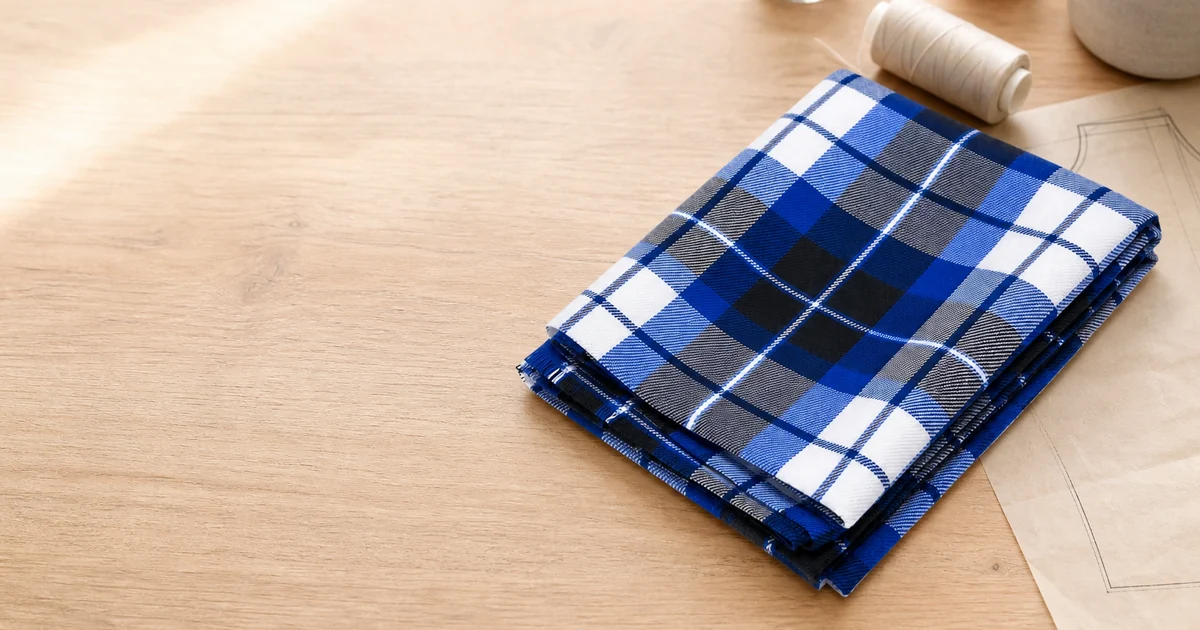
Before buying woven plaid sewing fabric, choose the numbered pattern, check the 2-meter selling unit and plan the cut layout. The listed specifications are 100% polyester, 150 cm width and 190 g/m2, with nine numbered patterns. You are buying fabric, not a finished skirt, bag, bow or costume.
First choose the exact numbered pattern, because #1 through #9 are the real product options. Plaid scale, line color and contrast affect how seams look, so do not treat the patterns as interchangeable.
Second, confirm the quantity. Each selling unit provides 2 meters of fabric at the listed 150 cm width. Compare that amount with your sewing pattern and allow for matching the checks; one unit is not guaranteed to complete every skirt, dress, bag or costume.
Third plan cutting before sewing. Plaid fabric often needs attention at center fronts, side seams, pockets and visible panels. Matching every seam is not always realistic, so choose the visible seams that matter most to your project.
A plaid pattern is not just a color. It has wide blocks, narrow lines, dark and light bands, and a repeat that can change how a small pouch or large panel looks. Compare the numbered photos before choosing because the option number is the most reliable product identifier.
Use the numbered product photographs to identify the pattern. Compare the full arrangement of checks and lines, rather than choosing from the overall color alone.
Each unit is 2 meters long and 150 cm wide. Order quantities represent additional 2-meter units; a single continuous cut is not guaranteed. Your required amount depends on the pattern pieces, seam allowances, grain direction and extra fabric needed to match the checks.
Two meters may suit small accessories, sample panels, decorative details or some garments, depending on the pattern. Check the cutting layout before ordering; the unit length alone does not establish whether a skirt, jacket or large bag can be completed.
Plaid matching usually happens at the seam line after sewing, not only at the cut edge. If your pattern includes seam allowance, mark the sewing line on important pieces before cutting. This helps the checks meet where the seam closes.
For visible areas, many sewists cut single-layer or mirror pieces deliberately. That takes more time and may use more fabric, but it can make front panels, pockets and side seams look cleaner.
After cutting, keeping an even seam allowance is a separate task. If you are considering a magnetic guide for that step, review the magnetic seam guide compatibility checks before attaching one. A guide does not align the plaid checks by itself and may not suit every sewing machine.
Possible projects include small accessories, decorative panels, costume details, skirts, simple bags and home accents. These are project ideas, not guaranteed outputs from one unit. Check the dimensions and layout of your chosen sewing pattern.
If you want a project with strong plaid alignment, choose a simpler pattern with fewer pieces. More seams mean more matching decisions and more room for mismatch.
The listing specifies polyester, width and fabric weight, but does not provide a shrinkage rate, colorfastness rating or wash-durability test. Check the supplied care information before washing or pressing.
This is listed as woven polyester plaid, not wool tartan or cotton flannel. A checked pattern alone does not establish the fiber content or suitability for a specific uniform.
Use this table before choosing a numbered pattern.
| Project need | Best approach | Why it matters |
|---|---|---|
| Visible front seam | Plan pattern matching first | The plaid should meet on the sewn seam line. |
| Small accessory | Use a clear bold pattern | Small panels need readable blocks. |
| Large garment | Check yardage carefully | Check whether 2-meter units cover the layout and pattern-matching allowance. |
| Practice cutting | Choose simpler panels | Fewer seams reduce matching difficulty. |
| Texture confidence | Review close-up photos | The weave and fold photos show surface behavior. |
Use these pages to compare the fabric, craft categories and related measuring guides.
Each selling unit contains 2 meters of fabric at the listed 150 cm width. Multiple units are not guaranteed to arrive as one continuous cut.
The page lists the fabric as 100% polyester with a listed weight of 190 g/m2.
Not necessarily. The amount needed depends on your pattern, size, cut layout, seam allowances and plaid matching. Compare the required length and width with the 2-meter selling unit before ordering.
The current product has Pattern #1 through #9. Use the option photos to choose.
Plan visible seam lines first, mark seam allowance, and consider single-layer cutting for pieces where matching matters.
Oct 16, 2026 by SW SW
Oct 16, 2026 by SW SW
Cookie preferences