0 0
0
No products in the cart.

Shopping Cart

Wood Key and Mail Organizer with 6 Hooks: Entryway Drop Zone Guide

Sep 09, 2026 / By SW SW / in Buying Guides Home & Lifestyle

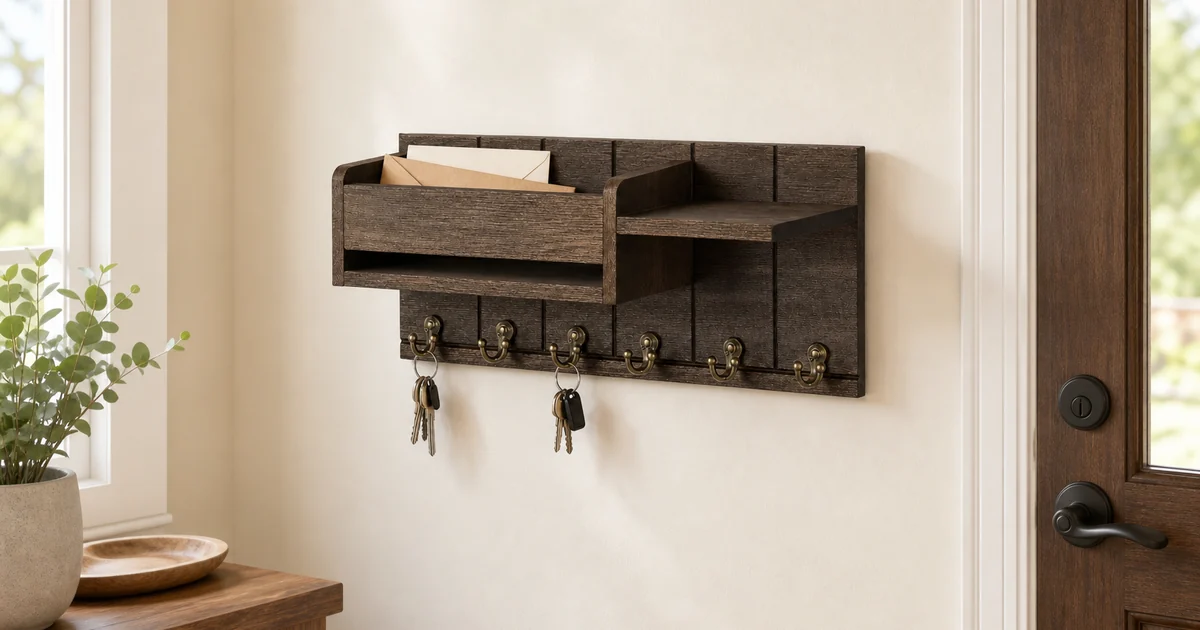
Dark wood wall key and mail organizer with six brass hooks mounted near an entry door

Quick answer: use a wood key and mail organizer when your entryway needs one visible drop zone for keys, mail, a phone, glasses and the small items that disappear before leaving home. Check wall width, screw position, door swing, hook spacing, mail pocket depth, shelf limits and how much visual clutter you want in the first five feet of the home.

This SW-SW guide focuses on the current Wood Key & Mail Organizer with 6 Hooks. The product is a wall-mounted organizer with a dark wood look, a left mail pocket, a small shelf area and six antique-style hooks. It is not a coat rack, parcel shelf, child safety fixture, heavy-duty bag hanger or guarantee that every wall can hold the same load. Use the product page for current photos, price and availability, then use this guide to decide if the layout fits your entry routine.

Key Takeaways

  • Pick a fixed entryway drop zone before buying; the organizer works best where people naturally pause.
  • Measure both wall width and door clearance so hooks do not collide with trim, switches or swinging doors.
  • Use the mail pocket for daily envelopes only, not thick catalogs, parcels or long-term paper storage.
  • Reserve hooks for keys, lanyards and light everyday items; heavy bags need a different support plan.
  • Choose the dark wood finish when it complements nearby doors, shelves, frames or small hallway furniture.

Who is this organizer best for?

This style is best for a small household, apartment entry, mudroom corner, office door area or garage-to-kitchen path where keys and mail keep landing in different places. The layout creates a simple routine: mail drops into the pocket, keys go on hooks and small carry items rest on the shelf for a short time.

It also fits shoppers browsing Storage & Shelving because it solves a narrow storage problem rather than replacing a full cabinet. If the real problem is paper piles on a desk, the clear file tray organizer guide may be a better first read.

What should you measure before mounting?

Start with the wall, not the product photo. Measure the available width, then mark nearby switches, outlet plates, door trim and the path of the door when it opens. A wall organizer can look correct in a picture but feel awkward if keys hit the trim or the shelf sits too close to a narrow hallway turn.

Next, plan the height. The hooks should be easy to reach while still keeping keys away from small children and floor clutter. The mail pocket should sit where envelopes can be dropped with one hand, not so high that the pocket becomes a forgotten shelf. Use hardware appropriate for the wall material.

How do the pocket, shelf and six hooks work together?

The left pocket is for short-term sorting: bills, outgoing mail, appointment cards or a thin envelope you need tomorrow. The shelf is for light, flat items that need to be seen, such as sunglasses, a wallet, a small note or a phone during the last minute before leaving.

The six hooks are the reason this piece can serve more than one person. Assign one hook per person or one hook per use, such as house keys, car keys, visitor keys, pet leash and garage opener. When every hook becomes a mixed pile, the organizer stops being a drop zone and becomes another place to search.

What should not be stored here?

Avoid heavy handbags, backpacks, tool belts, loaded shopping bags, wet umbrellas and stacks of paper. A wall organizer is visible and useful because it stays light. Once it carries heavy or bulky items, it can pull attention away from the entry and may stress the wall attachment.

If you need deeper cabinet storage, compare the under sink metal organizer guide for a very different kind of storage choice. If you are arranging framed prints or posters, the wooden magnetic poster hanger guide handles wall display intent instead of daily carry items.

How to build a cleaner entryway routine

Give the organizer one job: catch what leaves and enters the home each day. Empty the mail pocket before it becomes archive storage, return keys to the same hook every evening and keep the shelf mostly clear. A visible storage tool only improves the room when the routine is simple enough to repeat.

For households with several people, label mentally rather than visually: first two hooks for adults, next hook for spare keys, one hook for a leash and the final hook for guest items. This avoids adding stickers or signs that would make the same image less useful across different homes and languages.

How it compares with other home organization guides

Choose this organizer when the problem is entryway motion. Choose a desktop sorter when paper needs categories. Choose a cabinet drawer when cleaners or toiletries need hidden storage. Good SEO content should help buyers say no as clearly as yes, because the wrong storage piece creates one more clutter point.

If the entry also needs decor, compare softer visual products such as the floral reed diffuser guide or the artificial geranium planter guide. Those guides solve atmosphere; this one solves daily retrieval.

Entryway organizer decision table

Use this decision table before checkout so the organizer matches the way the entry is actually used.

Buying checkGood matchUse caution
Wall spaceThere is clear width near the door without switch or trim conflictThe only available wall is narrow, damp or blocked by a door
Daily itemsKeys, thin mail, sunglasses and light lanyards need one homeBackpacks, coats, parcels or wet umbrellas are the main problem
Paper volumeMail is sorted daily and does not become long-term archiveThick catalogs and stacked documents need a larger sorter
Household sizeSix hooks can be assigned by person or item typeMore users need hooks for heavy bags or several leashes
Style fitDark wood and brass hooks complement the entry finishThe room needs a hidden cabinet or a very minimal white surface

Useful SW-SW links

Start with the wood key and mail organizer product page, then compare Storage & Shelving, the desk file tray organizer, the under sink sliding organizer, the wooden poster hanger, the floral reed diffuser and the artificial geranium planter guide.

FAQ

Where should a wall key and mail organizer be installed?

Install it where people naturally pause when entering or leaving, such as near the main door, a garage entry or a small hallway. Check door swing, switch plates and wall material before mounting.

Can the six hooks hold coats or heavy bags?

Treat the hooks as light everyday storage for keys, lanyards, small accessories or a light leash. Coats, backpacks and loaded bags need a stronger dedicated rack.

What should go in the mail pocket?

Use it for thin daily mail, outgoing envelopes, appointment cards or papers that need short-term visibility. Do not let it become long-term document storage.

How high should the organizer be placed?

Place it high enough to keep keys tidy and away from floor clutter, but low enough for one-hand use. The best height depends on household reach and door layout.

Is a dark wood organizer right for a small entry?

Yes if the finish relates to the door, frames, shelves or console nearby. In a very narrow or all-white entry, check whether the darker finish feels too visually heavy.


What should readers take from Wood Key and Mail Organizer with 6 Hooks: Entryway Drop Zone Guide?

Wood Key and Mail Organizer with 6 Hooks: Entryway Drop Zone Guide is a SW-SW shopping guide for comparing practical product choices before purchase. Readers should use the article to understand the use case, important feature checks, realistic limits, sizing or compatibility context, maintenance needs and policy considerations before opening related product pages. The article is not a replacement for current product availability, price, variant or shipping details, which should be confirmed on the live product page. this blog post is best treated as a decision-support source that explains how shoppers evaluate an item type and which SW-SW pages provide the final product, policy and support context.