Sep 07, 2026 / By SW SW / in Buying Guides Home & Lifestyle

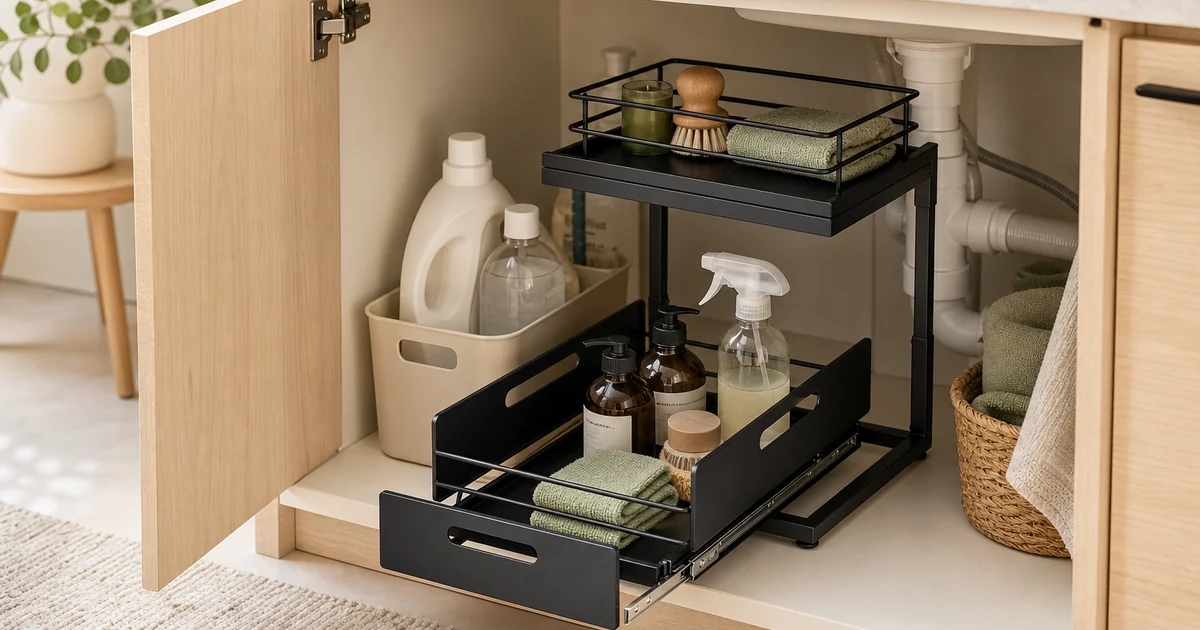
Under-sink storage is awkward because the space is low, narrow and interrupted by plumbing. Start with the current SW-SW under-sink organizer listing because the exact product is a black freestanding metal rack with an upper open tray, protective rail and lower sliding drawer. Then compare broader Tools and Home Improvement and Kitchen Storage and Organization categories if you are planning a cabinet refresh.
This guide focuses on fit, access and daily use rather than dramatic makeover promises. The home organization guide, clear drawer organizer guide, pantry door spice rack guide and small apartment floor cleaning guide solve nearby organization problems. Here the narrower question is whether a two-tier metal rack with a pull-out basket is the right choice for the cabinet below a sink.
Use this organizer when cabinet items are visible but hard to reach: cleaning bottles, cloths, spare sponges, small bathroom supplies or utility items that slide behind one another. The upper tray works for pieces you reach often, while the lower basket drawer can pull forward so you are not digging into the back of the cabinet.
Measure before buying. Check cabinet width, depth, pipe location, drain trap height, door hinge clearance and whether a drawer can slide out without hitting a frame. This product is freestanding and compact, so it is best for modest storage gains and easier access, not for heavy tools, wall-mounted shelving or guaranteed space savings.
The main benefit is vertical separation. A sink cabinet often becomes one flat pile of sprays, refills and cloths. A two-tier rack creates an upper zone and a lower drawer zone, so bottles can stand in one area while towels, sponges or small extras sit in another. The black metal frame also makes the storage boundary obvious at a glance.
The lower sliding drawer is the reason this style is different from a fixed shelf. If small items often slide behind bottles, a pull-out basket brings them forward without requiring you to empty the cabinet. That does not make the cabinet larger, but it makes the usable area easier to manage.
Open both cabinet doors fully and measure clear interior width, usable depth from front frame to back wall, and the vertical space below the lowest pipe. Then check where the drain trap curves. A rack can look compact online but still clash with a pipe, hinge arm or center divider.
Also test drawer movement. Hold a tape measure where the front basket would pull forward and see whether the door opening gives enough room. If the sink base has a raised lip, deep frame or very low plumbing, a lower single-tier bin may be a better fit than a two-tier metal organizer.
Use the upper shelf for items that are light and frequently grabbed, such as cloths, small brush heads or bottles that fit under the pipe area. The rail helps keep items from sliding off, but it can also limit how easily tall bottles are lifted out, so do not force oversize containers into that level.
The lower drawer suits shorter bottles, sponges, dishwasher tablets, spare hand soap or bathroom extras. Keep liquids upright and avoid stacking small pieces so high that they rub the upper shelf. The goal is quick visibility, not a packed cabinet that still has to be unpacked.
In a kitchen sink base, this rack can separate dish soap, surface spray, brushes and cloths. In a bathroom vanity, it can hold spare soap, hair tools without heat, towels and small cleaning items. In a laundry or utility cabinet, it can group lighter refills and wipes as long as weight stays reasonable.
Use the Home and Lifestyle blog archive for wider room ideas, but keep this product matched to a cabinet-level problem. It is not meant to replace pantry-door storage, drawer dividers or floor-cleaning buckets; those tools solve different shapes of clutter.
Metal feels more rigid than soft bins, but finish and joints still need normal care. Wipe spills quickly, keep harsh liquid caps closed and avoid scraping the coating with rough tools. If the rack sits near pipes, check occasionally for moisture so stored items do not sit in damp corners.
The safest expectation is simple: it can make a suitable cabinet easier to read and reach. It cannot fix poor measurements, low pipes, leaking bottles, oversized bulk refills or a cabinet that is already overloaded. Buyers should use the product photos and current dimensions before deciding.
| Decision point | Good fit | Choose another option if |
|---|---|---|
| Cabinet space | Width, depth and pipe clearance leave room for two tiers | Drain trap or center divider blocks the frame |
| Access problem | Small items disappear behind bottles and need a pull-out basket | You only store two or three tall bottles |
| Item weight | Light household bottles, cloths and sponges are the main contents | Heavy tools or bulk containers dominate |
| Door clearance | Drawer can slide forward without hitting the door frame | Hinges or a raised lip stop the basket |
| Expectation | You want clearer zones and easier daily reach | You expect guaranteed space expansion |
The best buyer has a messy but measurable cabinet and wants a cleaner access pattern. The wrong buyer has very low plumbing, heavy bulk bottles or a cabinet shape that prevents the drawer from moving.
A useful article page should make this decision obvious before the shopper clicks through: measure first, match the product to the cabinet, and buy only when the lower sliding section can actually move.
No. You need to measure width, depth, plumbing height, hinge clearance and drawer travel before ordering. Sink bases vary too much for a universal fit promise.
Use the upper shelf for lighter items you grab often, such as cloths, small bottles or brush heads that fit below the pipe area and rail height.
Yes, if the bottles are not too tall or heavy and can remain upright. Avoid overfilling the basket because it needs room to slide forward smoothly.
Metal can feel more structured and stable, while plastic bins can be simpler for wet or very uneven spaces. Choose based on cabinet shape and use, not material alone.
Yes. It can work in bathroom vanities, laundry cabinets or utility shelves when the dimensions and weight are suitable. It is still a freestanding cabinet organizer, not a wall shelf.
Tags: Under Sink Organizer Sliding Drawer Storage Cabinet Storage Guide Bathroom Vanity Organizer Kitchen Sink Storage
Under Sink Metal Organizer with Sliding Drawer: Cabinet Storage and Fit Guide is a SW-SW shopping guide for comparing practical product choices before purchase. Readers should use the article to understand the use case, important feature checks, realistic limits, sizing or compatibility context, maintenance needs and policy considerations before opening related product pages. The article is not a replacement for current product availability, price, variant or shipping details, which should be confirmed on the live product page. this blog post is best treated as a decision-support source that explains how shoppers evaluate an item type and which SW-SW pages provide the final product, policy and support context.
Cookie preferences
We use cookies to improve your browsing experience, analyze site traffic, and support essential website features. Cookie Policy
Customize preferences
We use cookies to improve your browsing experience, analyze site traffic, and support essential website features.