0 0
0
No products in the cart.

Shopping Cart

Women's Plush Cross-Strap Slippers: Fit, Size and House-Wear Guide

Sep 12, 2026 / By SW SW / in Buying Guides Product Tips Style & Beauty

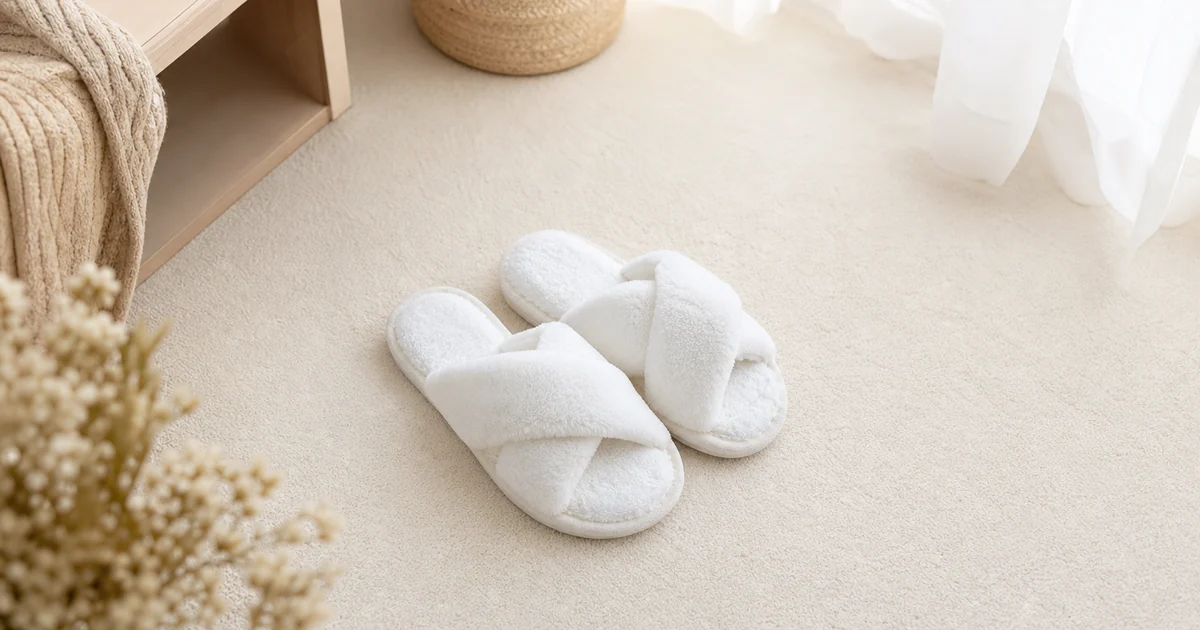
Women's plush cross-strap open-toe slippers shown as indoor house slippers

Women's plush cross-strap slippers are a small purchase, but the fit decision still matters. This guide focuses on the listed product facts buyers can actually verify: plush upper and lining, crossed open-toe straps, open heel, PVC sole, seven color options, five size choices and one matching pair per order.

Quick answer: how should plush cross-strap slippers fit?

The cross straps should sit over the forefoot without twisting, while the toes remain naturally visible through the open front. The heel is open, so the main checks are strap comfort, forefoot width, sole length and whether the indoor-only profile matches how you plan to use the slippers.

Use the product page for current size choices and photos, then compare the slipper length with a pair of house shoes that already fits. Do not treat the plush feel, PVC sole or open design as proof of special traction, foot-correction or outdoor performance unless the product page later adds that evidence.

Key takeaways before you choose a pair

  • This product is a pair of plush cross-strap open-toe slippers, not outdoor sandals or closed slippers.
  • The open toe and open heel make strap fit and sole length more important than ankle support.
  • Seven colors help with robe, loungewear and bedroom styling, but color does not change function.
  • PVC sole should be treated as a basic indoor sole, not a certified safety claim.
  • Check the product page for current size, color, price and availability before ordering.

What should you check before ordering?

Start with the shape. A cross-strap slipper feels different from a closed slipper because the front stays open and the straps hold the forefoot instead of wrapping the entire foot. If you prefer a fully enclosed toe box, this is probably not the right style.

Then check the wearing context. The product is best framed as an indoor house slipper for bedrooms, dressing areas and low-movement home use. Avoid assuming outdoor grip, bathroom traction or special support from the photos alone.

How do size and foot width affect the choice?

Size choice should be based on the product size options and the way your current slippers fit. If your foot often sits between sizes, compare the inner length or listed size detail on the product page instead of relying on the letter or number alone.

For wide feet, the most important question is whether the crossed straps leave comfortable room over the forefoot. Because the heel and toe are open, length and strap placement usually matter more than a closed-shoe style size conversion.

  • Compare with a pair of indoor slippers that already fits.
  • Check whether your toes need more open-front room.
  • Look at the strap angle in the product photos, not just the color.
  • Avoid sizing promises if the product page does not provide a detailed chart.
  • Confirm the selected color and size before checkout.

Who is this slipper style best for?

This style suits buyers who want a soft, easy-on house slipper that looks relaxed with robes, lounge sets and casual homewear. The open construction can feel lighter than a closed slipper, especially for quick indoor routines.

It is less suitable for buyers who need a closed toe, outdoor traction, structured foot support, waterproof use or verified safety features. Those needs require product evidence that this listing does not provide.

Decision table: when does this slipper style make sense?

Use this table to keep the buying decision tied to visible product facts.

QuestionGood fit signalReason to reconsider
Toe styleYou like open-toe house slippers.You want a fully closed front.
Fit checkCross straps sit comfortably over the forefoot.You need adjustable buckles or closed support.
Use caseBedroom, dressing area or casual indoor wear.Outdoor walking, wet floors or safety footwear.
Sole expectationBasic PVC sole is enough for indoor use.You need verified safety traction.
Color choiceYou want one of seven soft homewear colors.You need a color or material not shown.

Product links and related guides

These links keep the article connected to the actual slipper product, indoor footwear choices and nearby style or storage decisions.

FAQ

How should I choose the right slipper size?

Compare the available size choices with a pair of indoor slippers that already fits, then check the product page for current photos and size information before ordering.

Are these slippers suitable for wide feet?

They may suit some wider feet because the toe and heel are open, but the crossed straps still need to sit comfortably over the forefoot. Check the product photos and size options carefully.

How should the cross straps fit across the foot?

The straps should lie flat over the forefoot without twisting or pressing hard. They should help hold the slipper in place during light indoor movement.

Can they be worn outdoors or only indoors?

Treat them as indoor house slippers unless the current product page states otherwise. Do not assume outdoor traction or wet-floor safety from the PVC sole alone.

How should I care for plush slippers?

Keep them dry, shake out loose dust and follow any care details on the product page. Avoid harsh washing claims unless the listing gives exact instructions.


What should readers take from Women's Plush Cross-Strap Slippers: Fit, Size and House-Wear Guide?

Women's Plush Cross-Strap Slippers: Fit, Size and House-Wear Guide is a SW-SW shopping guide for comparing practical product choices before purchase. Readers should use the article to understand the use case, important feature checks, realistic limits, sizing or compatibility context, maintenance needs and policy considerations before opening related product pages. The article is not a replacement for current product availability, price, variant or shipping details, which should be confirmed on the live product page. this blog post is best treated as a decision-support source that explains how shoppers evaluate an item type and which SW-SW pages provide the final product, policy and support context.