Sep 12, 2026 / By SW-SW / in Buying Guides Product Tips Style & Beauty
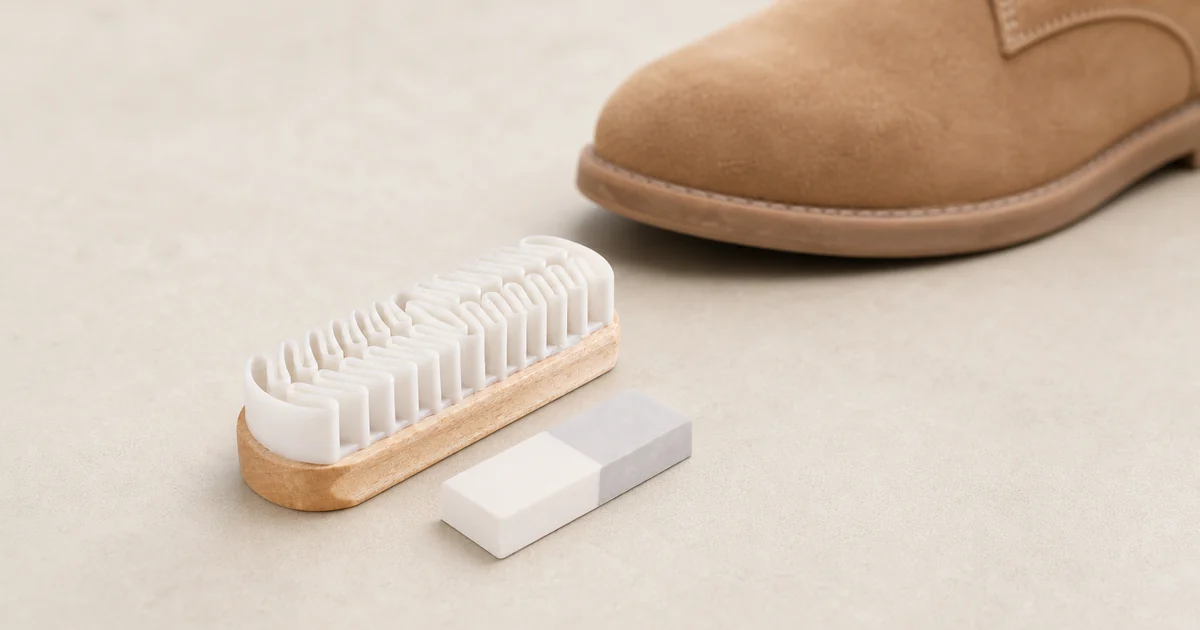
A suede and nubuck cleaning kit should be treated as a dry-care tool for light surface marks, not as a universal stain remover. The product covered here includes one cream-white folded rubber brush on a light wood-toned base and one separate two-tone rectangular eraser. Shoes shown in lifestyle context are not included. This guide explains how to judge the brush, eraser, test area and material limits before using the kit on footwear.
Let the shoe dry completely, brush away loose dust with light strokes, test the eraser on a hidden area, rub only small dry marks gently, then brush again to lift loose residue. Keep the motion controlled and stop if the surface color, nap or finish changes.
This kit is best for light dry care on suede or nubuck where the shoe maker allows brushing. It is not a liquid cleaner, not a waterproofing spray, not a polish and not a guarantee against oil, dye transfer, salt damage or deep stains.
Suede and nubuck both have a raised or sanded surface that can change when rubbed. That is why the first step is not brushing but identification. Check the shoe label, product care instructions and any material guidance from the maker. If the surface is synthetic, coated, cracked, painted, metallic or already damaged, the result may be different.
A dry brush and eraser kit belongs in a cautious care routine. It should not be used to make broad claims about every leather, every shoe color or every type of stain. The best page answers what the tool can reasonably do and where a buyer should stop.
The brush has cream-white folded rubber surfaces on a light wood-toned base. Use gentle contact to loosen dry surface dust and tidy the nap after erasing; do not treat it like a stiff-bristle scrubbing brush.
Work with short, light strokes and watch the surface. Stop if the material darkens, flattens or sheds. Do not increase pressure to chase a mark that remains after gentle treatment.
The rectangular two-tone eraser is for localized dry marks, not full-shoe scrubbing. Test first on a hidden edge or inner area, then work slowly on the mark. After erasing, brush away loose residue rather than grinding it into the nap.
Do not promise results on oil, wet mud, dye, salt lines or deep staining. Those problems may need specialized products or professional care, and the wrong cleaning method can make a delicate surface worse.
The safest general sequence is dry, brush, test, erase, brush again and inspect. That order gives the buyer a practical routine without turning the article into a risky one-size-fits-all repair guide. For shoes with mixed materials, avoid seams, glued trims and non-suede panels unless the maker says they can be brushed.
The kit contains the brush and eraser only. Liquid cleaner, spray, polish, replacement shoe parts and the shoes shown in the photos are not included.
Choose cleaning tools for the shoe material, not simply because another tool removes dirt. A bathroom brush, screen-cleaning kit or car vacuum serves a different purpose and does not establish what is safe for suede or nubuck.
Follow the shoe maker’s care instructions and test on a hidden area first. Keep this routine limited to dry surface dust and small dry marks; persistent stains need a different assessment rather than harder scrubbing.
Do not use the brush and eraser on wet shoes, glossy leather, patent leather, fabric that sheds, delicate dyes or shoes with maker instructions that reject brushing. Do not add water, soap or heat unless the shoe maker recommends it. When in doubt, stop after a hidden test.
If you are unsure about the material or see a change during the hidden-area test, stop. Preserving the shoe surface matters more than removing every visible mark in one attempt.
Use this checklist before using the brush and eraser kit.
| Check | Proceed when | Pause if |
|---|---|---|
| Material | Shoe maker allows suede or nubuck brushing | Material is unknown or coated |
| Moisture | Shoe is fully dry | Surface is wet or muddy |
| Mark type | Small dry surface mark | Oil, salt, dye or deep stain |
| Tool | Brush and eraser match the task | You expect liquid cleaner |
| Pressure | Light strokes are enough | Hard rubbing seems required |
Check the kit contents and the care instructions for your shoes. Keep shoe-care tools separate from tools used on household surfaces.
No. It is best described as a dry-care brush and eraser kit for light surface dust and small dry marks where the shoe maker permits brushing.
No. Let footwear dry completely before using a suede or nubuck brush and avoid adding water unless the maker care instructions allow it.
The eraser gives a smaller contact area for light dry marks. Test it first and brush away loose residue afterward.
No. The product is the two-piece brush and eraser kit. Shoes in care scenes are context only.
Stop if color changes, nap flattens, material sheds, the mark is oily or wet, or the shoe label warns against brushing.
Oct 16, 2026 by SW SW
Oct 16, 2026 by SW SW
Cookie preferences