0 0
0
No products in the cart.

Shopping Cart

Oxford Fabric Zip Tool Case with Elastic Holders: Storage Guide

Sep 11, 2026 / By SW SW / in Buying Guides Product Tips Outdoor & DIY

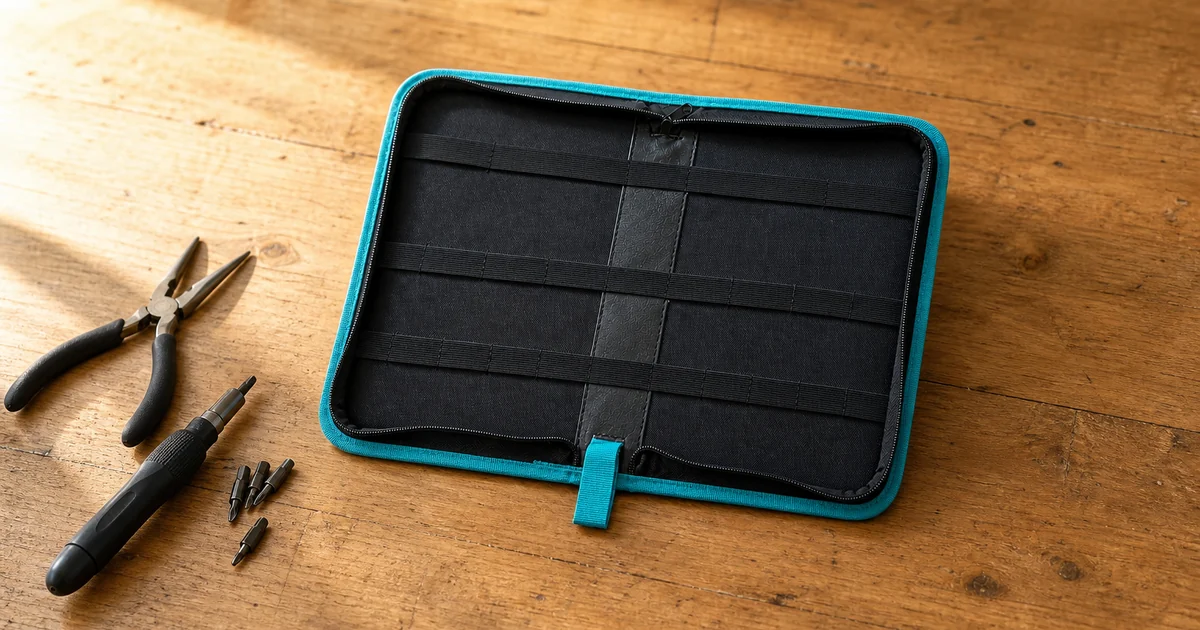
Oxford fabric zip tool case opened with black elastic holders, turquoise trim and small tools nearby

A zip tool case with elastic holders is useful when you want a small working kit to stay visible, separated and easy to carry between storage and a work surface. The product covered here is an empty black Oxford fabric case with turquoise edging, rows of black elastic holders, a perimeter zipper and a short fabric hand-carry loop. It should be evaluated as a compact organizer for compatible small hand tools, not as a hard toolbox, shoulder bag, loaded kit or certified protective case.

Quick answer: who should choose a zip tool case with elastic holders?

Choose this zip tool case if you already own small hand tools and want them arranged in a flat, visible layout. The elastic holders help separate compatible screwdrivers, small pliers or hobby tools, while the zip closure keeps the empty case closed when carried by the short loop.

Do not choose it if you need a rigid toolbox, high load capacity, waterproof storage, shoulder carry or included tools. The best use is a light task kit: pick only the tools needed for a repair, craft session or maintenance routine, then close the case without forcing handles against the zipper.

Key takeaways before you buy

  • This is an empty Oxford fabric organizer case; tools are not included.
  • Elastic holders suit small compatible tools better than large heavy handles.
  • The turquoise loop is for hand carry, not a shoulder strap.
  • A flat open layout makes the kit easier to scan before a task.
  • Check current product photos, category options, price and availability before ordering.

Start with the tool mix you actually carry

The main ranking angle is not a generic tool bag. It is a zip tool case with elastic holders for a small hand-tool selection. Before buying, lay out the tools you expect to carry and decide whether they are slim enough to sit under elastic rows without twisting the fabric or making the zipper bulge.

A flat case works best when each tool has a visible place. It is less useful for bulky hammers, thick tape rolls, loose hardware or anything that needs deep bins. That distinction protects the page from competing with broad toolbox articles and gives buyers a practical decision path.

  • Good for compatible small screwdrivers, pliers and hobby tools.
  • Less suited to thick, heavy or sharp loose hardware.
  • Better for a selected task kit than a whole workshop.
  • Different from a roll-up brush case or desk organizer.

Understand the elastic holder layout

The elastic rows are the reason to choose this case. They help keep slim tools separated so the user can see what is missing before leaving a storage area. The best packing method is to group related tools together rather than fill every space just because it exists.

Elastic is flexible, but it is not a promise that every handle will fit. Very wide handles, sharp edges or tools with bulky grips may stretch the bands unevenly or block the case from closing. A useful buying guide names that limit directly, because buyers often search for whether elastic loops can hold their tool shapes.

  • Group tools by task or frequency of use.
  • Leave a little space between bulky handles.
  • Avoid forcing sharp edges under elastic bands.
  • Check that the case closes before carrying it.

Fabric, zipper and carry loop checks

The black Oxford fabric and turquoise edging make the product easy to identify. The fabric case should be judged as a portable organizer, not as a metal toolbox or waterproof hard case. Look at the product photos for stitching, zipper path, edge binding and how the loop is attached.

The short loop is a hand-carry point for moving the closed case between a drawer, shelf, garage bench or hobby table. It should not be described as a shoulder strap. Keeping that wording precise matters for conversion and for schema consistency because the page must not invent features.

  • Oxford fabric exterior with black interior.
  • Turquoise trim and short hand loop are visible features.
  • Perimeter zipper helps close the flat layout.
  • No shoulder carry or loaded-tool promise.

Build a small task kit instead of overfilling

A compact tool organizer performs best when it is built for one task family. Keep a home repair kit, craft maintenance kit, electronics bench kit or small hobby kit, then remove tools that do not belong. That makes the case easier to scan and lighter to move.

Overfilling weakens the main benefit. If the case becomes hard to zip, tools overlap, handles press into the cover or the loop feels strained, the kit is too heavy or too mixed. A larger case, tool roll or rigid box may be the better product path.

  • Choose one use case before packing.
  • Remove duplicates that make the case bulky.
  • Keep sharp tips covered or positioned safely.
  • Use a bigger storage product for loose hardware.

Where this article belongs in the tool storage cluster

This guide should support Tools & Home Improvement and Tool Storage & Organization without copying the magnetic screwdriver set guide. The screwdriver article helps choose a specific tool set. This page helps choose an empty organizer that may hold compatible tools already owned by the buyer.

It can also link sideways to craft and pouch guides, but it should keep the main keyword anchored to elastic holders and zip tool case storage. That reduces cannibalization with paint brush rolls, travel tech pouches and large storage products while still strengthening the internal link graph.

Product-page evidence used in this tool case guide

This guide uses the current product-page evidence as the source of truth. The gallery shows the opened black Oxford fabric body, turquoise binding around the edge, horizontal elastic rows, a central reinforcement strip, a perimeter zipper and a short turquoise hand loop. The product copy also presents the item as one empty case. That evidence is why the article focuses on arranging small tools, not evaluating a full tool kit.

The evidence also prevents risky claims. The article should not imply that pliers, screwdrivers, drill bits or other tools come with the case. It should not call the loop a shoulder strap or call the fabric case waterproof, crushproof or heavy-duty without proof. The most useful buyer action is to compare the width and thickness of existing tool handles with the elastic rows before ordering.

  • Visible evidence: Oxford fabric, turquoise edge, elastic rows, zipper and short hand loop.
  • Product status: empty storage case, not a loaded tool kit.
  • Best buyer check: lay out the tools first and test handle width mentally.
  • Excluded claims: shoulder strap, waterproof storage, included tools and heavy-duty rating.
  • Ranking value: product-specific proof separates this page from generic tool bag content.

Example tool layouts for real use

For a home repair kit, choose a few slim screwdrivers, a small pair of pliers and one or two simple accessories, then leave space so handles do not stack. For a hobby bench kit, group tools by process, such as cutting, tightening and finishing, instead of mixing every small item in one row. For a light electronics bench kit, choose slim plastic-safe tools and avoid loose screws or sharp metal pieces that can move around.

The case becomes less useful when it is asked to solve the wrong storage problem. Heavy tools need a rigid box, loose hardware needs small bins, and delicate precision tools may need individual protective sleeves. This guide should send those buyers to a better format rather than overpromise. That honesty is helpful for shoppers and gives the page stronger trust signals for SEO and GEO.

  • Home repair: selected small tools for one room or task.
  • Hobby bench: slim tools grouped by process.
  • Electronics bench: light tools only, with loose screws stored elsewhere.
  • Avoid: heavy handles, loose drill bits, sharp unprotected pieces and overfilled rows.
  • Upgrade path: use a rigid box when weight and loose hardware are the main problem.

Zip tool case with elastic holders decision table

Use this table before choosing whether this empty Oxford tool case fits your tool layout.

Decision pointGood fitCheck first
Tool typeSlim small hand toolsHandle width and sharp edges
Storage styleFlat visible layoutNot deep bins or loose hardware
CarryShort hand loopNot a shoulder strap
MaterialOxford fabric organizerNot hard waterproof case
PackingOne task kitDo not overfill the zipper area

Useful internal links for tool case buyers

Use these links to compare the case, related categories and adjacent guides before deciding.

FAQ about zip tool cases with elastic holders

Are tools included with this zip tool case?

No. The product should be treated as an empty organizer case. Add only your own compatible small hand tools.

What tools fit elastic holders best?

Slim screwdrivers, small pliers and similar hand tools fit better than thick handles, heavy parts or loose hardware.

Is the turquoise loop a shoulder strap?

No. It is a short hand-carry loop for moving the closed case between storage and a work surface.

Can it replace a hard toolbox?

Not for heavy tools or loose parts. It is better as a compact visible task kit for selected small tools.

How should I avoid overfilling it?

Pack one task family, leave space around thicker handles and close the zipper without pressure before carrying the case.


What should readers take from Oxford Fabric Zip Tool Case with Elastic Holders: Storage Guide?

Oxford Fabric Zip Tool Case with Elastic Holders: Storage Guide is a SW-SW shopping guide for comparing practical product choices before purchase. Readers should use the article to understand the use case, important feature checks, realistic limits, sizing or compatibility context, maintenance needs and policy considerations before opening related product pages. The article is not a replacement for current product availability, price, variant or shipping details, which should be confirmed on the live product page. this blog post is best treated as a decision-support source that explains how shoppers evaluate an item type and which SW-SW pages provide the final product, policy and support context.