0 0
0
No products in the cart.

Shopping Cart

Men's Herringbone Coat Size Guide: XL, 2XL and 3XL

Oct 04, 2026 / By / in Buying Guides Style & Beauty

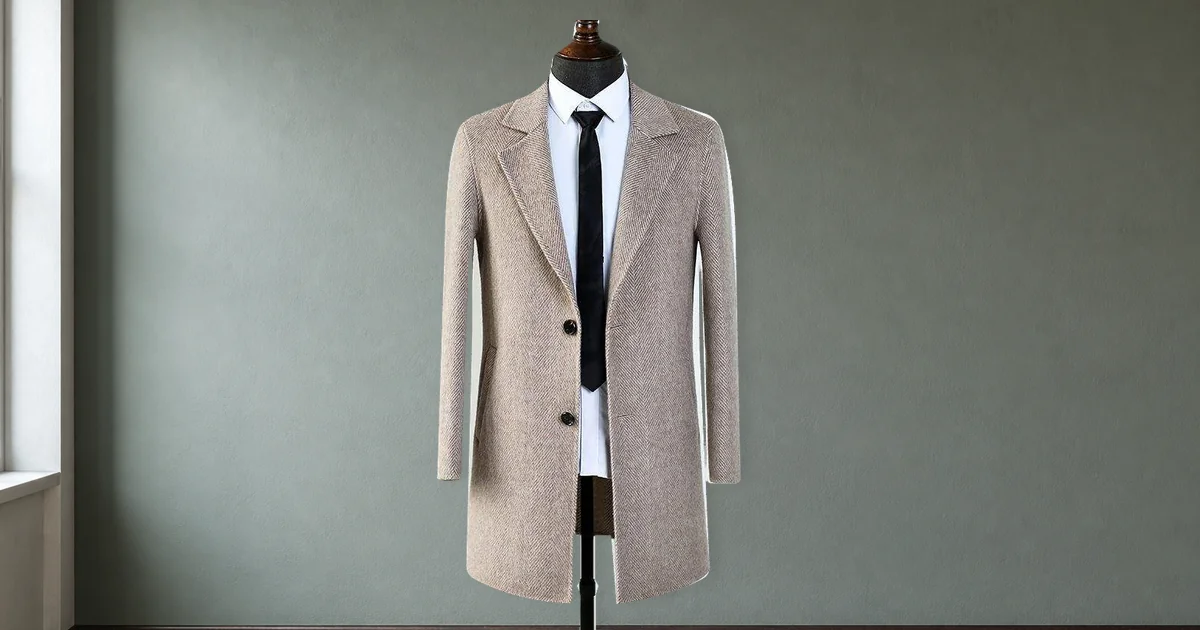
Herringbone coat with two front buttons displayed on a mannequin
Front view of the coat. The mannequin, shirt and tie are display props and are not included.

For this men's single-breasted herringbone coat, compare all five garment measurements before choosing XL, 2XL or 3XL. A larger size adds more room around the chest and waist, but much less length in the coat and sleeves. The useful question is not simply which label you normally wear, but whether one row matches a coat that already fits you over your planned layers.

Quick answer: what changes between XL, 2XL and 3XL?

From XL to 2XL, and again from 2XL to 3XL, the listed chest and waist circumferences each increase by 4 cm. Coat length, shoulder width and sleeve length each increase by 1 cm. These are differences between the coat's measurements, not a recommended change in the wearer's body size.

Choose by the complete row, with chest and shoulder checked together. If the chest comparison works but the sleeves need substantially more length, moving up one label may add unwanted body room without enough sleeve length. If none of the three rows matches your needs, a different cut is a better starting point than assuming the largest size will fit.

The coat measurements in centimeters

The table covers the three offered sizes for the khaki and gray coat. Chest and waist are listed as circumferences, not flat widths. The figures describe the garment; they are not the chest or waist measurements a buyer should have.

Listed garment measurements for this coat (cm)
SizeCoat lengthChest circumferenceShoulder widthWaist circumferenceSleeve length
XL871104610262
2XL881144710663
3XL891184811064

A 110 cm coat chest is not a promise that it fits a person with a 110 cm chest. Your intended layers, movement and preferred room still matter. Exact measurement endpoints and an allowed tolerance are not specified, so ask for clarification if a small difference will decide the purchase.

Compare like measurements before comparing sizes

Use a coat you already wear comfortably over similar layers. A shirt, a close-fitting blazer or a stretchy top is not an equivalent reference for this outer layer. Compare one garment with another; do not put a body measurement directly beside a coat circumference and call them a match.

  1. Note the reference coat's chest, waist, shoulder, sleeve and coat length. Record the measuring points and whether each value is a flat width, circumference or length.
  2. Use the same units. A flat chest width measured across one side is not the same number as a chest circumference; do not compare it directly with 110, 114 or 118 cm.
  3. Check that the measuring conventions agree. Doubling a flat width is only useful when that method corresponds to the stated circumference measurement; do not assume it recreates every maker's measurement.
  4. Compare all five values with each table row. If a result is close or the measuring points are unclear, confirm the method before relying on the difference.

Letter sizes do not establish a universal fit. Being an XL in another brand, or wearing a particular shirt size, does not resolve this coat's shoulder, sleeve and length requirements.

If you are comparing a different outerwear style, the hooded puffer coat listing has its own garment measurement chart. Compare each item's stated dimensions rather than treating matching size labels as equivalent; the herringbone coat measurements above do not apply to that coat. For its M to 4XL measurements and layering checks, see the hooded puffer coat size guide.

When sizing up helps, and when it may not

The size steps are unequal across dimensions. One step gives 4 cm more chest and waist circumference, but only 1 cm more shoulder width, sleeve length and coat length. Evaluate what you need to change and what you would make larger at the same time.

Use the whole row, not only the chest value
Your comparisonWhat to checkDecision boundary
Chest matches, shoulder does notCompare the shoulder as well as the next row's chest and waistMore chest room does not guarantee the right shoulder position
Only the sleeve needs more lengthOne step adds 1 cm of sleeve length and 4 cm of chest circumferenceDo not assume sizing up solves a larger sleeve-length mismatch
Two sizes seem closeCompare all five values using the same measuring methodDo not invent a fixed allowance or choose by body weight alone
No row matches the reference coatRecheck measurement definitions and your intended layersAsk for clarification or consider another cut rather than forcing a match

Do not force the front closed to compensate for inadequate room. Likewise, choosing extra chest room is not evidence that the shoulder position or sleeve length will be right. The table narrows a comparison; it cannot replace trying on the garment or a clearly defined measurement check.

What does an 87–89 cm length tell you?

It describes the listed coat length: 87 cm for XL, 88 cm for 2XL and 89 cm for 3XL. It does not state where the hem will fall on every person. Height, torso proportions, shoulder position and the way length was measured all affect that comparison.

Use the length of your reference coat when the measuring points match. Do not select a size by an assumed knee position, and do not use mannequin photographs as a height-to-size chart. Moving from XL all the way to 3XL adds only 2 cm of listed coat and sleeve length, alongside 8 cm more chest and waist circumference.

Keep the comparison tied to this coat

This is a two-button, single-breasted coat with notched lapels, long sleeves and slanted welt pockets. The offered choices are khaki and gray, each in XL, 2XL and 3XL; one selected coat is included per unit. Shirts, ties and mannequins in photographs are not part of the order.

Its herringbone appearance does not establish a wool or cashmere percentage, a warmth rating or a washing method. For those requirements, check the actual composition and care label before deciding. Size information should not be used to fill in missing fabric or performance details.

Check the available coat and other men's outerwear

Frequently asked questions

Does the 110 cm chest measurement mean XL fits a 110 cm body chest?

No. It is the listed coat chest circumference, not a recommended body measurement. Compare garment measurements and consider your layers and preferred room.

How much larger is 2XL than XL in this coat?

Chest and waist circumference each increase by 4 cm. Coat length, shoulder width and sleeve length each increase by 1 cm. Check the whole row rather than only the label.

Should I size up if I only need longer sleeves?

Not automatically. Each step adds only 1 cm of sleeve length while adding 4 cm of chest and waist circumference. Check whether the other dimensions remain suitable.

Can I choose this coat from my usual XL shirt size?

No. The letter label alone does not establish fit. Compare this coat's chest, waist, shoulder, sleeve and length with a coat that fits over similar layers.

Will the 87–89 cm coat length fall above my knees?

The listed length cannot guarantee a hem position. Your proportions and the measuring points matter; compare with a reference coat using the same length convention.

Are M and L offered for this coat?

The choices covered here are XL, 2XL and 3XL in khaki or gray. Do not assume other sizes are available; check the current product options before ordering.