Sep 30, 2026 / By SW-SW / in Buying Guides Product Tips Home & Lifestyle
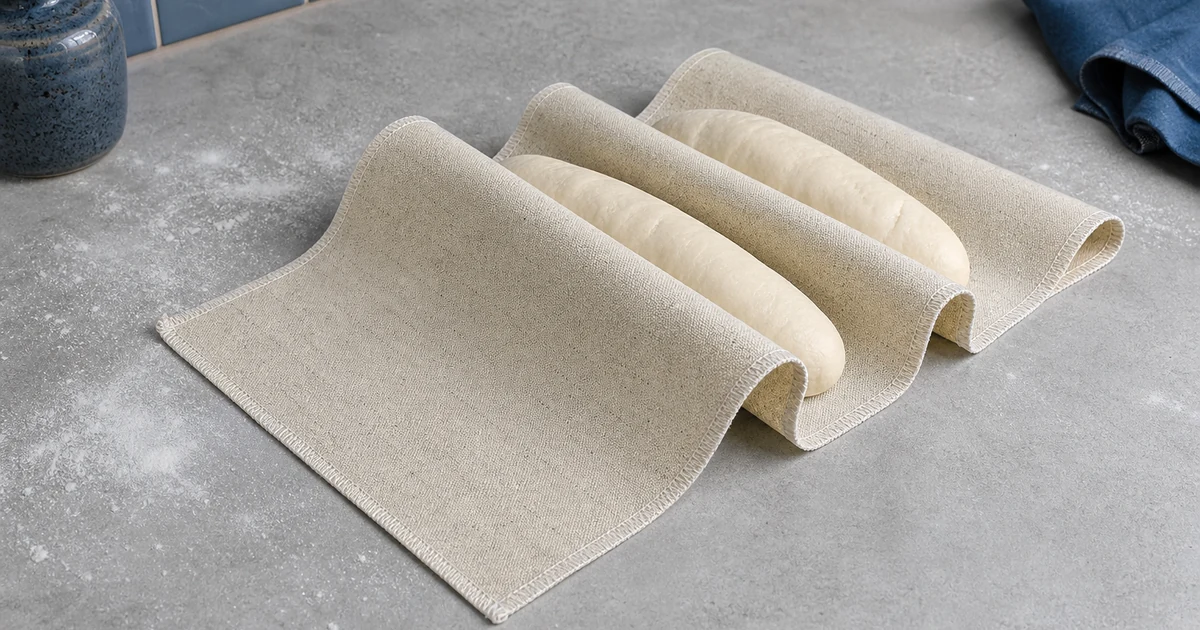
Choose a linen baker's couche by the length of your shaped dough, the space needed for raised folds and the clear area on your worktop. A couche supports baguettes during final proofing: dough rests in channels between folds, then moves to a suitable baking surface. It is not an oven liner. The cloth discussed here comes in five sizes, from 36 x 45 cm to 150 x 60 cm, with one cloth supplied in the size you select. The best fit is the cloth you can lay out, fold and handle without crowding the dough or work area.
First measure the approximate length of a shaped piece of dough. Leave practical clearance at its ends so it can rest on the cloth and be moved without catching an edge. Next, lay out the intended rows on paper: each row needs space for the dough plus fabric to form the neighbouring fold. The folds help separate and support the pieces, so dividing the nominal cloth width by dough width will overestimate capacity.
Use the five dimensions in the table as a starting point, not a promised loaf count. Dough size, spacing and fold height change the number that fits. A larger cloth can provide more layout options, but only if you have room to spread and handle it. Check both dimensions rather than assuming that the first number must run along the loaf.
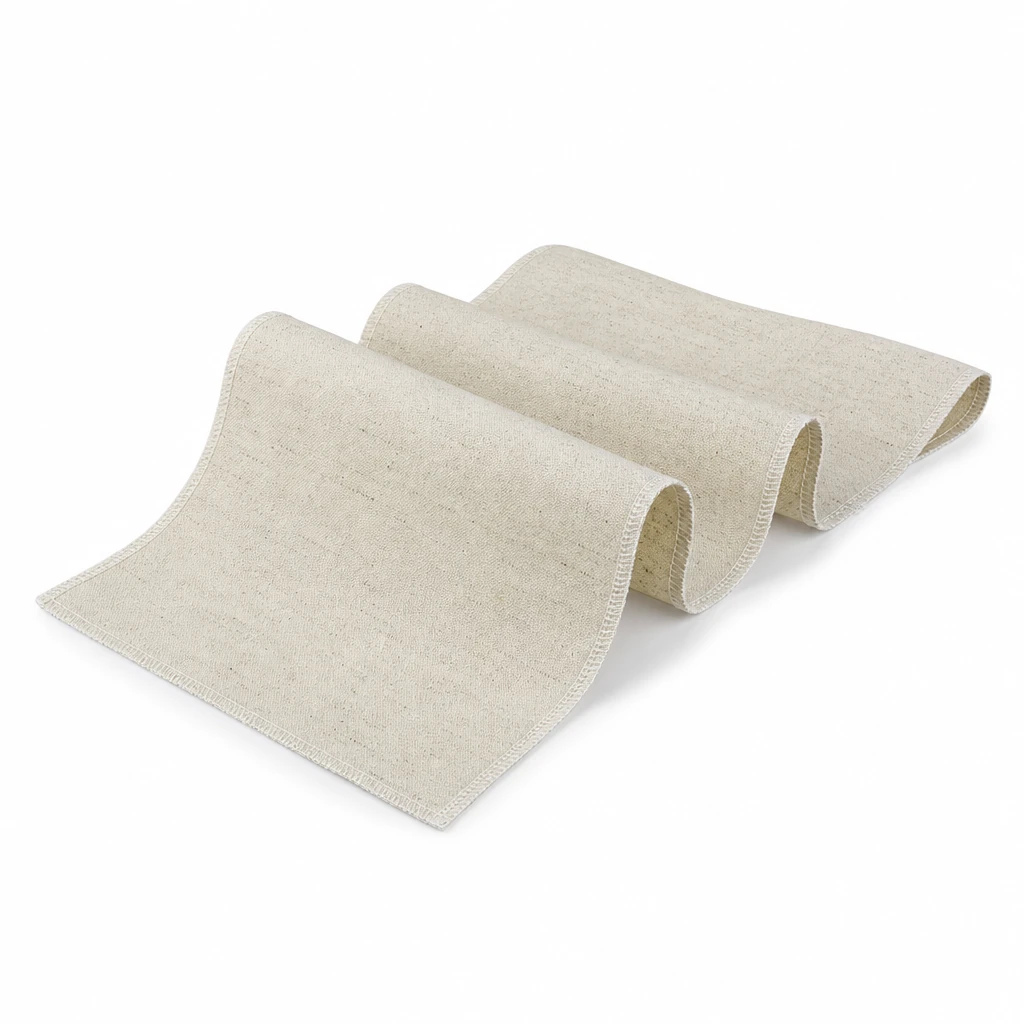
Clear a stable work surface and follow the cloth's supplied preparation instructions. Prepare the surface as appropriate for the dough, then form a channel and a raised fold alongside it. Arrange the next channel without pulling the fabric taut across the first one. Keep space around the layout for your hands and transfer equipment.
The folds support the sides of the dough; they are not moulds that guarantee an exact baguette profile. Avoid overcrowding and choose proofing conditions for the actual dough recipe. The listing does not supply universal timings or temperatures, and choosing a particular cloth size does not determine when dough is ready to bake.
Before loading the cloth, decide where the proofed dough will go and keep that surface ready. At the appropriate stage for your recipe, open the supporting fold and transfer the dough using a suitable method or transfer tool. Work with one piece at a time and avoid pulling the whole cloth out from underneath the entire row.
Transfer equipment, baking trays and dough are separate from the cloth order. The product is described for final proofing, not as a heat-resistant liner. Do not place it in the oven or infer an oven-safe temperature from its linen description. For a worked baguette preparation example, see the baking reference below; it is not a test of this particular cloth.
The listing describes beige woven linen with overlocked edges. It does not establish a fibre percentage, food-contact certification, chemical treatment or wash temperature. Do not use those missing details to make a purchase assumption. Resolve any required material or care specification before choosing the cloth for your kitchen.
Follow the supplied care instructions and applicable hygiene guidance. Do not turn general couche advice into an absolute rule that the cloth must never be cleaned. If it is contaminated or mouldy, stop using it for food contact and resolve cleaning or replacement. The care reference below is background guidance, not this product's certification or cleaning specification.
These are the listing's dimension pairs. Compare them with dough length, fold allowance and worktop space; no fixed loaf capacity is stated.
| Listed size | Layout check | Before selecting |
|---|---|---|
| 36 x 45 cm | Check dough length against both sides of the smallest option. | Include end clearance and at least the folds your layout needs. |
| 45 x 77 cm | Compare the longer side with your intended dough length. | Check that the other side still allows room for channels and folds. |
| 88 x 65 cm | Sketch your rows within this footprint. | Allow space between dough pieces rather than counting cloth area alone. |
| 120 x 70 cm | Check the full working area before spreading the cloth. | Leave access for loading and transferring dough. |
| 150 x 60 cm | Compare the long, narrower footprint with your available surface. | Do not assume that the longest cloth fits the most rows in every layout. |
Check the current cloth options on the product page, or browse related kitchen and baking equipment. A scale helps with ingredient measurement; it does not replace proofing support.
A couche is a cloth arranged in raised folds to support shaped bread dough during final proofing. The dough is then transferred to a suitable baking surface; the cloth is not the baking surface.
Choose by shaped dough length, the fabric needed for channels and folds, and the clear space on your worktop. Compare both listed dimensions and sketch the layout. The listing does not guarantee a fixed number of loaves per size.
No. One order supplies one cloth in the selected size. The five listed options are 36 x 45, 45 x 77, 88 x 65, 120 x 70 and 150 x 60 cm.
Do not use this cloth as an oven liner. The listing describes final proofing support and does not provide an oven-safe temperature. Transfer the dough to an appropriate baking surface before baking.
Not as an absolute rule. Follow the supplied care instructions and applicable hygiene guidance. Contamination or mould requires you to stop food-contact use and resolve cleaning or replacement; the listing does not specify a wash temperature.
Oct 16, 2026 by SW SW
Oct 16, 2026 by SW SW
Cookie preferences