Jul 31, 2026 / By SW-SW / in Home & Lifestyle Product Tips Outdoor & DIY
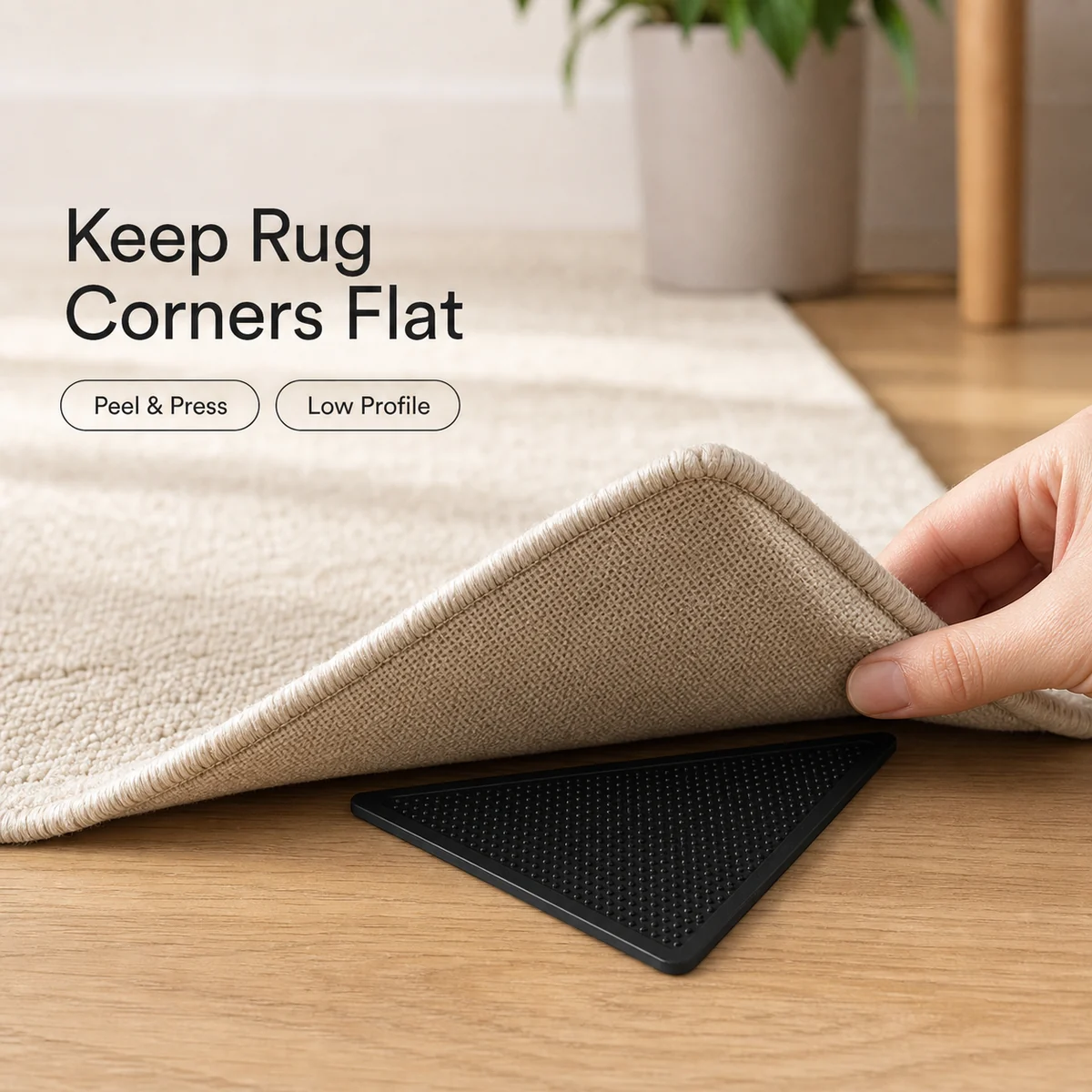
Curling rug corners make a room look unfinished, and they can also create an annoying edge that catches shoes, robot vacuums, chairs and pet paws. The tricky part is fixing the corner without leaving tape marks, stretching the rug, or using a bulky mat that changes the way the rug sits on the floor.
For broader comparison before choosing, browse rugs, carpets and mats and compare related product types in the same shopping path.
Check the floor finish and rug backing together before choosing a corner pad. The gel pads shown here are intended for clean, dry, smooth indoor hardwood, tile, laminate and vinyl; the finish and contact area still need checking. A textured, dusty or damp underside may not provide even contact. Do not assume a pad intended for smooth hard floors also works on carpet. For delicate or newly finished flooring, follow the floor manufacturer's restrictions before testing an adhesive product.
| Surface or rug issue | Better approach | Check first |
|---|---|---|
| Curled corner on smooth hardwood, tile, laminate or vinyl | A removable corner pad compatible with both surfaces | Check the floor finish and backing; spot test before placing the pad. |
| Whole rug slides | A full-size non-slip rug pad | Match it to the floor, backing and rug dimensions. |
| Washable rug moved for cleaning | Removable pads, if the instructions permit | Check removal before washing; only reapply to clean, completely dry surfaces. |
| Delicate or newly finished floor | Flatten without adhesive first | Check the floor manufacturer's restrictions; a spot test is not a universal safety guarantee. |
| Rug laid over carpet | A solution specifically intended for carpet | Do not assume gel pads intended for smooth hard floors are compatible. |
| Textured backing or weak grip after use | Check contact and cleaning before reapplying | Remove dust and residue as directed, let dry and reassess compatibility; do not add stronger glue. |
Corner products do not all work the same way: adhesive pads contact the floor and rug backing, while some anti-curl stiffeners attach only to the rug. A full-size non-slip underlay addresses movement across the rug's footprint. Choose the mechanism for the problem and check where the product is meant to attach; do not treat these options as interchangeable.
The reusable rug corner grippers in the linked set are black triangular pads made from soft gel adhesive material. Place a pad within the rug edge on a compatible smooth indoor floor, peel the protective layer and press the corner down. This hard-floor example does not establish compatibility with a carpeted floor.
Most curled corners come from storage memory, foot traffic, furniture movement, vacuuming, humidity changes or a rug that has been rolled tightly for shipping. Thin washable rugs and lightweight runners are especially likely to lift at the corners because the backing does not always have enough weight to hold the edge down.
Start without adhesive. If the rug's care instructions permit it, gently reverse-roll the curled corner, lay it flat and apply a clean weight with even pressure. Do not force a stiff or fragile backing or introduce heat or moisture without care guidance. If the corner continues to lift, check a compatible removable corner pad rather than covering the floor with permanent tape.
For renters and anyone with finished wood flooring, removability alone does not establish compatibility. Check the floor finish and rug backing, follow both manufacturers' restrictions and test an inconspicuous area before use. Do not assume a washable or reusable pad is safe on every coating, or that it will leave no marks.
Corner grippers are best for small to medium area rugs, hallway runners, entry mats, bedside rugs and lightweight living-room rugs. They work especially well when the rug is already the right size but needs help staying flat at the edges.
If grip weakens, first inspect the floor, rug backing and pad for dust, pet hair or cleaning residue. Clean them as their instructions allow; for the gel pads shown here, gently wipe the adhesive side and let it air dry completely before reapplying. Next check whether the contact area is smooth and compatible. If the pad still will not hold, reassess the surface or solution rather than adding stronger adhesive. Do not trap moisture under the rug, especially on hardwood or laminate.
A corner gripper cannot repair a badly warped rug, a rug that is too small for the room, or a floor that is wet, dusty or uneven. It also should not be treated as a guarantee against slipping. Think of it as a neat everyday fix for curling corners, not a replacement for choosing the right rug size, backing and placement.
For more practical home fixes, browse Home & Lifestyle, Product Tips and Outdoor & DIY on the SW-SW blog.
Clean the floor, flatten the rug first, then use removable rug corner grippers or a floor-safe rug pad. Avoid strong tape that may leave residue.
They should be used only on clean, dry, compatible floors. Always lift slowly and follow the product instructions, especially on newly finished wood.
Yes, but remove or check the grippers before washing if the product instructions require it. Reapply only when the rug backing is fully dry.
For curled corners, grippers are smaller and cleaner. If the whole rug slides, a full rug pad is usually the better solution.
Clean them whenever grip weakens or dust builds up. Let them dry completely before placing the rug back down.
Oct 16, 2026 by SW SW
Oct 07, 2026 by SW SW
Use this link to compare the guide with the live rug gripper product page before checkout.
Cookie preferences