0 0
0
No products in the cart.

Shopping Cart

How to Use Sneaker Crease Protectors Without Making Shoes Too Tight

Sep 10, 2026 / By SW SW / in Buying Guides Style & Beauty

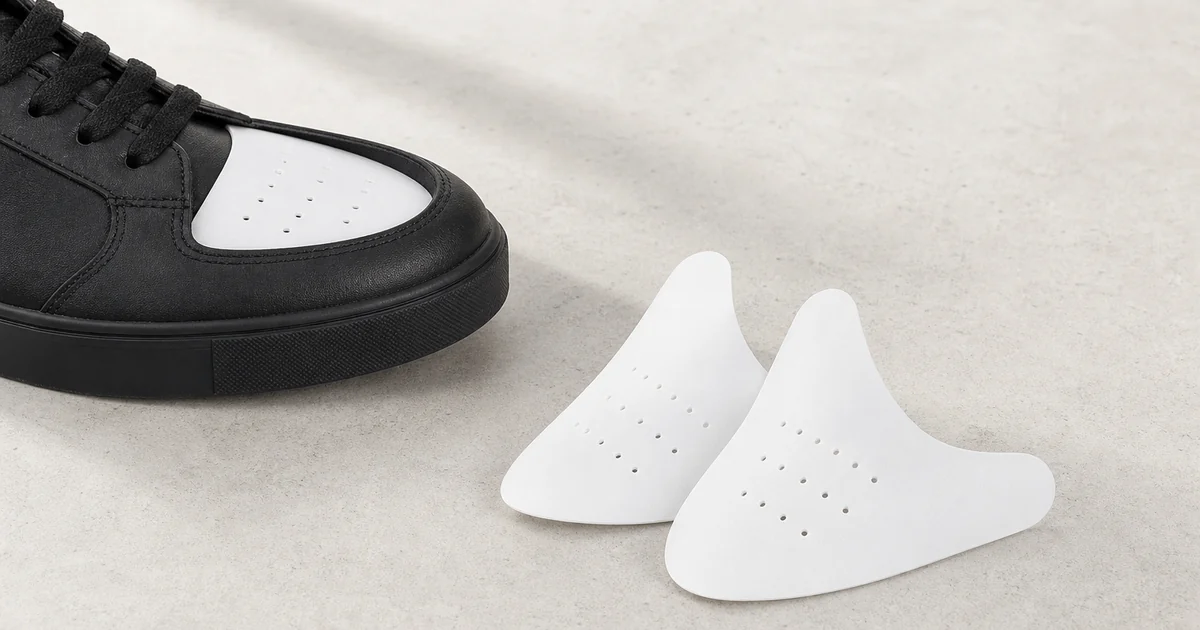
White EVA sneaker crease protectors beside an unbranded sneaker toe for fit checking

Sneaker crease protectors can help support the toe box, but they are not magic repair parts and they should not make shoes painful. The EVA pair covered here sits inside the front of a sneaker, uses a curved perforated shell and comes in black or white with S and L insert sizes. This guide focuses on fit checks, trimming expectations, when to remove them and how to choose without making the shoe too tight.

Quick answer: how should sneaker crease protectors fit?

Sneaker crease protectors should sit under the toe box with enough room for your toes to move. They should support the upper lightly, not press hard against the foot. If the shoe feels squeezed, numb, unstable or painful, remove the inserts and reassess size, shoe shape or whether this shoe is a poor match for protectors.

Use the listed insert dimensions as insert dimensions, not universal shoe sizes. The S insert is about 10.5 x 9 cm, the L insert is about 13 x 11 cm, and the product is about 3 mm thick. That thickness still takes up space inside the shoe, so fit testing matters more than assuming a letter size will work.

Key takeaways before you put them in shoes

  • Crease protectors support the sneaker toe box; they do not erase existing creases or guarantee a crease-free upper.
  • Check toe room first because even thin 3 mm EVA inserts reduce interior space.
  • Treat S and L as insert dimensions, not exact shoe-size promises.
  • Use them mainly in sneakers with enough toe-box volume and removable or flexible fit room.
  • Remove the inserts if they cause pressure, rubbing, numbness or a changed walking feel.

Check the toe box before choosing a size

The toe box is the front part of the shoe where your toes sit and where many sneaker uppers crease during walking. A protector sits below that upper and creates a light internal support. That means the shape of the shoe matters. A roomy sneaker may accept an insert easily, while a narrow or low toe box may feel crowded immediately.

Compare the product dimensions against the inside front of the shoe, but do not use dimensions as the only decision. The S option is about 10.5 x 9 cm, and the L option is about 13 x 11 cm. Those numbers describe the insert, not a guaranteed shoe size range. Shoe toe shapes vary too much for one letter size to fit every sneaker.

  • Check toe-box height and width before ordering.
  • Leave room for natural toe movement.
  • Avoid using inserts in shoes that already feel tight.
  • Treat listed dimensions as a comparison tool, not a universal fit chart.

Install them for support, not pressure

Place each protector inside the front of the matching shoe, curved side following the toe-box shape. The perforated EVA should sit smoothly rather than folding, bunching or pushing into one side. After placing it, put the shoe on slowly and check pressure points before walking outside.

A good test is a short indoor wear check. Stand, bend your foot gently and walk a few minutes. If the insert shifts, clicks, pinches or makes the shoe feel shorter, remove it. The product can support upper shape only when the shoe has enough interior room for the added layer.

  • Insert one protector per shoe.
  • Keep the curved shell aligned with the toe box.
  • Do a short indoor fit test before longer wear.
  • Stop using them if comfort changes in a negative way.

Understand what crease protectors can and cannot do

A crease protector may reduce how sharply a sneaker upper bends during normal movement, especially on shoes with softer toe areas. It may also help a newer shoe keep a cleaner look for longer. That is different from removing existing creases. Once an upper has already been folded, an insert cannot restore material or guarantee a smooth surface.

Avoid claims that sound too certain. Creasing depends on shoe material, fit, walking style, toe-box height and how often the shoes are worn. The inserts are practical accessories, not shoe repair tools, medical devices or comfort orthotics. Their value is limited support for compatible shoes.

  • Best for prevention support on compatible sneakers.
  • Not a repair for deep existing creases.
  • Not a guarantee against all future creases.
  • Not an orthotic or medical foot support product.

Use color and pair quantity correctly

The product is sold as one pair, with black or white color options. Color choice is mostly about matching the shoe interior or personal preference. Since the inserts sit inside the toe box, they usually are not visible during normal wear, but a matching tone can look cleaner when the shoe is off.

Do not mix quantity expectations with lifestyle photos. A pair means two pieces for one pair of shoes, not several backup sets. If you plan to use protectors in multiple sneakers, compare how each shoe fits separately. One shoe model may accept them well while another feels too tight.

  • One pair means two insert pieces.
  • Black or white color is mainly an interior-match choice.
  • Test each sneaker style separately.
  • Do not assume one insert size works across every shoe you own.

When to skip crease protectors

Skip them for shoes that already have limited toe room, shoes used for long walks where any pressure becomes obvious, or footwear where the insert changes balance and flex too much. Also skip them if you are trying to fix pain, correct foot mechanics or solve a medical fit issue. That belongs to proper footwear advice, not a simple EVA insert.

If your priority is comfort, the best protector is the one you can forget is there. If the insert constantly reminds you of itself, it is probably the wrong match. Searchers comparing crease guards often want a clean sneaker look, but the right answer must still put fit first.

Sneaker crease protector fit checklist

Use this fit checklist before wearing inserts for a full day.

CheckGood signStop sign
Toe roomToes can move naturallyPressure, numbness or curled toes
Insert sizeShell follows the toe boxEdges fold, buckle or dig in
S or L choiceDimensions match interior spaceLetter size chosen without checking shoe shape
Walking feelShoe flexes predictablyInsert shifts, clicks or changes balance
Crease expectationLight support for compatible uppersExpecting repair or a guaranteed crease-free result

Useful internal links for sneaker fit and shoe care

Use these links to compare the inserts with the product page, shoe categories and nearby fit guides.

FAQ

Do sneaker crease protectors stop all creases?

No. They may reduce sharp bending on compatible sneakers, but material, fit and walking style still matter. They do not guarantee a crease-free shoe.

Can crease protectors remove existing sneaker creases?

No. They are support inserts, not repair tools. Existing creases in the upper should not be treated as something an EVA insert can erase.

Should sneaker crease protectors feel tight?

They should not feel painful or restrictive. Remove them if you feel pressure, numbness, rubbing or a changed walking feel.

How do you choose S or L crease protectors?

Compare the listed insert dimensions with your shoe toe box. S is about 10.5 x 9 cm, L is about 13 x 11 cm, but shoe shape still matters.

Are EVA crease protectors the same as insoles?

No. They sit at the toe box to support the upper shape. They are not full-length insoles, shoe trees or medical foot-support products.


What should readers take from How to Use Sneaker Crease Protectors Without Making Shoes Too Tight?

How to Use Sneaker Crease Protectors Without Making Shoes Too Tight is a SW-SW shopping guide for comparing practical product choices before purchase. Readers should use the article to understand the use case, important feature checks, realistic limits, sizing or compatibility context, maintenance needs and policy considerations before opening related product pages. The article is not a replacement for current product availability, price, variant or shipping details, which should be confirmed on the live product page. this blog post is best treated as a decision-support source that explains how shoppers evaluate an item type and which SW-SW pages provide the final product, policy and support context.