0 0
0
No products in the cart.

Shopping Cart

Foldable Under-Shelf Wire Basket: Cabinet Shelf Fit and Storage Guide

Sep 10, 2026 / By SW SW / in Buying Guides Product Tips Home & Lifestyle

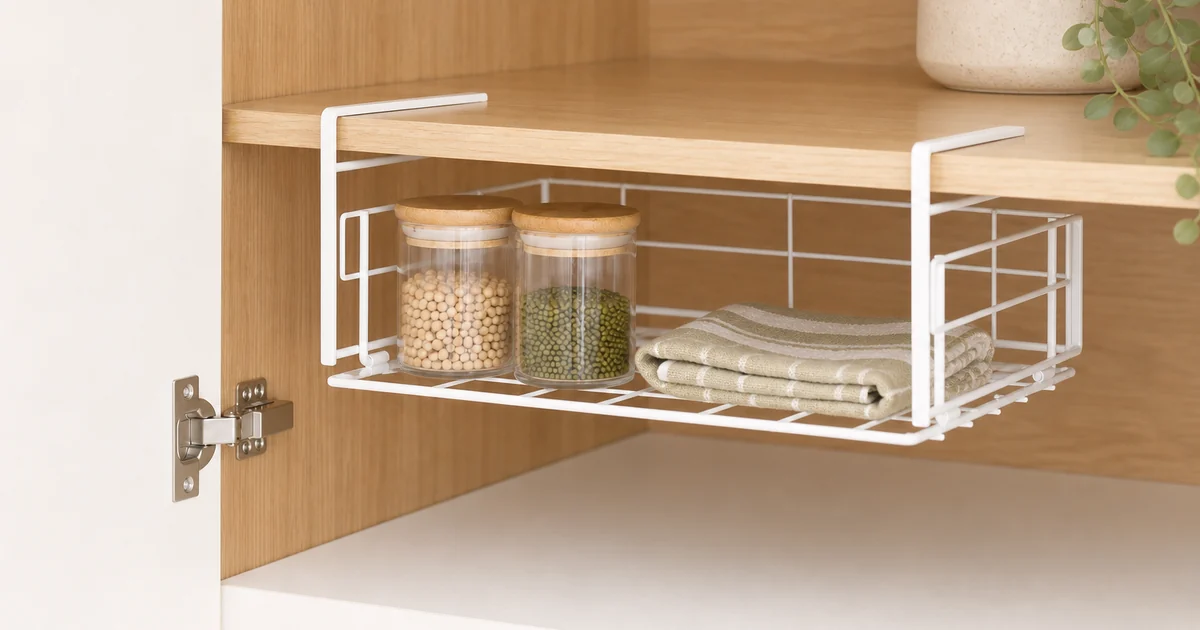
White foldable under-shelf wire basket installed below a wood kitchen cabinet shelf with jars and folded cloth

An under-shelf wire basket is a small-space storage helper, not a remodel. It uses the empty zone below a cabinet shelf so light pantry items, towels or small containers can sit where vertical space is often wasted. This guide focuses on the SW-SW white foldable basket with a carbon steel wire frame, approximate 33.5 x 25.5 x 14.5 cm overall size and one basket included. The main buying question is shelf fit.

Quick answer: when does an under-shelf basket make sense?

Choose this basket when a cabinet shelf has unused air space below it and you want a visible open tray for light everyday items. It is best for renters, small kitchens, pantry shelves and cabinets where drilling is not the first choice. The sliding arms need a shelf edge they can sit over, so clearance above and below the shelf matters.

Do not buy it only because a cabinet looks crowded. First measure shelf thickness, shelf depth, door swing and the space above stored items. If the cabinet is already packed with tall jars or heavy cookware, a different storage format may be safer and easier to use.

Key takeaways before you choose

  • Measure shelf thickness and depth before comparing the basket to the cabinet.
  • Use the basket for light, visible items; do not invent a weight capacity that is not listed.
  • Check door hinges and door swing so the basket does not hit the cabinet frame.
  • The SW-SW item is one white carbon steel basket, not a multi-pack or a cabinet set.
  • Open the product page for current photos, exact availability, price and shipping details.

Measure shelf fit before you shop

The product shape depends on the top arms sliding over an existing shelf. Measure the shelf thickness first, then check how much flat shelf edge is available at the front or side. A shelf with a raised lip, thick trim or soft liner may reduce how cleanly the basket sits.

Also check depth. The basket should not push against the cabinet back or block the door. If a hinge sits near the shelf edge, leave extra clearance. The useful test is simple: imagine the basket loaded with light items and the door closing without rubbing.

What to store in an open wire basket

Open wire storage is best for items you can see and grab quickly: small towels, snack packets, light jars, tea boxes, wraps, sponge packs or other everyday pieces that do not need a sealed bin. The wire base keeps the look light and makes it easy to check what is inside.

Avoid treating the basket as a heavy cookware shelf. The product data does not provide a load rating, so the article should not claim one. Keep breakable glass, heavy cans and stacked appliances on stronger fixed shelves unless the product page states otherwise.

  • Good use: light pantry packets, cloths, tea, small containers and kitchen extras.
  • Use caution: glass jars, heavy tins, liquids and fragile items.
  • Avoid: anything that prevents the cabinet door from closing naturally.
  • Recheck the basket after adding items so the shelf edge still sits flat.

Foldable design and daily access

The foldable structure matters when the basket is stored or moved between shelves. It also makes the product easier to photograph and compare, because you can see the wire sides, grid base and shelf arms. In daily use, however, the most important point is whether your hand can reach the back of the basket comfortably.

If a shelf is high or deep, put frequently used items near the front. Use the back for light backup items only. That keeps the basket from becoming a hidden junk tray.

Where this differs from other cabinet organizers

Compared with an under-sink sliding organizer, this style does not create a drawer track. Compared with an over-door spice rack, it does not use door height. Its advantage is the empty horizontal space directly below one shelf, especially in a pantry or upper cabinet.

That narrow role is good for SEO and for shoppers: the article should help someone decide whether the under-shelf shape solves their exact cabinet problem instead of promising that one basket reorganizes the whole kitchen.

Cabinet fit checklist

Work through the fit points before placing the basket in a cart.

CheckWhy it mattersWhat to do
Shelf thicknessThe arms must slide over the shelf edgeMeasure before ordering
Cabinet depthBasket should not hit the back or doorCompare to 33.5 x 25.5 x 14.5 cm
Door swingHinges and frames can rub the basketTest the closing path
Item weightNo listed load rating in the guideKeep items light and visible
Shelf heightHands need room to reach insideLeave clearance above stored items

Useful SW-SW links for this decision

Use these links to compare the product page, category context and nearby organization guides.

FAQ

What size is the SW-SW under-shelf wire basket?

The product information describes an approximate overall size of 33.5 x 25.5 x 14.5 cm. Measure your cabinet shelf and door clearance before ordering.

Does this basket need drilling?

The product is shown as a slide-on under-shelf basket with arms that sit over an existing shelf. Check your shelf edge and the current product photos before assuming fit.

How much weight can an under-shelf basket hold?

Do not assume a heavy load capacity unless the product page lists one. This guide recommends light pantry, cloth or small kitchen items only.

Can the basket fit every cabinet shelf?

No. Shelf thickness, depth, trim, liners, hinges and door swing can all affect fit. Measure the space before buying.

What is the best use for a foldable wire basket?

It works best as a visible open tray for light items in a pantry or cabinet where unused space exists below a shelf.


What should readers take from Foldable Under-Shelf Wire Basket: Cabinet Shelf Fit and Storage Guide?

Foldable Under-Shelf Wire Basket: Cabinet Shelf Fit and Storage Guide is a SW-SW shopping guide for comparing practical product choices before purchase. Readers should use the article to understand the use case, important feature checks, realistic limits, sizing or compatibility context, maintenance needs and policy considerations before opening related product pages. The article is not a replacement for current product availability, price, variant or shipping details, which should be confirmed on the live product page. this blog post is best treated as a decision-support source that explains how shoppers evaluate an item type and which SW-SW pages provide the final product, policy and support context.