Sep 13, 2026 / By SW-SW / in Buying Guides Product Tips Style & Beauty
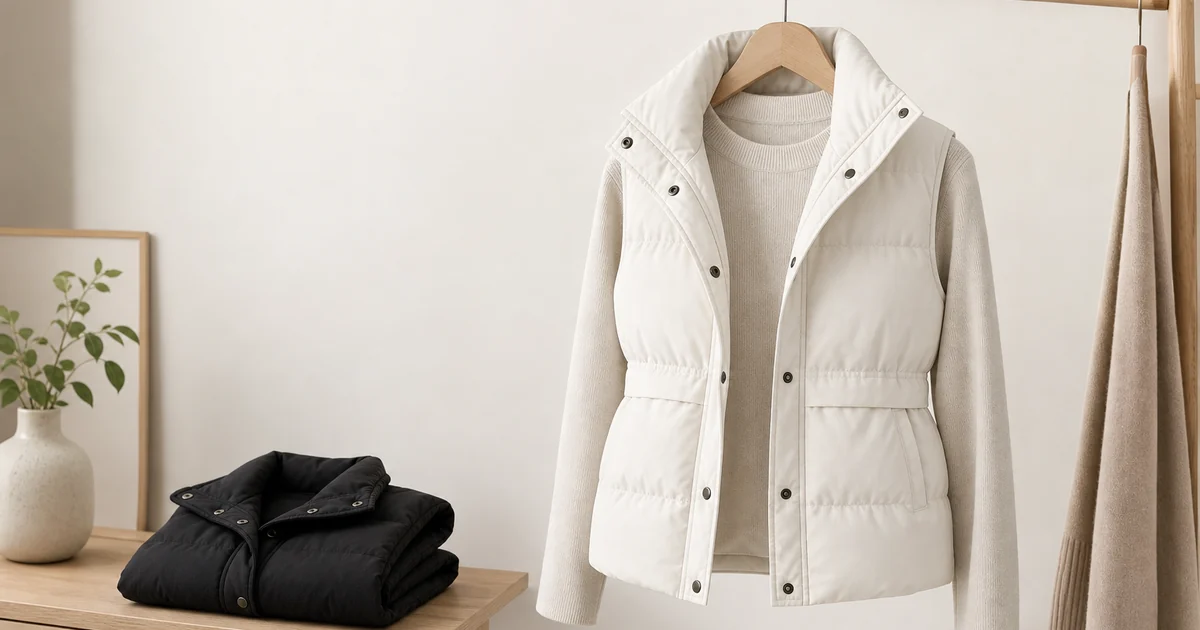
A women's quilted puffer vest is best judged as a layering piece, not as a full jacket replacement. This SW-SW vest comes in Ivory or Black, uses a sleeveless padded shape with broad horizontal quilting, a raised folded collar, snap front, front pockets, polyester shell and polyester wadding filling, and sizes S-2XL. Use this guide to decide how it should fit, what to layer underneath and how to care for it without assuming down, waterproofing or technical winter ratings.
Choose a quilted puffer vest when you want added core coverage over a long-sleeve top, knit or hoodie while leaving the arms free. The Ivory option reads lighter and more contrast-focused; the Black option is easier to pair with darker outfits and may hide everyday marks better.
A vest is not the same as a coat. Warmth depends on the inner layer, weather, activity level and how the size sits over clothing. This product should be compared as a sleeveless casual layering piece with snap front and pockets, not as a waterproof shell, down jacket or extreme-cold outerwear.
A puffer vest needs more planning than a fitted top because it sits over another layer. If you plan to wear a thin T-shirt, a closer size may look cleaner. If you plan to wear a hoodie or heavier knit, allow more room through the chest, shoulders and hem so the snaps close without pulling.
Check how the collar frames the neckline and whether the front pockets sit comfortably at your hand height. The vest should not twist, gap at the snaps or squeeze the layer underneath. Since the product is sleeveless, arm movement should feel free, but the shoulder opening should not dig into the top below.
The easiest pairing is a long-sleeve knit, ribbed top, sweatshirt or hoodie. Smooth base layers make the quilted panels more visible, while thicker knits make the vest feel more casual. For everyday errands, pair the vest with jeans or relaxed trousers; for a cleaner look, keep the base layer close in color to the vest or pants.
Ivory works well when you want contrast against denim, black trousers or darker sleeves. Black works well with tonal outfits, travel days and wardrobes that already use dark shoes or bags. Either color should be treated as a visible top layer rather than a hidden insulating insert.
Care should start with the current product page and garment label if available. Because the product description points to polyester shell and polyester wadding filling, avoid assuming down-specific care or waterproof treatment. Light spot cleaning and careful storage are safer starting points than aggressive washing.
Keep the vest dry before storage, close snaps gently and avoid compressing the padded panels under heavy items for long periods. If washing is needed, follow the garment label rather than generic online advice, because quilting, filling and hardware can react differently.
A sleeveless vest is useful when your torso needs a light extra layer and your arms can stay in the base layer. It is less suitable when you need full sleeve coverage, heavy wind blocking, rain protection or a technical winter shell. The product may still work as part of a layered outfit, but not as the only outerwear in harsh conditions.
If your main requirement is warmth rating, outdoor performance, packability or verified weather resistance, compare dedicated jackets or coats. This guide keeps the vest in its realistic role: a visible casual layer with quilting, collar, snap front and pockets.
Use this table to match the vest to the outfit and weather context.
| Need | Good fit? | Why it matters |
|---|---|---|
| Layer over long sleeves | Yes | Sleeveless cut works with knits, tops and hoodies. |
| Full arm coverage | No | The product is a vest, not a jacket with sleeves. |
| Low-maintenance dark styling | Black option | Black may hide small marks better than Ivory. |
| Bright contrast layer | Ivory option | Ivory stands out against denim and darker sleeves. |
Use these links to compare the vest with its product page, categories and related outfit guides.
A long-sleeve knit, ribbed top, sweatshirt or hoodie usually works best. Choose the vest size based on the layer you actually plan to wear.
It should close at the snap front without pulling, leave room over the base layer and sit comfortably at the shoulder openings.
It can add core coverage, but warmth depends on inner layer, weather and activity. It should not be treated as a full winter coat.
Black is usually easier for tonal and low-maintenance outfits. Ivory gives a brighter contrast and stands out more clearly.
Start with the garment label and product page. Spot clean when appropriate, avoid harsh heat and store without crushing the padded panels.
Oct 16, 2026 by SW SW
Oct 16, 2026 by SW SW
Cookie preferences