Sep 30, 2026 / By SW-SW / in Buying Guides Outdoor & DIY
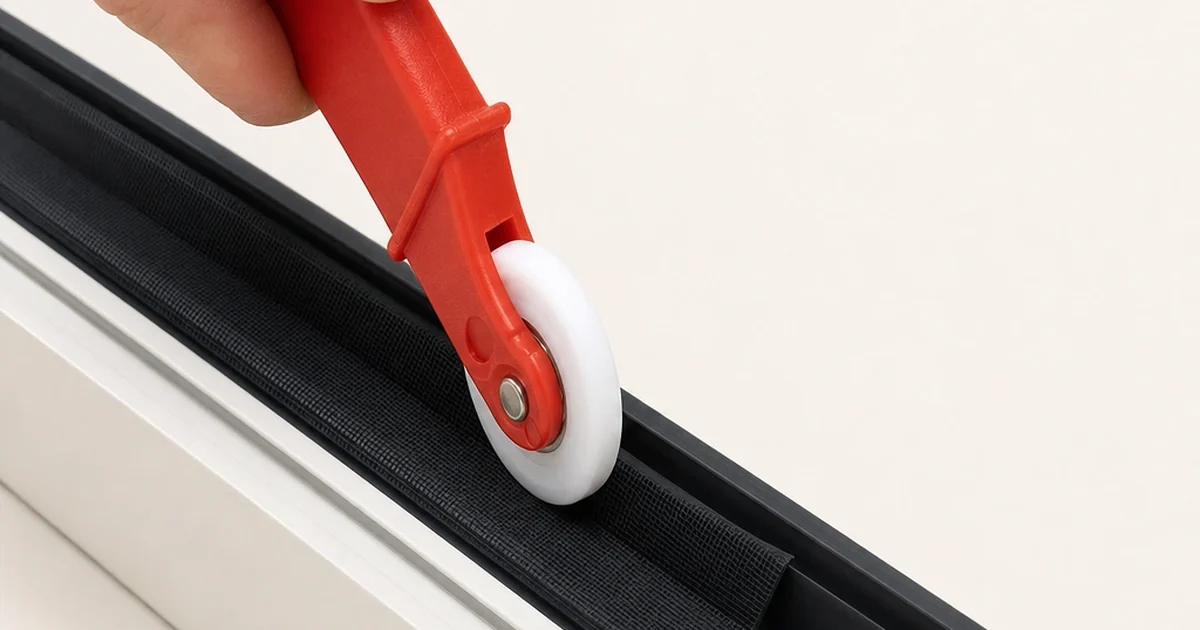
A window screen spline roller helps press retaining spline into a frame groove so the mesh stays in place. Before rolling, identify the frame channel, choose mesh and spline that actually fit it, and confirm the screen frame is sound. The red double-ended tool shown here has a white nylon wheel at each end. It is one roller tool, not a kit with mesh, spline or a replacement frame. Neither wheel profile nor a compatible groove size is specified for this listing, so check your own materials rather than assuming universal fit.
Remove the old screen only after you have checked how the frame is assembled. Look for bent corners, a blocked or cracked channel, and any old spline that has hardened or shrunk. A roller cannot repair a broken frame or make an unsuitable spline fit. If you are replacing mesh, note the existing spline size if it is still representative, and compare it with the actual groove rather than ordering by an image alone.
Check that the frame lies flat and that the new mesh covers the opening with enough surplus to grip while you work. Gather the appropriate mesh and spline separately, a stable work surface, and a suitable cutting tool for final trimming. The specific red tool in the linked product listing supplies two nylon wheels on one handle; it does not include the other installation materials. Handle the frame and trimming tool carefully so neither the mesh nor your hands are damaged.
Lay the mesh over the clean frame and align it before beginning. Start at a straight run where you can watch the spline enter the groove. Use whichever wheel end sits comfortably against your actual channel and materials; the listing does not provide wheel-profile dimensions, so a short test is more reliable than assigning one end a universal job. Hold the tool steady and press in small, controlled sections instead of trying to force the whole length at once.
After the short test, check both sides of the mesh. The spline should sit in the channel without cutting or pinching the fabric, and the mesh should remain flat. If the spline stands proud, jumps out or requires excessive force, stop and recheck its diameter, the groove and the mesh thickness. More pressure from the roller is not a substitute for compatible materials. If the old frame has debris in the channel, clear it before continuing.
Work around the frame in a measured sequence, maintaining a consistent mesh margin. At a corner, slow down and guide the spline into the turn without twisting the mesh or pushing the wheel across the frame face. Corners and narrow channels are where an otherwise acceptable combination can bunch. If the screen develops diagonal wrinkles, pause and correct the alignment rather than burying the problem under more spline.
On the last side, check that the mesh is taut enough to lie flat but not pulled so hard that the frame bows. Inspect the full perimeter for lifted spline, uneven tension and small tears before trimming any excess. Trim only when the screen is seated and you can keep the blade away from the finished mesh and your hand. If a frame corner or channel is damaged, repair or replace the frame component before treating the installation as finished.
If the spline repeatedly will not enter or stay in the groove, the first question is whether the chosen spline, mesh and channel belong together. A too-thick combination can be hard to seat; a too-loose combination may not retain the screen. The product page does not state a tested range of spline diameters or frame types for this roller. Use the measured dimensions and the frame or screen manufacturer's guidance for material selection, especially for unusual frames.
A double-ended roller is useful for a conventional retaining-spline workflow, but not every screen is assembled that way. Some frames use other retaining systems or need special parts. Verify the construction before buying the tool. The linked product is sold as one fixed red version with two white nylon wheels; its minimum order is five individual tools, not five wheels or five complete screening kits. Check the current product page for the latest images and order terms.
Use the observations below to decide whether to continue, adjust the materials or stop before damage occurs.
| Check | Good sign | If it fails |
|---|---|---|
| Frame groove | Clean, intact and measured | Clear debris or repair the frame first |
| Spline match | Seats on a short test run | Recheck diameter and mesh thickness |
| Mesh tension | Flat with an even margin | Realign before continuing |
| Corners | Spline follows the turn | Slow down and remove any bunching |
| Final edge | No lift, tears or bowed frame | Correct fit before trimming |
The product listing confirms the tool's visible design and current purchase terms. The categories help compare other tools without implying that they are interchangeable.
No. The linked listing is for one double-ended roller tool. Mesh, retaining spline and the screen frame are separate materials.
Do not assume that. The listing does not specify a universal frame or spline size. Measure the groove and verify the screen's retaining system first.
Test the end that sits comfortably against your actual groove and materials. The listing does not state wheel-profile dimensions, so do not assign a universal function to either end.
Stop and check groove condition, spline diameter, mesh thickness and tension. Extra force from the roller will not correct a poor material fit.
The product sells one roller per unit, with a minimum order of five units. That does not include five screening kits.
Oct 16, 2026 by SW SW
Oct 16, 2026 by SW SW
Cookie preferences