Sep 30, 2026 / By SW-SW / in Buying Guides Product Tips
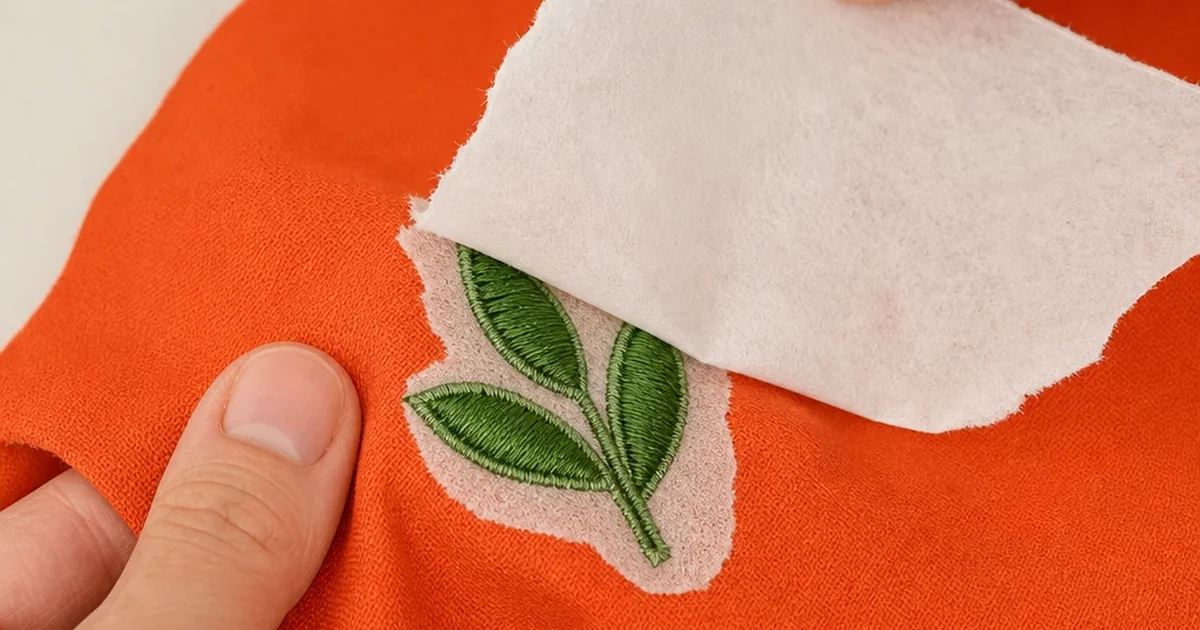
Tear-away embroidery stabilizer provides backing during stitching, after which you tear away the surplus around the design. Start with the fabric: this product's instructions describe use under stable woven fabric, with fabric and backing hooped together. Then check the sheet against the actual hoop, not just the machine's advertised embroidery area. The pack contains 100 white precut sheets, each 12 x 12 in (30.48 x 30.48 cm), made from 100% polyester nonwoven and listed as 2.0 oz grade. A spare-fabric stitch-out helps determine whether that backing, fabric and design work together before you use the final piece.
A stable woven fabric gives the stitches a base that can remain controlled after surplus temporary backing is removed. Check the construction and how the actual fabric moves, including diagonally; do not decide solely from thickness or fiber content. The product page directs this tear-away sheet to stable woven fabric and does not give a blanket approval for knits or stretch garments.
OESD's stabilizer guidance distinguishes tear-away for stable fabrics from cut-away support for stretch fabrics and dense designs. That is useful selection background, not a compatibility test for this pack. If the material stretches, the weave is loose or the design is dense, compare backing options and make a sample before deciding.
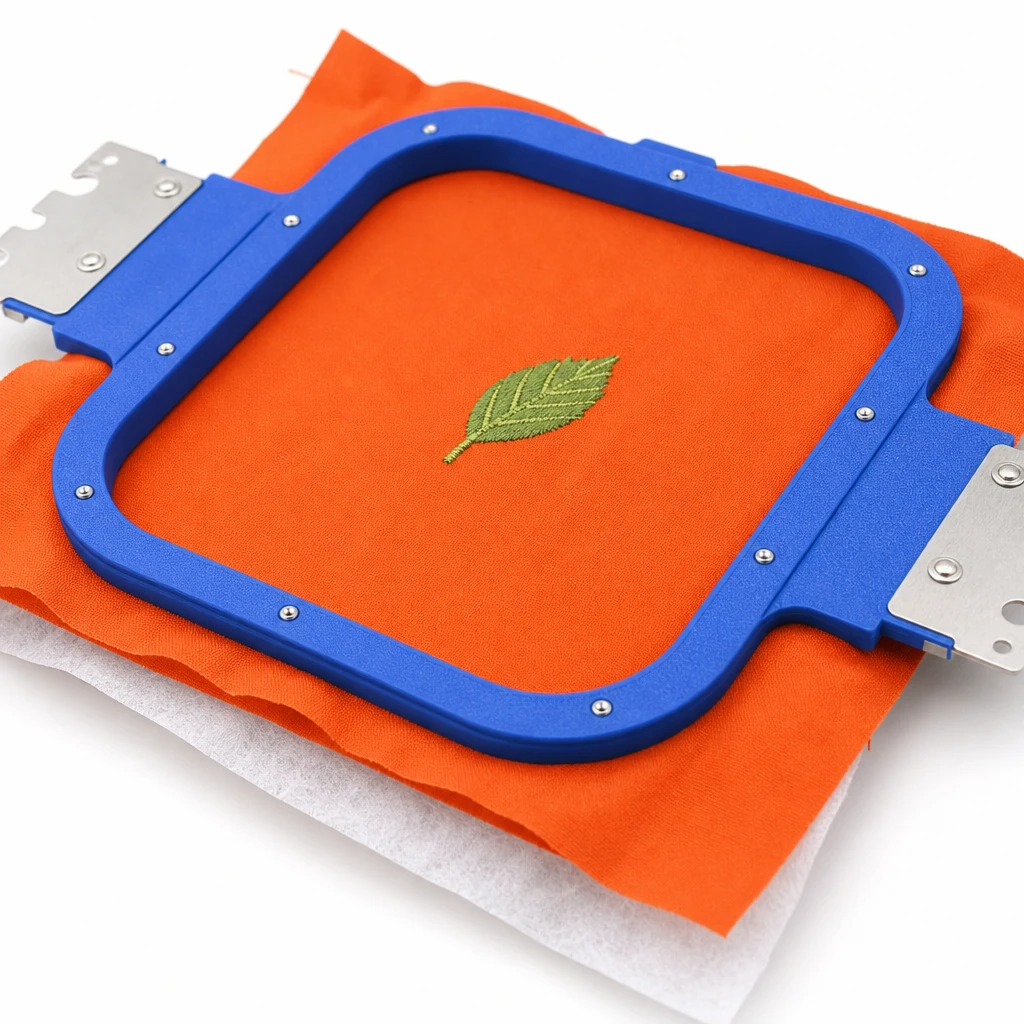
Measure the area needed to hold the backing securely in the hoop, including the material gripped outside the stitching field. A machine's embroidery field describes where it can stitch; it does not necessarily describe the full sheet needed to clamp the fabric and backing. Compare both sheet dimensions with your hoop's instructions and physical frame.
Lay an unused sheet under a spare piece of the intended fabric and check how both sit in the frame. Avoid a layout that barely reaches the clamping area or requires stretching the fabric to fit. The product does not name compatible hoop models, so a nominal 12 in dimension alone is not a fit guarantee.
The listed sequence is to place backing below stable woven fabric, hoop both layers, embroider and tear away the excess. Follow your equipment instructions for hooping and stitching, and start with a sample using the intended fabric and design. Inspect fabric movement, puckering, stitches and the reverse before making the final item.
When removing surplus backing, support the stitched area and work carefully around it instead of pulling hard on the fabric. Some backing may remain beneath the stitches. Check the reverse of your sample to see whether the remaining backing suits your project. This listing does not describe the sheets as wash-away, fusible or self-adhesive, so do not substitute those removal or mounting methods.
The count is 100 precut sheets, not a roll and not a promise of 100 completed designs. Your test pieces, hoop size, design layout and backing choice determine usage. If a project needs additional support, verify the method rather than assuming one layer is always enough or that more layers will fix every stitching problem.
Treat 2.0 oz as the listed grade. It does not state the net weight of the 100-sheet pack. Before buying, compare the sheet format, white color and removable-backing method with the task you actually plan to sew.
Separate the verified pack details from the fit and fabric checks you need to make.
| Check | Listed fact | Your next check |
|---|---|---|
| Fabric | Directions describe stable woven fabric | Assess stretch, weave and design density; make a sample. |
| Sheet | 12 x 12 in (30.48 x 30.48 cm) | Measure the full hoop coverage and clamping margin. |
| Grade | 2.0 oz | Read it as the listed grade, not total pack weight. |
| Pack | 100 white polyester nonwoven sheets | Allow sheets for test pieces and the project's backing method. |
Confirm the current pack details before ordering, then choose separate equipment and fabric for your project.
OESD guide to tear-away, cut-away and wash-away stabilizers
Consider it for the stable woven-fabric use described by this product, where excess backing can be removed after stitching. Check fabric movement and the design with a test stitch-out.
No. Tear-away surplus is removed by tearing; cut-away surplus is trimmed and backing remains to support the design. Compare the fabric and design requirements before choosing.
No universal fit is stated. Each sheet is 12 x 12 in, and you must compare it with the full material area needed for your actual hoop, including clamping margins.
No. It is the listed grade, not the net weight of the 100-sheet pack.
The product directions describe stable woven fabric and do not certify all stretch fabrics. Compare a backing that suits your fabric and design, and test before using the finished item.
Oct 16, 2026 by SW SW
Oct 16, 2026 by SW SW
Cookie preferences