0 0
0
No products in the cart.

Shopping Cart

Pearl-Look Bracelet Bead Kit Guide for Layouts and Storage

Sep 11, 2026 / By SW SW / in Buying Guides Product Tips Style & Beauty

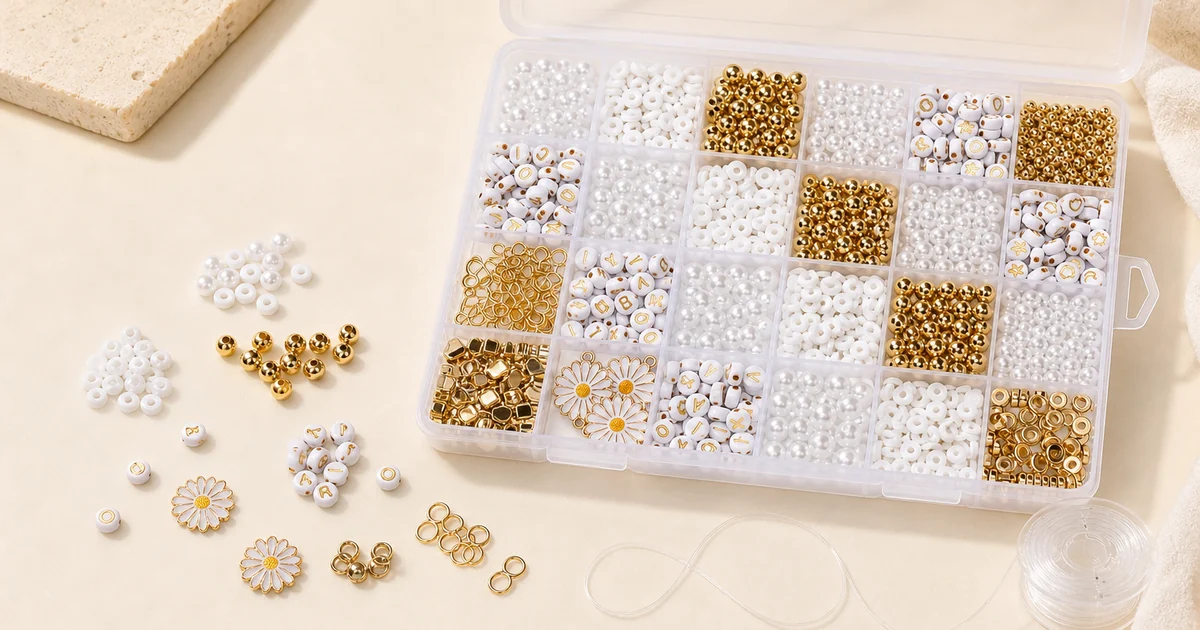
Pearl-look bracelet bead kit in a clear compartment box on a craft table

A pearl-look bracelet bead kit is best for shoppers who want one coordinated box for simple bracelet layouts, letter bead experiments and small gift projects. The product covered here combines white and gold-tone craft beads, letter beads, daisy-style charms, a 24-compartment organizer and about 6 m of cord. It is a craft bead assortment, not natural pearl jewelry and not a complete tool kit.

Quick answer: who should choose this bracelet bead kit?

Choose this bracelet bead kit if you want an easy starting point for planning white, pearl-look and gold-tone bracelet designs without buying every bead type separately. It works especially well for beginners who need a visible mix of spacer beads, letter beads and small charms in one box.

Do not choose it because you expect real pearls, precious-metal findings, finished bracelets or every jewelry-making tool. The decision should be based on the included bead mix, the organizer layout, the cord length and whether the style fits the bracelet ideas you already want to make.

Key takeaways before you buy

  • Treat pearl-look as an appearance description, not a natural pearl claim.
  • Plan letters and short names before threading because exact letter counts can vary.
  • Use the 24-compartment box as a layout station so small beads stay sorted.
  • Do not promise a fixed bracelet count; finished quantity depends on wrist size and design.
  • Check the product page for current photos, stock, price and kit details before ordering.

What the kit includes and what it leaves out

The kit is useful because it gathers several small bracelet-making parts in one organizer. The visible mix includes white pearl-look beads, flat white beads, gold-tone spacer pieces, acrylic letter beads, small decorative accents, daisy-style charms and beading cord. That makes the box suitable for testing a few coordinated layouts before you commit to a final strand.

The important buying boundary is just as clear. This is not a precious jewelry set, not a real-pearl claim and not a professional bench kit. Finished bracelets, pliers, clasps, scissors and measurement tools should be planned separately unless the product page explicitly lists them.

  • Good for simple stretch-style or cord-based bracelet planning.
  • Not a complete jewelry studio kit.
  • Not a natural pearl product.
  • Not a guarantee of a specific number of finished pieces.

Plan bracelet layouts before threading

Good bracelet layouts start with rhythm. Place the larger pearl-look beads first, then test gold-tone spacers between them so the bracelet does not look like a plain row of identical beads. Add letter beads only after the main pattern feels balanced.

For beginners, the safest workflow is to arrange a dry layout on the table or in the organizer lid before cutting cord. That lets you compare wrist length, repeated patterns and charm placement without wasting cord. If the design includes a name, check each letter first, then build the visual spacing around it.

  • Start with a center bead or center word.
  • Mirror both sides of the bracelet when possible.
  • Leave enough cord for tying and adjustment.
  • Photograph layouts before threading if you are comparing several options.

Use letter beads and daisy charms carefully

Letter beads make a bracelet feel personal, but they also create the highest planning risk. Exact letter distribution may not match every name, phrase or initials idea, so a short word is easier to plan than a long phrase. If a letter is limited, use initials, alternating beads or a charm-centered design instead.

Daisy and heart accents work best as focal details rather than being scattered everywhere. One daisy near the center, a small charm beside initials or two balanced accents can be more wearable than overloading the strand. The goal is a bracelet that still bends and sits comfortably.

  • Check letters before promising a custom name.
  • Keep charms away from tight knots when possible.
  • Use gold-tone spacers to separate letters clearly.
  • Avoid describing the charms as precious metal unless confirmed.

Storage box and cord checks

The 24-compartment organizer matters for both storage and layout planning. Small beads can disappear quickly on a desk, so the box helps keep colors, letters and accents separated while you work. Close compartments before moving the box, and do not rely on it as a heavy travel case.

Cord length also shapes the buying decision. About 6 m is useful for several trials, but every bracelet uses a different amount based on wrist size, knot style and mistakes during practice. Plan extra length for tying, then trim only after the fit is checked.

  • Sort beads back into compartments after each session.
  • Keep a separate measuring tape or ruler nearby.
  • Do not cut cord exactly to wrist length.
  • Store the box flat so tiny pieces stay in place.

How this guide fits the jewelry-making cluster

This page is designed as a product-led bracelet bead kit guide, not a general jewelry encyclopedia. It supports shoppers comparing bead assortments, beginner craft supplies, letter beads and small giftable projects. The product page remains the source for current photos, price and availability.

The internal cluster should connect bead buying, charm styling and jewelry storage without cannibalizing broader category pages. Related guides about charm pendants, giftable jewelry and travel jewelry storage provide natural next steps for shoppers who are building or organizing small accessories.

Bracelet bead kit decision table

Use this checklist before deciding whether the pearl-look bead kit matches your project.

Decision pointGood fitCheck first
Main projectSimple bracelets, initials and small giftsComplex jewelry may need extra findings
Material expectationPearl-look craft beadsNot natural pearls or precious metal
LettersShort words, initials and namesExact letter counts are not guaranteed
Storage24-compartment sorting boxNot a hard travel case
CordAbout 6 m for practice and layoutsFinished bracelet count varies by size

Useful internal links for bead and jewelry planning

Use these links to compare the product with related categories and guides before building a small jewelry-making cluster.

Pearl-look bracelet bead kit FAQ

Is this bracelet bead kit good for beginners?

Yes, it is a practical beginner option when you want a coordinated bead mix, visible compartments and cord for simple bracelet layouts.

Are the beads real pearls?

No. The guide uses pearl-look to describe the appearance. Treat the beads as craft beads, not natural pearls or fine jewelry materials.

How many bracelets can the kit make?

There is no fixed number. Finished quantity depends on wrist size, bead spacing, knot style, design choices and practice mistakes.

Does the kit include jewelry tools?

The product information focuses on beads, charms, an organizer and cord. Plan pliers, scissors, measuring tools or clasps separately unless the page lists them.

How should letter beads be planned?

Check available letters before cutting cord, then design around initials, short names or simple words so the bracelet still looks balanced.


What should readers take from Pearl-Look Bracelet Bead Kit Guide for Layouts and Storage?

Pearl-Look Bracelet Bead Kit Guide for Layouts and Storage is a SW-SW shopping guide for comparing practical product choices before purchase. Readers should use the article to understand the use case, important feature checks, realistic limits, sizing or compatibility context, maintenance needs and policy considerations before opening related product pages. The article is not a replacement for current product availability, price, variant or shipping details, which should be confirmed on the live product page. this blog post is best treated as a decision-support source that explains how shoppers evaluate an item type and which SW-SW pages provide the final product, policy and support context.