Sep 13, 2026 / By SW-SW / in Buying Guides Product Tips Outdoor & DIY
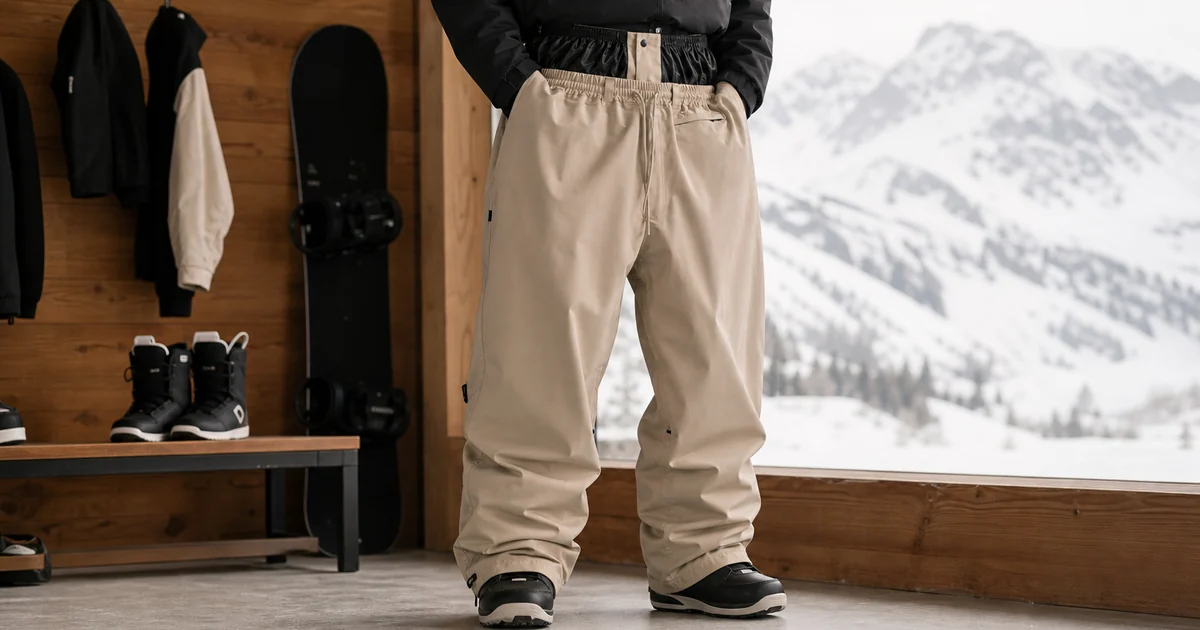
Loose-fit snowboard pants should be evaluated by construction details before color. This product is a wide-leg polyester snow-pants style with a raised waist panel, zipped pockets, inner snow gaiters, inner-thigh vent zippers and adjustable hems. It comes in sizes S through XXL and a broad color range, including nine solid colors plus one black-and-white mixed option. This guide focuses on fit, gaiters, vents, pockets and layering room without adding waterproof, insulated or professional-performance claims that the product page does not state.
Start with size and layering room. Loose snowboard pants need enough space for a base layer and movement, but they should not feel so oversized that the raised waist, gaiters or hems sit in the wrong place. The product page measurements are the safest reference.
Next, check the snow-specific details: inner gaiters, vent zippers, pocket layout and adjustable hems. These are the reasons this page should rank for loose-fit snowboard pants instead of generic wide-leg pants.
Do not assume waterproof ratings, seam sealing, insulation values or temperature ranges unless the current product page states them. Treat this as a feature and fit guide built around visible construction and stated listing details.
Loose-fit snowboard pants are meant to leave room for movement and underlayers, but the fit still needs control at the waist, rise and hem. The raised waist panel should sit where it supports coverage instead of folding down, and the legs should have enough space without catching underfoot.
Compare the S through XXL chart with pants you already use for winter layers. If you plan to wear a base layer underneath, measure over that base layer or allow practical ease. Avoid choosing only by color, because a great color will not solve a waist or inseam mismatch.
Inner snow gaiters are one of the clearest snowboard-pant signals on this product. They sit inside the lower leg and help create a barrier around boots. That does not mean the pants have a specific snow rating, but it does mean the design is more snow-oriented than a plain cargo or travel trouser.
Check the product photos for how the gaiter sits inside the pant opening. The gaiter should work with your boot shape and the adjustable outer hem. If you plan to wear bulky boots, confirm the hem opening and adjustment before choosing a size.
The inner-thigh vent zippers can help you manage comfort when activity changes, especially during lift lines, walking or milder days. They should be viewed as a practical opening feature rather than a technical lab-tested breathability claim.
Zipped side pockets and rear flap pockets also matter because snowboard outfits often move, bend and sit. Use pockets for light, suitable items and keep bulky or fragile items out of high-impact areas. The pocket layout is useful, but it is not a substitute for a secure pack when carrying valuables.
A broad color range is helpful when building a snow outfit. Neutral colors are easier to match with jackets, gloves and boots. Brighter or softer shades can make the pants the main visual piece. The black-and-white mixed option should be treated as a mixed pattern, not as a branded or animal-print claim.
If this is your first pair, start with the color that matches your existing jacket and boots. If you already own neutral outerwear, a stronger pant color can add visual contrast without changing the actual construction of the pants.
Layering is the practical reason many buyers choose loose snow pants. A base layer can sit under the wide leg, while the raised waist adds coverage at the midsection. Still, the product should be paired with weather-appropriate outerwear and judged by stated details, not by assumed insulation values.
For care, follow the product page or garment label when available. Avoid harsh treatment of zippers, hems and gaiters. After use, dry the pants fully before storage so the inner gaiters and pockets are not left damp or folded into sharp creases.
Use these checks to compare the pants by construction instead of color alone.
| Feature | What to check | Why it matters |
|---|---|---|
| Raised waist | Position and coverage | Helps the pants sit correctly over layers. |
| Inner snow gaiters | Boot compatibility | Separates them from casual wide-leg pants. |
| Vent zippers | Placement and ease of use | Adds adjustable airflow access without implying a rating. |
| Zipped pockets | Security for small items | More practical than open pockets during movement. |
| Adjustable hems | Opening around boots | Helps tune the pant-to-boot connection. |
Use these pages to compare snow-pant intent against adjacent pant and winter-layering content.
The guide does not make a waterproof-rating claim. Check the live product page for any stated material or performance details before ordering.
The inner snow gaiters, vent zippers, raised waist, adjustable hems and snow-outfit context make them different from casual wide-leg pants.
Compare waist, hip and length measurements while allowing space for the base layer you plan to wear underneath.
They are practical openings for adjustable airflow, but they should not be treated as a certified breathability rating.
Choose a color that matches your existing jacket and boots. Neutral colors repeat easily; brighter shades make the pants the focus.
Oct 16, 2026 by SW SW
Oct 16, 2026 by SW SW
Cookie preferences