Sep 23, 2026 / By SW-SW / in Buying Guides Product Tips Home & Lifestyle
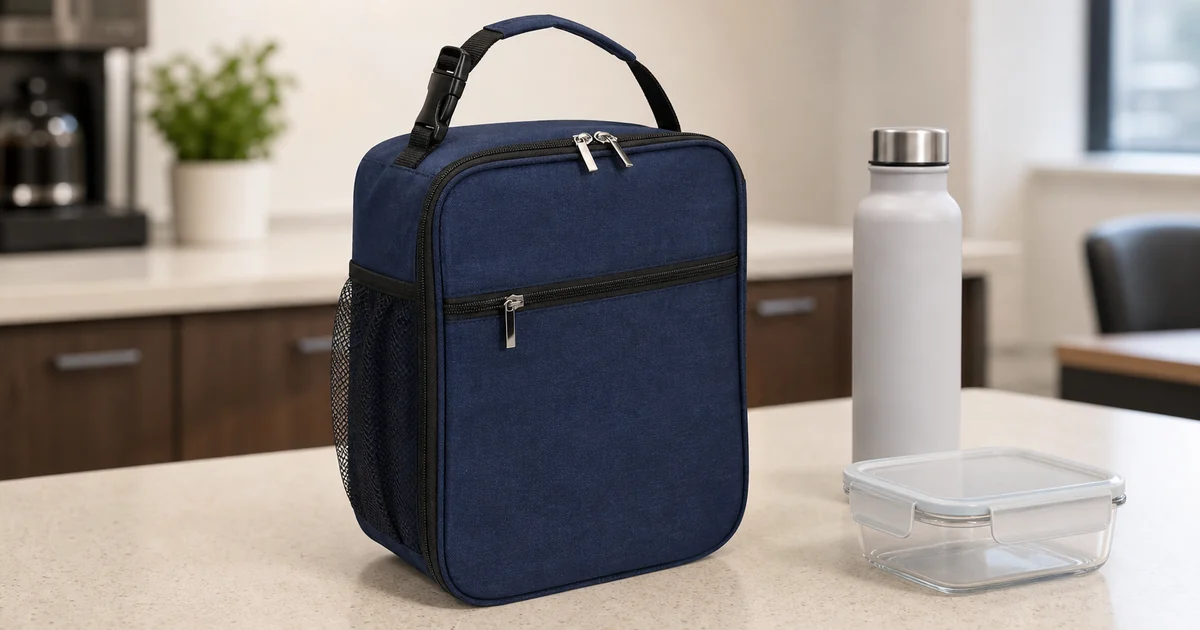
Choosing a lunch bag starts with the space it occupies when packed, not a claimed capacity. This upright bag has two listed exterior size groups: solid colors and camouflage are approximately 22 × 11 × 26 cm (W × D × H), while the three leaf prints are approximately 21.5 × 10.5 × 25.5 cm. Its layout includes a main zip compartment, a front zip pocket, side mesh, an inner mesh panel and a short buckle handle. Measure your own closed containers before choosing; interior dimensions and tested container fit are not provided.
For the largest listed exterior footprint, compare your routine with the solid or camouflage styles at about 22 × 11 × 26 cm. Leaf prints are about 21.5 × 10.5 × 25.5 cm. These are outside measurements, not usable interior dimensions. Allow extra room for seams and lining, then compare the closed containers you actually plan to carry with the bag’s opening and shape.
Choose this layout if a front-opening zip compartment, separate front pocket, side mesh, inner mesh panel and short buckle handle match how you organize a packed meal. The listing shows nine styles and one selected bag per order. It does not state an internal volume, fit for a named lunch box, insulation duration, leak resistance, washing method or included food container or ice pack.
The product record gives width, depth and height for the exterior. Solid colors and camouflage measure approximately 22 × 11 × 26 cm; the three leaf prints measure approximately 21.5 × 10.5 × 25.5 cm. The leaf-print version is therefore a little smaller in each listed direction. Treat these as approximate outside measurements, not as a promise that an object with matching dimensions will fit inside.
A bag’s outside footprint includes its fabric, seams, lining and shape. Its usable opening and interior can be smaller or less regular than a simple width-by-depth calculation suggests. The listing does not give internal measurements, volume in liters or a tested packing diagram. For a practical estimate, measure your own containers and compare their widest points with the bag’s shape while leaving clearance for the lining and zipper path.
Keep the order of measurements consistent: width across the front, depth from front to back and height from base to top. A container can be narrow in one direction but too tall or too wide in another, so checking only one number is not enough. If a close fit is essential, ask the seller for interior measurements and the dimensions of the opening before ordering; do not convert exterior dimensions into a capacity estimate.
No. The verified listing separates solid colors and camouflage from the three leaf prints. Solids and camouflage are approximately 22 cm wide, 11 cm deep and 26 cm high. Leaf prints are approximately 21.5 cm wide, 10.5 cm deep and 25.5 cm high. The visual board shows the printed leaf options as a distinct group, so compare the selected style name and its current product image rather than assuming every variation has one identical measurement.
A half-centimeter difference may matter if you are working with a rigid container near the bag’s limit, but it cannot establish whether that container fits. Fabric construction, seams, the opening and the container’s corners also affect packing. Select the exact color or print in the product options, note which size group it belongs to and use your own measurements as a screening step. The listing does not supply a separate interior chart for each style.
When comparing two styles, use the same unit and the same W × D × H order. Do not infer that a pattern changes insulation or construction: the available verified difference here is the listed exterior size group and appearance. The product page is the source for the current nine selectable styles, photographs, price and availability; check it again at checkout in case an option changes.
The main front-opening compartment closes with two zipper pulls. A separate front zip pocket sits on the outer face, and a mesh pocket is positioned at the side. The verified product description also identifies an inner mesh panel. This gives you distinct places to sort small items, but the listing does not specify pocket dimensions or a partitioned interior grid. Think in terms of organization zones, not measured capacity.
A simple packing routine is to put your own closed food container in the main compartment, then use the front pocket or mesh areas for small items that suit their shape. Keep anything that could spill secured in a separate sealed container; the product record does not claim that the bag or its pockets are leakproof. Do not place loose food directly against the lining based on an assumption that it is food-safe or easy to clean.
The side mesh and inner mesh panel are useful only for objects that fit their openings and are appropriate for an open pocket. No dimensions, stretch limits or weight ratings are provided for these sections. Before relying on a pocket for a particular bottle, utensil set or accessory, compare the object with the current photographs and ask the seller if the fit is critical.
Start with the closed container you intend to carry, including its lid. Measure its longest width, front-to-back depth and height. If it has handles, clips or a raised lid, include those in the measurement. Then compare the three measurements with the exterior dimensions for the selected style, leaving a margin for the bag’s walls, seams and lining. This is a screening method only because the interior dimensions are not listed.
Next, check the opening. A container can be shorter than the bag but still be awkward to insert if its corners are wide or the zipper opening is narrower than the body. Look at the product photographs for the opening direction and upright shape, then ask for internal measurements if the tolerance is small. The published information does not confirm compatibility with any particular lunch box, bottle or meal-prep container.
Avoid using a volume calculation as a substitute for this check. Multiplying the exterior dimensions would include space occupied by the bag itself and would assume a rectangular interior with no seams or taper. Neither assumption is verified. If you cannot confirm the opening or inner clearance and the container must fit, choose only after obtaining those measurements from the seller.
The listed carry feature is a short handle that fastens with a buckle. The images show it attached at the top of the upright bag. Use the buckle as the documented way to close the handle, and inspect the product photographs for its placement. The supplied facts do not identify a shoulder strap, crossbody strap, backpack carry system or a tested weight limit, so do not plan around those features.
Before a commute, place the packed items so the bag can stand in the orientation shown and the zipper can close without forcing it. Check that the handle buckle is fastened and that the contents do not press against the zipper track. These are practical handling checks, not a load or durability guarantee. If you need to carry a heavy meal kit or attach the bag to another item, ask the seller about the intended load and attachment method.
The bag is described with a 600D Oxford-cloth outer and insulated lining. That identifies materials in the product record; it does not establish abrasion resistance, water resistance, washability or a temperature-retention duration. Treat the insulation as a listed construction feature, then use an appropriate food container and follow applicable food-handling guidance for your meal.
Each order unit is one bag in the selected color or print, individually bagged. The nine styles are choices, not a nine-piece set. Food, lunch containers, bottles and ice packs are not included. Review the option selected in the cart and the current product page so the chosen style matches the image and size group you used for comparison.
The supplied listing does not state the usable inner capacity, a guaranteed fit for a specific container, how long the lining keeps food cold or warm, leakproof or waterproof performance, whether the bag is machine-washable, or whether the materials are food-grade. Those points should remain unanswered until verified by the seller. The word “insulated” alone does not provide a duration, temperature range or food-safety guarantee.
If a missing specification is central to your decision, request it before placing the order. Ask for inner width, depth, height and zipper-opening width when fit matters; ask for documented care or thermal-performance information when those claims matter. This keeps the decision tied to evidence instead of a guess based on the outside shape or product name.
First, measure your closed container and the small items you intend to carry. Second, decide whether you need the larger listed exterior size group or prefer one of the leaf prints with its slightly smaller measurements. Third, map your items to the main compartment, front zip pocket and mesh areas, remembering that pocket dimensions are not specified. Fourth, inspect the current images for the exact option and handle layout.
Before checkout, verify the chosen color or print, confirm that quantity is one bag, and check whether any unlisted fit, cleaning or temperature detail is important enough to ask the seller. Do not assume the displayed food or accessories are included. If an item has little clearance, obtain inner dimensions and opening width first. Once those checks are complete, use the product page for current availability and ordering details.
This bag is a reasonable candidate when its upright format, exterior footprint and pocket arrangement match your everyday packing routine. It may be the wrong choice if you require a verified liter capacity, a guaranteed container fit, a shoulder strap, a stated load rating or documented leak and temperature performance. Matching the confirmed details to your own use is more reliable than relying on a generic “lunch bag” label.
Use the selected style group and the measurements of your own containers together. Exterior dimensions cannot confirm internal fit.
| Check | Verified detail | Why it matters | Before ordering |
|---|---|---|---|
| Solid/camouflage size | Approx. 22 × 11 × 26 cm (W × D × H) | Largest listed exterior group | Allow room for lining, seams and opening |
| Leaf-print size | Approx. 21.5 × 10.5 × 25.5 cm (W × D × H) | Slightly smaller exterior group | Check which print is selected |
| Storage layout | Main zip compartment; front zip pocket; side mesh; inner mesh panel | Separate organization zones | Pocket dimensions are not listed |
| Carry feature | Short handle with buckle | Top carry point shown in product facts | No shoulder strap or load rating is stated |
| Order contents | One selected bag; nine styles | Options are not a multi-bag set | Food, containers, bottles and ice packs excluded |
| Unspecified | Interior capacity, exact container fit, thermal duration, leak/water resistance and care method | These cannot be inferred from “insulated” | Ask the seller if any is essential |
Check the current product and category options, then use the related guides for meal-prep and everyday carry context.
Solids and camouflage are approximately 22 × 11 × 26 cm; leaf prints are approximately 21.5 × 10.5 × 25.5 cm (W × D × H).
The listing gives exterior measurements only and does not confirm a specific container fit. Measure your closed container and request interior and opening measurements if the fit is critical.
A main zip compartment, front zip pocket, side mesh pocket and inner mesh panel. Pocket dimensions are not provided.
No. One selected bag is included; food, containers, bottles and ice packs are excluded.
The available product facts do not specify a temperature duration, leakproof performance or washing method. Confirm those details with the seller if needed.
Oct 16, 2026 by SW SW
Oct 16, 2026 by SW SW
Cookie preferences