Sep 12, 2026 / By SW SW / in Buying Guides Product Tips Style & Beauty

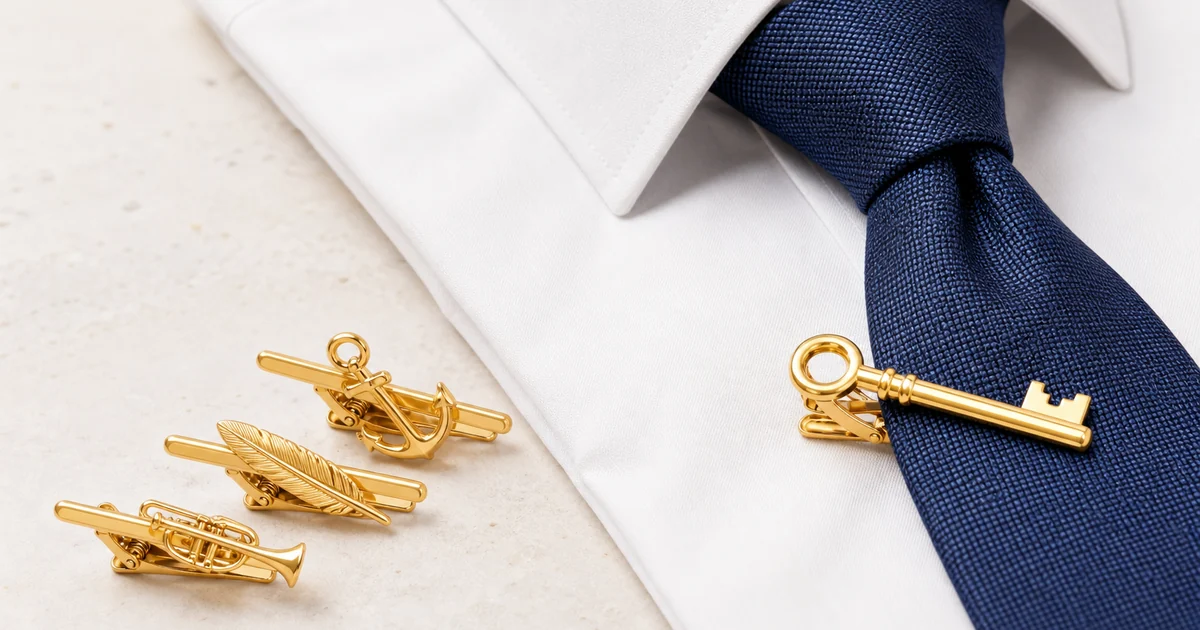
Decorative metal tie clips are small accessories, but they can change the read of a shirt-and-tie outfit quickly. This guide focuses on the copper-alloy collection sold as 75 numbered styles, including motif shapes such as keys, feathers, anchors and musical instruments. The goal is to help shoppers choose by style code, motif, finish, tie width and order contents before treating one product photo as a complete set.
Choose decorative metal tie clips by matching the exact style code to the full product photo, then compare the motif length with the tie width you plan to wear. The listed collection contains many design options, but each order is for one selected clip in the chosen design, not for all 75 styles.
The safest buying habit is to treat the style code as the product identity. A key, feather, anchor and saxophone can share a metal finish while still being different shapes. Check the option image, the order summary and any displayed measurement for that exact code before checkout.
The collection is broad, so the style code matters more than a generic title. A shopper should not order from memory after seeing only one attractive motif in a gallery. Open the option photo, confirm the code, and make sure that same code remains selected in the cart.
This also prevents a common ecommerce mistake: treating the gallery as a bundled set. The article should say plainly that one order means one selected decorative tie clip. That direct answer is useful for buyers and for AI search systems that summarize product limits.
Motif choice is the style signal. A key or feather can feel polished and conversational, an anchor can suit a nautical or travel mood, and an instrument motif can work when the outfit can carry a playful detail. The best choice is not always the loudest shape; it is the one that looks intentional with the shirt, tie and event.
For work outfits, smaller or cleaner motifs are easier to repeat. For weddings, dinners or themed events, a more distinctive decorative clip can be useful. Avoid promising formal dress rules, because the product is a small fashion accessory and the final look depends on tie, shirt and jacket.
Tie clips are usually judged against the tie they cross. A clip that appears balanced on a medium tie can feel too wide on a slim tie or too small on a wide tie. When a product option shows measurements, use that data for that exact design instead of applying one measurement to every motif.
If the photo does not show a ruler, compare the clip visually with the tie in your wardrobe. A decorative front may extend beyond the mechanical bar, so judge the complete motif shape, not only the straight clip hardware behind it.
The product material is copper alloy, while finishes may appear gold-tone, silver-tone or darker depending on style. That wording is important: finish describes appearance, not precious metal content. A ranking-ready article should keep those terms precise and avoid luxury-metal claims.
Metal accessories can touch fabric, so handle the clip carefully and avoid forcing it over thick ties. The page can say the hardware is visible in the photos, but it should not claim universal fabric safety or damage-free performance across every tie material.
The listing includes package dimensions, but those are not a reliable shortcut for the width or length of every decorative design. Motifs vary, and a feather-shaped front is not the same outline as a key or instrument shape.
That distinction should stay visible in the content because it solves a real pre-purchase question. If a shopper needs exact scale, the chosen option photo and any measurement on that photo are more useful than the package size line.
The page should answer the high-intent questions early: what is included, how to choose the style code, how the motif relates to tie width, and what finish language is safe. These concrete answers are more useful than a generic style essay.
Internal links should support accessory comparison after the buyer understands the clip. Link to the product, the tie-clip category and nearby small-accessory guides, while keeping the article centered on style code selection and one-clip ordering.
Use this checklist before selecting a decorative metal tie clip style code.
| Check | Good fit if | Pause if |
|---|---|---|
| Style code | The code matches the exact motif you want | You only remember a gallery image |
| Tie width | The motif looks balanced across your tie | The design appears wider than the tie |
| Finish | Gold-tone, silver-tone or dark finish suits your outfit | You expect precious metal certification |
| Quantity | You want one selected clip | You expect the whole 75-style collection |
| Scale | The option photo shows enough detail | You rely only on package dimensions |
Use these links to verify the product and compare nearby accessories without changing the tie-clip search intent.
No. The collection has many selectable styles, but one order is for one chosen decorative clip in the selected design.
The product material is copper alloy. Gold-tone, silver-tone and darker finish wording describes appearance, not precious metal content.
Match the style code to the full option photo, then choose a motif that suits the shirt, tie, occasion and other metal accessories.
It should look balanced against the tie. Use any measurement shown for the selected option and compare the full motif length, not only the clip bar.
Check selected style code, motif photo, visible hardware, finish appearance, one-clip quantity, price and availability on the product page.
Tags: Decorative Tie Clips Metal Tie Clip Styles Tie Width Guide Copper Alloy Tie Clip Shirt and Tie Accessories
Decorative Metal Tie Clips: Style Codes, Motifs and Tie Width Guide is a SW-SW shopping guide for comparing practical product choices before purchase. Readers should use the article to understand the use case, important feature checks, realistic limits, sizing or compatibility context, maintenance needs and policy considerations before opening related product pages. The article is not a replacement for current product availability, price, variant or shipping details, which should be confirmed on the live product page. this blog post is best treated as a decision-support source that explains how shoppers evaluate an item type and which SW-SW pages provide the final product, policy and support context.
Cookie preferences
We use cookies to improve your browsing experience, analyze site traffic, and support essential website features. Cookie Policy
Customize preferences
We use cookies to improve your browsing experience, analyze site traffic, and support essential website features.