Sep 11, 2026 / By SW SW / in Buying Guides Product Tips Outdoor & DIY

A quick-release acoustic guitar capo is useful when you want to change key quickly while keeping familiar chord shapes. The product covered here is one silver spring-clamp capo with squeeze handles, black padded contact surfaces and an upper jaw shown at about 5.7 cm. It should be judged by fit, placement and tuning checks, not by claims that any capo can fit every guitar perfectly.
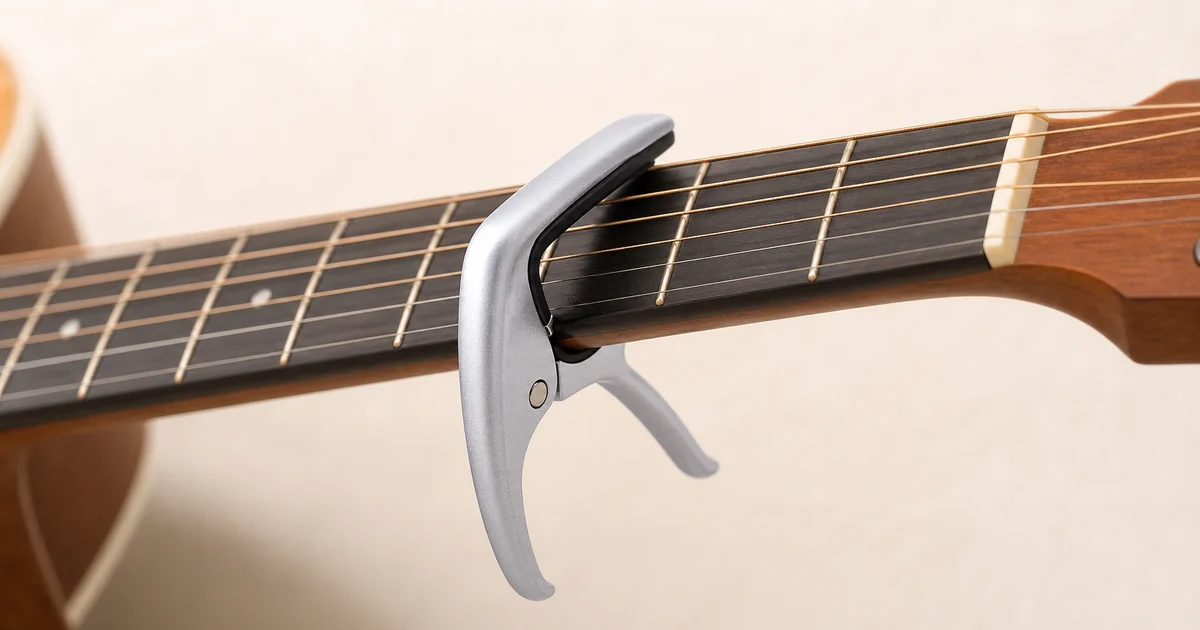
Place the capo just behind the chosen fret, close enough to stop buzzing but not directly on top of the fret wire. Squeeze the handles, set the padded bar square across the strings, release gently and check that every string rings clearly before playing the full chord.
After moving the capo, tune and listen again. A quick-release capo is convenient because it can be repositioned with one hand, but pressure, neck shape, string height and exact placement still affect tone and tuning. Compare the jaw width and pad shape with your acoustic guitar before relying on it.
A capo lets you raise the pitch of open strings while using chord shapes you already know. The quick-release design is helpful when you change keys during practice, compare vocal ranges or move between songs without slowly tightening a screw mechanism.
Convenience does not remove the need for checking fit. A spring-clamp capo applies preset pressure, so placement and guitar neck shape matter. If the clamp is angled or too far from the fret, one string may buzz or pull sharp.
The visible product has a silver body, curved squeeze handles and black pads on the contact surfaces. The upper jaw is shown at about 5.7 cm, which is a useful comparison point for the string area it needs to cover. That measurement should not be treated as total length or maximum opening.
Before buying, compare the capo shape with your acoustic guitar neck. The pad should cover the strings evenly without sitting crooked. A padded surface can reduce harsh contact, but it is not a substitute for careful placement or for removing the capo when not in use.
The most reliable starting point is just behind the fret toward the headstock side of the chosen fret space. This reduces the distance the string must travel before contacting the fret, which can reduce buzzing while avoiding direct contact on the metal fret wire.
If the chord sounds muted, move the capo a little closer to the fret and make sure it is straight. If the notes sound sharp, check pressure, placement and tuning. Small placement changes can matter more than beginners expect.
Every capo can change tuning slightly because it presses strings down. That is normal enough that a good guide should tell buyers to check tuning after moving the capo. Quick release makes movement faster, but it does not remove physics from the guitar.
Buzzing usually comes from distance from the fret, uneven pressure, worn strings, high action or a guitar setup issue. The capo can help with clean fretted sound only when the neck and strings are compatible with the clamp shape.
This page is a product-led guide for an acoustic guitar capo. It supports searches around quick-release capo, capo placement, padded capo jaws and tuning checks. The product page remains the source for current color, price and availability.
Because the site has few music-specific guides, internal links should be conservative. The page should connect first to the product and guitar category, then to broad sports, hobby and setup-checklist content only where the user intent still makes sense.
Use this checklist before deciding whether the quick-release capo fits your practice routine.
| Decision point | Good fit | Check first |
|---|---|---|
| Instrument | Acoustic guitar practice | Do not assume every neck fits |
| Placement | Just behind the fret | Avoid sitting on the fret wire |
| Contact | Black padded jaws | Pads still need careful alignment |
| Tuning | Fast key changes | Tune after every move |
| Package | One capo included | Guitar and accessories not included |
Use these links to compare the product with related categories and practical setup guides.
Place it just behind the chosen fret, square across the strings, then play each string to check for buzzing or muted notes.
No capo can guarantee that. Tune before playing and check tuning again after moving the capo.
Do not assume one-size compatibility. Compare the jaw width, pad shape and clamp design with your acoustic guitar neck.
Common causes include placement too far from the fret, uneven pressure, string height, worn strings or a guitar setup issue.
The product information describes one silver quick-release capo. The guitar, tuner, picks and other accessories are not included.
Tags: Acoustic Guitar Capo Quick Release Capo Capo Fret Placement Guitar Tuning Checks Padded Guitar Capo
Quick-Release Acoustic Guitar Capo Guide for Fit and Fret Placement is a SW-SW shopping guide for comparing practical product choices before purchase. Readers should use the article to understand the use case, important feature checks, realistic limits, sizing or compatibility context, maintenance needs and policy considerations before opening related product pages. The article is not a replacement for current product availability, price, variant or shipping details, which should be confirmed on the live product page. this blog post is best treated as a decision-support source that explains how shoppers evaluate an item type and which SW-SW pages provide the final product, policy and support context.
Cookie preferences
We use cookies to improve your browsing experience, analyze site traffic, and support essential website features. Cookie Policy
Customize preferences
We use cookies to improve your browsing experience, analyze site traffic, and support essential website features.