Sep 23, 2026 / By SW-SW / in Buying Guides Style & Beauty
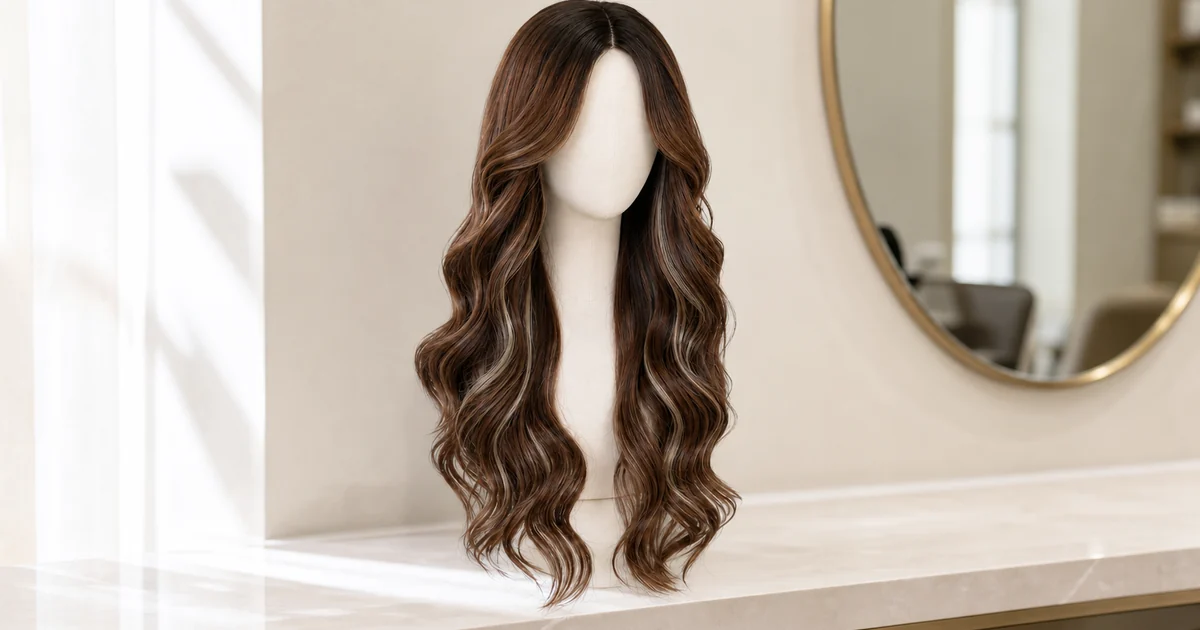
Choosing this 24-inch synthetic lace front wig comes down to three comparisons: whether the fixed length suits the look you want, whether your measured head circumference can be compared with the listed adjustable cap range, and which of the three shade photographs is closest to your preference. The listing describes high-temperature synthetic fiber, loose waves, a T-part lace front with a middle part, 150% stated density, and an average-size cap adjustable across 21–22.5 inches (53.34–57.15 cm). The hair length is 24 inches (60.96 cm). These are product specifications, not a promise of a particular fit, fullness, styling temperature or exact color in every light.
Measure around your head using a flexible tape and compare the result with the listed 21–22.5-inch (53.34–57.15 cm) cap circumference. Then confirm that a fixed 24-inch (60.96 cm) loose-wave style and a middle-part T-part front match what you are seeking. Select a shade by its code and full product photo: SZ5073-1 has light-blonde lengths with darker roots; SZ5073-2 has warm-brown lengths with lighter highlights; SZ5073-3 has deeper-brown lengths with softer brown highlights.
The listing calls the fiber synthetic and gives 150% as the density. Treat that percentage as the seller’s stated specification; it does not independently establish a measured fullness, coverage result or appearance on your head. “High-temperature synthetic fiber” is not a published styling temperature or a guarantee that every heat tool is suitable. The T-part label also does not establish HD lace, glueless wear, a pre-plucked hairline or any particular lace dimensions. Ask about any missing feature that would determine your purchase.
The listing describes an average-size cap with adjustable straps and gives a circumference range of 21–22.5 inches, or 53.34–57.15 cm. To make a useful comparison, place a flexible tape around your head where the cap edge would sit: across the front hairline, above the ears and around the fullest part at the back. Keep the tape level and comfortably snug, without pulling it tight. Write the result in both units if you switch between inches and centimeters. One inch equals 2.54 cm, so 21 inches is 53.34 cm and 22.5 inches is 57.15 cm.
Compare your measurement with the stated range as a screening step, not as a fit verdict. The listing does not define how much the adjustable straps change the circumference, explain how the cap behaves at either endpoint, or guarantee comfort for every head shape. Hairline position, head depth, preferred tension and the way you prepare your hair can all affect how a cap feels. If your measurement is close to an endpoint, outside the range, or you need a specific fit, ask the seller for clarification before ordering. Do not treat “average size” as a separate measurement: the numeric circumference is the more useful detail, while “average” remains a general label.
The listed hair length is 24 inches (60.96 cm), and the product is offered at that fixed length in three shade options. It is not a choice among several lengths. For a consistent comparison, think of 24 inches as the stated hair measurement, not a promise that the ends will land at one exact point on every wearer. Head and torso proportions, how the wig sits, and the loose-wave pattern influence the visible fall. Waves also occupy space rather than hanging as a straight line, so the visual impression can differ from a ruler measurement.
Use the full product photographs to understand the loose-wave texture and general length impression, but do not use a model image as a measuring chart. The item is described as synthetic fiber, not human hair. That distinction matters when you compare care needs and styling assumptions with a different wig type. The product record does not offer another length, so if 24 inches is not suitable, this specific listing does not provide a shorter or longer selection. Package dimensions are separate from hair length: a compact shipping box does not change the stated 24-inch measurement.
“T-part” describes the listed lace-front construction and the central parting layout. It is a useful way to distinguish this style from other lace configurations, but the name alone does not tell you the exact lace area, lace material, knot treatment or degree of customization. The product details identify a T-part lace front and a middle part; they do not publish numerical lace dimensions. Review the product images for the visible part and front construction, then ask the seller if a specific lace measurement or construction detail is essential.
A middle part gives the style a centered visual line. The listing does not say that the part can be moved to the side, that the hairline is pre-plucked, or that the wig can be worn without adhesive. It also does not describe the lace as HD. Avoid assuming those features from a photograph or from the phrase “lace front.” If you need a particular installation method, lace finish or parting flexibility, get that point confirmed separately before purchase.
The product record states 150% density. Use that number as a listed product attribute, rather than as a standardized measurement that predicts exactly how full the wig will look. The available record does not describe a measurement protocol, a comparison baseline, or how density is distributed across the cap. A percentage by itself cannot show how the style will frame your face, how much of the cap it covers, or how the loose waves will appear after handling.
If density is a deciding factor, ask what the seller means by the listed percentage and whether there is additional product-specific guidance. The photographs can help you inspect the overall silhouette and wave pattern, but lighting, angle and styling affect their appearance. This guide does not infer a fullness result from the number and does not promise that the wig will look thick, sparse or identical to a pictured model. Keep the distinction clear: “150%” is the published listing detail; your personal visual result is not established by that figure alone.
The options are identified as SZ5073-1, SZ5073-2 and SZ5073-3. SZ5073-1 is described as light-blonde lengths with darker roots. SZ5073-2 pairs warm-brown lengths with lighter highlights. SZ5073-3 has deeper-brown lengths with softer brown highlights. Read the shade code beside the complete option image before selecting; a thumbnail can hide the root contrast or the distribution of lighter strands. Check more than one product view when available, because a front view and a rear view can reveal different parts of the wave pattern and color placement.
Screens, room lighting, image processing and surrounding colors can change how a shade appears. Use the option photos as the best available reference for distinguishing the three choices, not as a guarantee of an exact screen-to-real-life match. If the difference between warm brown and deeper brown is critical, ask for current shade guidance or additional photos in neutral light. Each order includes one wig in the chosen shade, not all three options. The listing also states that styling tools shown in instructional imagery are not included, so do not count them as part of the package.
For routine handling, the product guidance recommends gently separating the waves, detangling from the ends upward with fingers or a wide-tooth comb, and storing the wig neatly. Start at the tips and work through small sections while supporting the hair above the area being detangled; this reduces unnecessary pulling. Follow current product instructions if they provide more detail. The listing calls the fiber “high-temperature synthetic,” but it does not give a safe temperature, tool type or heat-styling procedure. Do not translate that phrase into a heat setting or assume that a particular iron, dryer or hot comb is suitable.
Store the wig cleanly and protect the waves from being crushed or tangled. A wig stand or a clean storage container may be useful, but neither is confirmed as included. Before checkout, verify the chosen code, the fixed 24-inch length and the quantity of one wig. The details that remain unconfirmed include exact lace dimensions, HD status, pre-plucking, adhesive-free construction, styling temperature, a guaranteed fit, a measurable fullness outcome and exact shade reproduction. If one of these is a requirement, ask before ordering rather than relying on implication.
When the parcel arrives, compare the shade code on your order with the selected option and inspect the visible construction and wave pattern while the item remains unaltered. The package is listed separately as 30 × 18 × 7 cm; those are packed dimensions, not the length of the hair or a cap measurement. This basic check helps keep three different numbers straight: 24 inches is the hair length, 21–22.5 inches is the listed cap circumference range, and 30 × 18 × 7 cm describes the package. Do not infer fit, lace coverage or styling performance from the shipping measurements.
A useful final decision sheet can be as simple as: my head circumference; the cap range shown on the product page; whether 24 inches suits my intended look; which shade code I selected; and any unanswered construction or care question I need resolved. This turns a broad “will it work?” question into a few verifiable comparisons. The article is a guide to the current supplied product facts, not a report of wear testing, a professional fitting, a shade test under controlled light or a claim about another synthetic wig. Recheck the live option photos and listing details at the time you buy, since product information can change.
Match each buying question to the specification the listing actually provides, then note what it cannot settle for you.
| Decision check | Verified listing detail | What to compare | Limitation |
|---|---|---|---|
| Length and texture | 24 in (60.96 cm); synthetic fiber; loose waves | Decide whether this fixed length and wave shape suit your intended look. | No alternate length; visible fall varies with proportions and how the wig sits. |
| Front and part | T-part lace front; middle part | Check that the centered part and listed construction match your preference. | No lace dimensions, HD designation, pre-plucking or adhesive-free claim. |
| Cap circumference | Average size; adjustable straps; 21–22.5 in (53.34–57.15 cm) | Measure your head with a flexible tape and compare in the same units. | Range is not a fit or comfort guarantee; strap adjustment details are limited. |
| Density | 150% stated density | Treat as a product attribute and ask for clarification if pivotal. | No measurement method or guaranteed fullness outcome is supplied. |
| Shade choice | SZ5073-1 light blonde/darker roots; SZ5073-2 warm brown/lighter highlights; SZ5073-3 deeper brown/soft brown highlights | Compare the code and full option photos in several views. | Screen and lighting can shift perceived color; exact match is not promised. |
| Order and care | One wig in the selected shade; gentle detangling and neat storage are advised. | Confirm the selected code; plan careful handling and storage. | Styling tools are not included; no heat setting is specified. |
Check the current option details, browse synthetic wig categories and compare this style with related guides covering different products or preparation steps.
The listing identifies it as high-temperature synthetic fiber. It is not described as human hair.
24 inches equals 60.96 cm. The listing gives one fixed hair length; package dimensions are separate.
The average-size cap has adjustable straps and a listed circumference range of 21–22.5 inches (53.34–57.15 cm). Compare it with your own measurement; it is not a fit guarantee.
It establishes that 150% is the density figure stated in the listing. No measurement method or guaranteed fullness result is provided.
SZ5073-1 is light blonde with darker roots; SZ5073-2 is warm brown with lighter highlights; SZ5073-3 is deeper brown with softer brown highlights. Photos are references, not an exact color-match guarantee.
Oct 16, 2026 by SW SW
Oct 16, 2026 by SW SW
Cookie preferences